Translate

Sunday, May 19, 2019

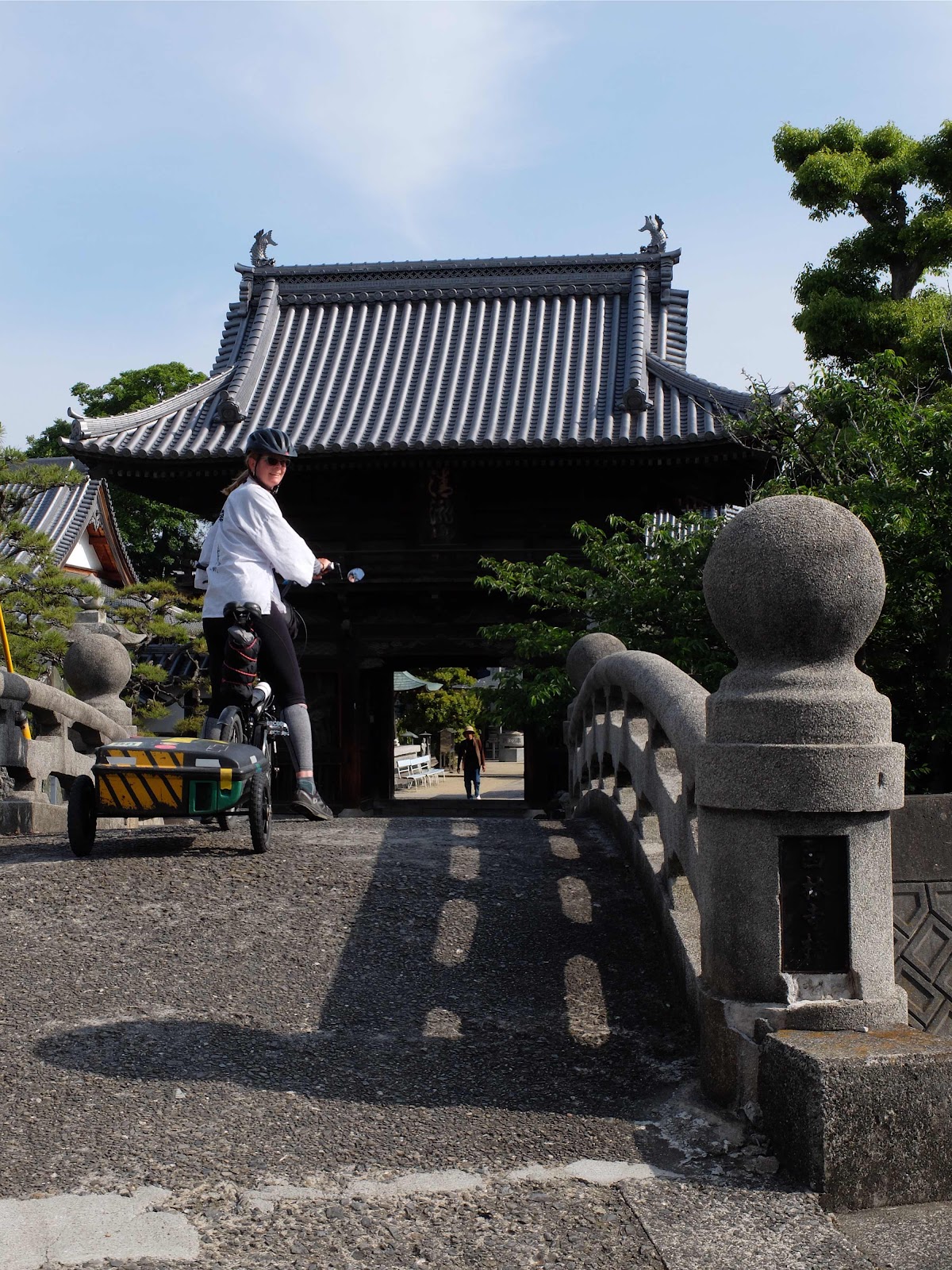
Hanging out with locals: Temples 52-58


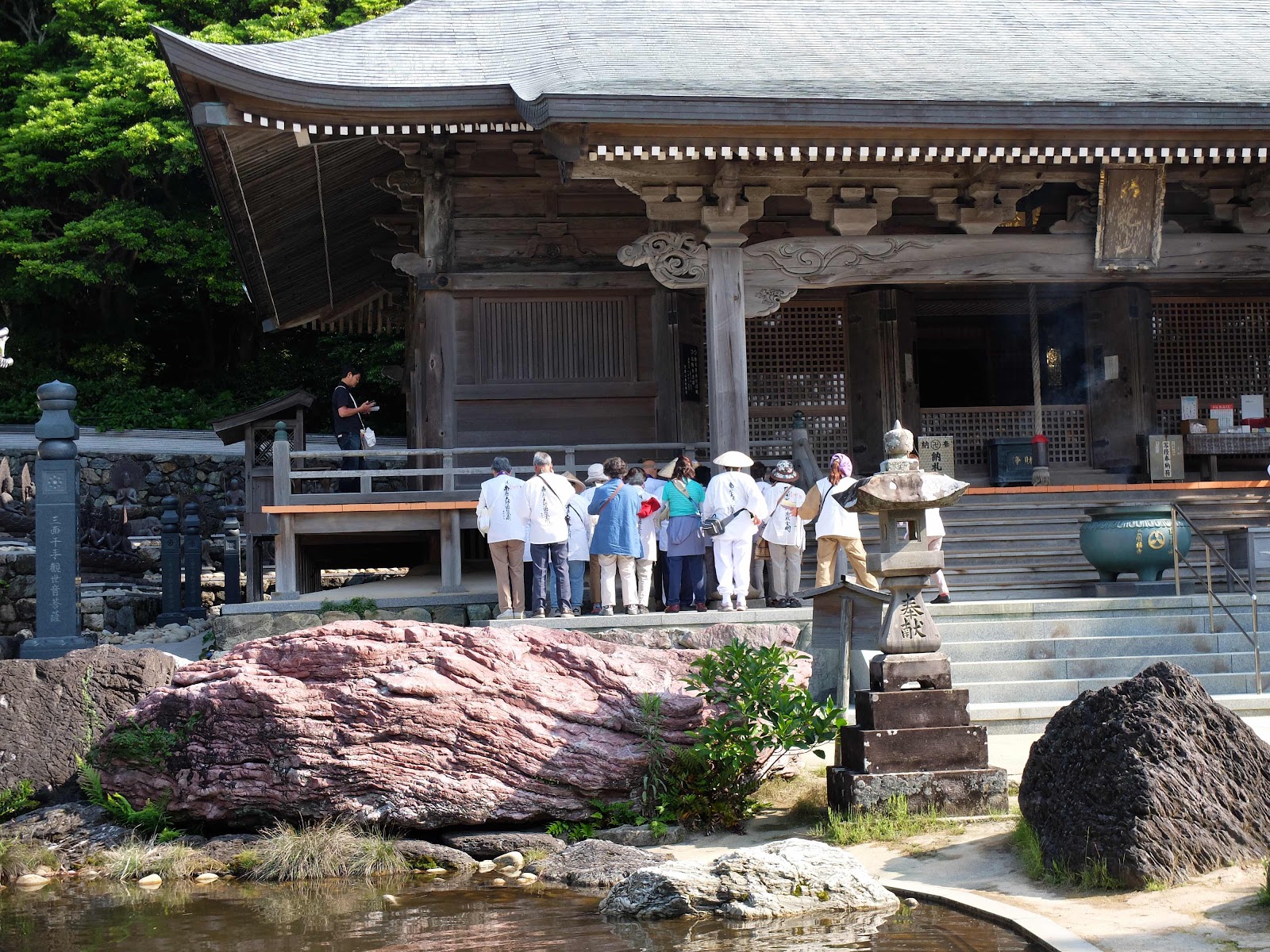
Ruth: There are relatively few foreigners on the Shikoku pilgrimage route, so we tend to spend our time with the Japanese that we meet.  As the lovely temples begin to blur together, what stands out more for me each day are the wonderful interactions we have with locals. 

When we were planning our trip to Japan I told Gord that I definitely would not be sampling any pufferfish. Only licenced people can clean and prepare this fish because it contains toxins that are 1200 times more toxic than cyanide.  A single fish can kill up to 30 people. Why would anyone take the risk? Then our lovely Warmshowers host offered us each a bowl of his homemade pufferfish soup and I ate it. The fish was very tender and delicate and we survived the night. 


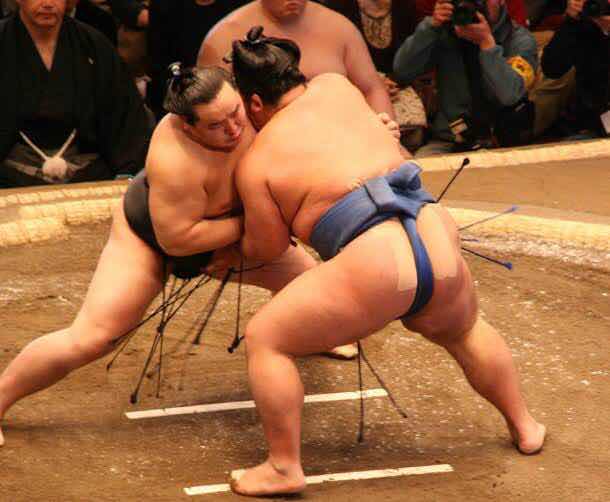
After dinner we spent the evening watching a sumo wrestling tournament with our host. Another activity I never thought I could get into. He explained that the sport is now dominated by the Mongolians, but many Eastern Europeans have also made it into the top ranks. We watched a massive Georgian easily win his match. 
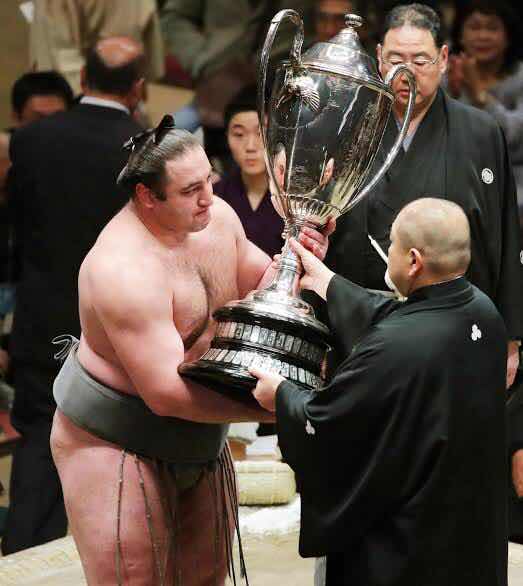


Sumo is a sport that could only have been created and sustained in Japan. Coloured by ancient Shinto traditions, the sport has barely changed since the Edo period in the 16th century - right down to their period hair do’s. I’m not sure what the life expectancy was in the Edo period, but for modern sumo wrestlers it’s between 60 and 65. Shinto elements also remain a big part of the sport, including throwing salt into the ring as a purification ritual. Like so many things we encounter in Japan, ancient traditions exist in parallel with  the country’s modernity. 

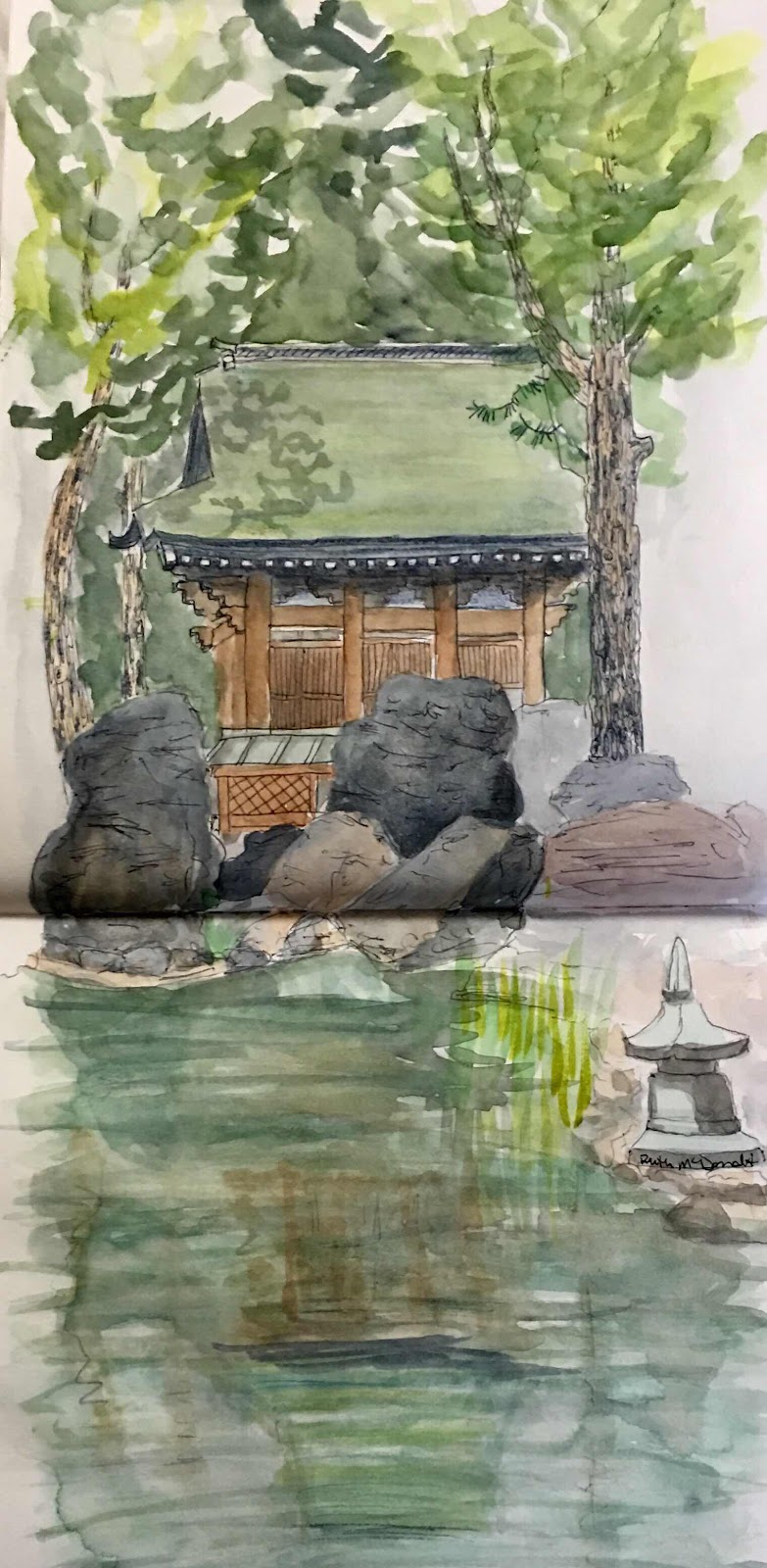
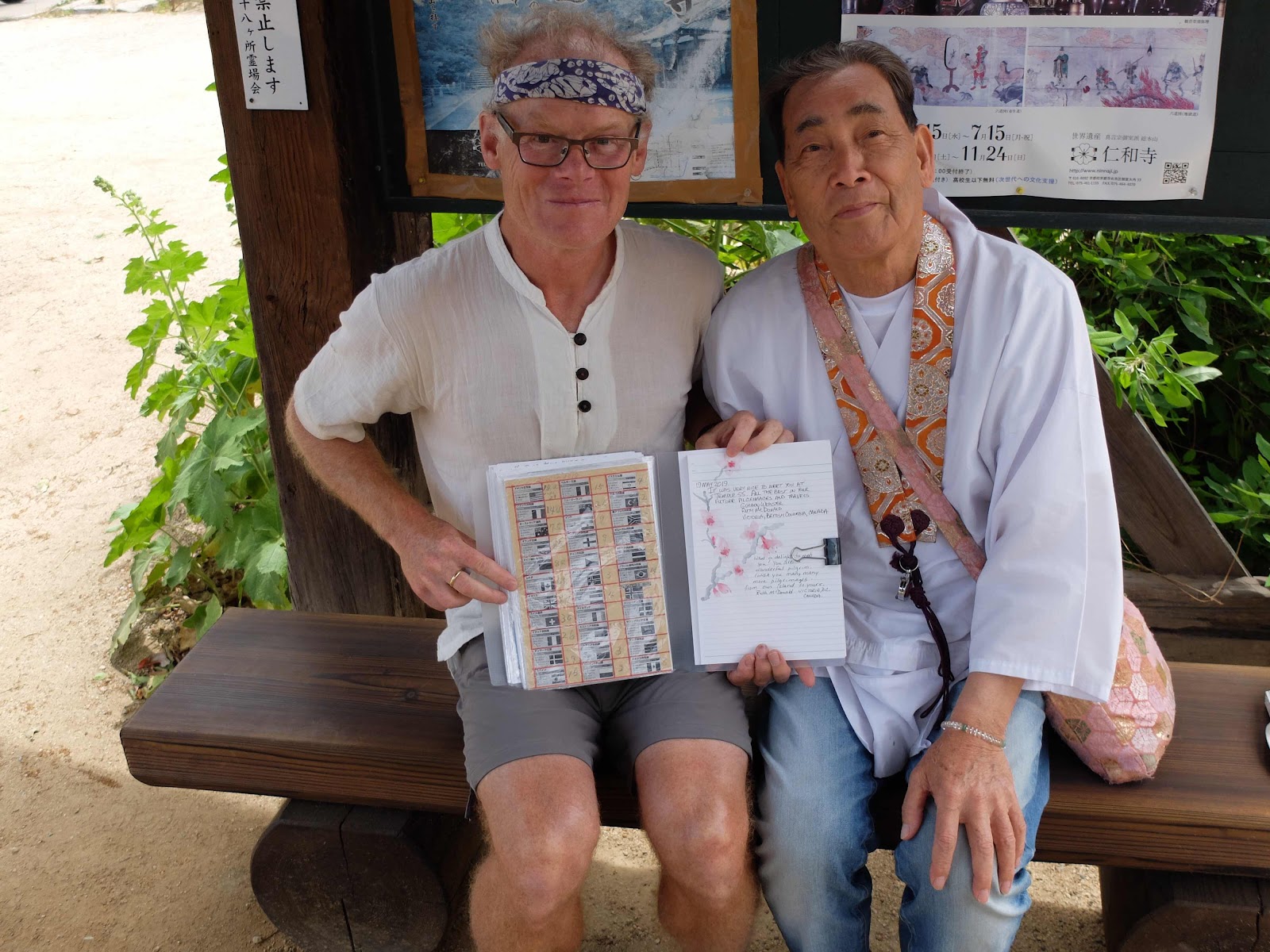
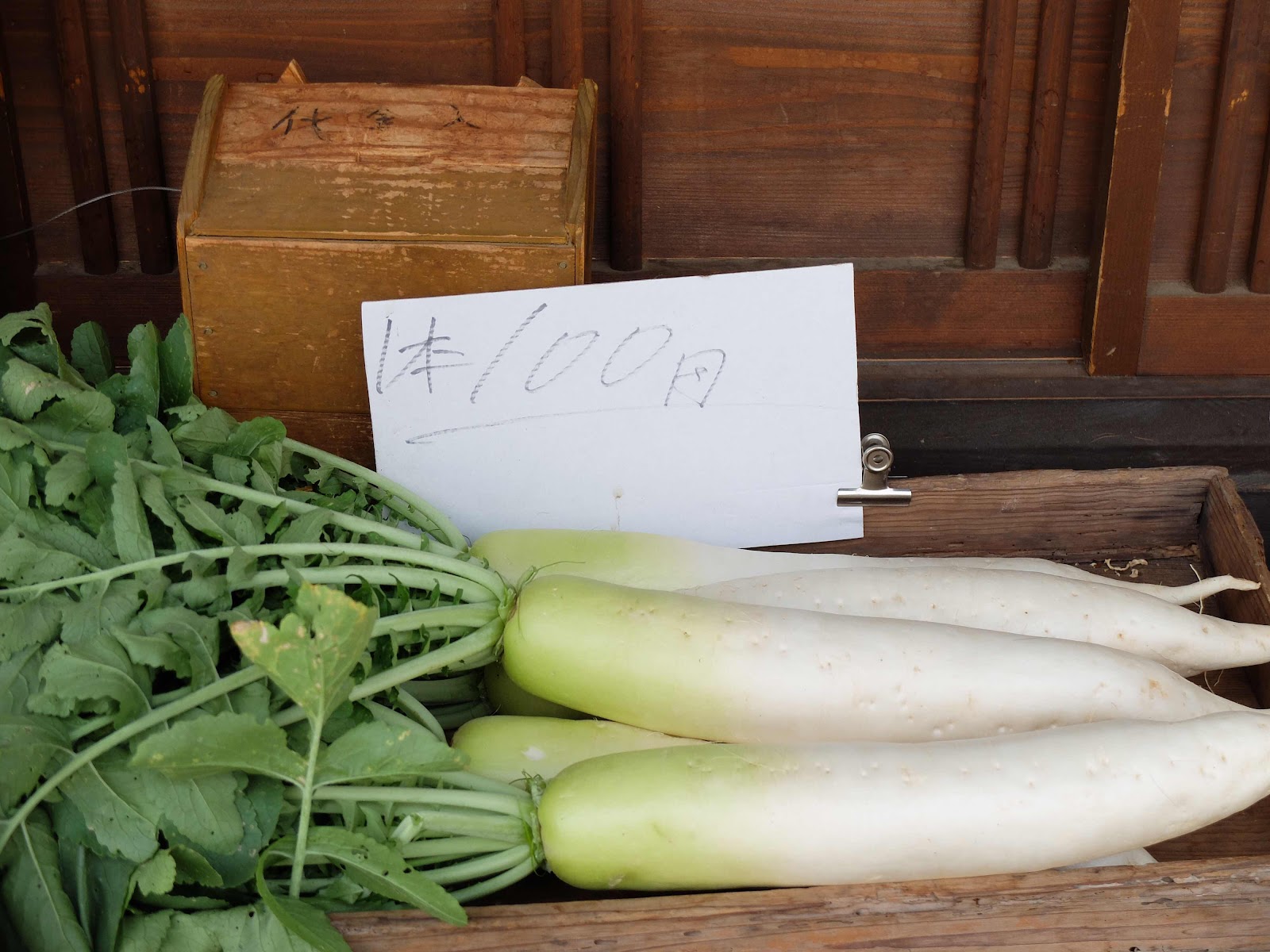
We continue to be so impressed with the kindness of the Japanese people we meet. Today we met a man who showed us his album documenting all the foreigners he had met on countless henros and a Camino in Spain. We were his 69 and 70th Canadians. Then we got into a competitive osettai match with him. We exchanged name slips (his was golden, indicating he has done the pilgrimage between 50 and 100 times) and we gave him some Canada pins. He then went to his car and brought us back a cut paper wild boar thingy. Gord countered up with a Canadian bandana.  And then he gave us a towel, so I did a small painting in his book.  After we left the temple he spotted us again near a convenience store where he beckoned us to sit down as he bought us iced coffees. Competitive kindness is a hoot!


Oh, just a side note. I was stopped this morning by my own paparazzi. A guy waved frantically, pulled his car over and with an enormous camera proceeded to take my picture. Ah, fame at 51!




Friday, May 17, 2019

Japan can be a bit Nutty: Temples 48-51


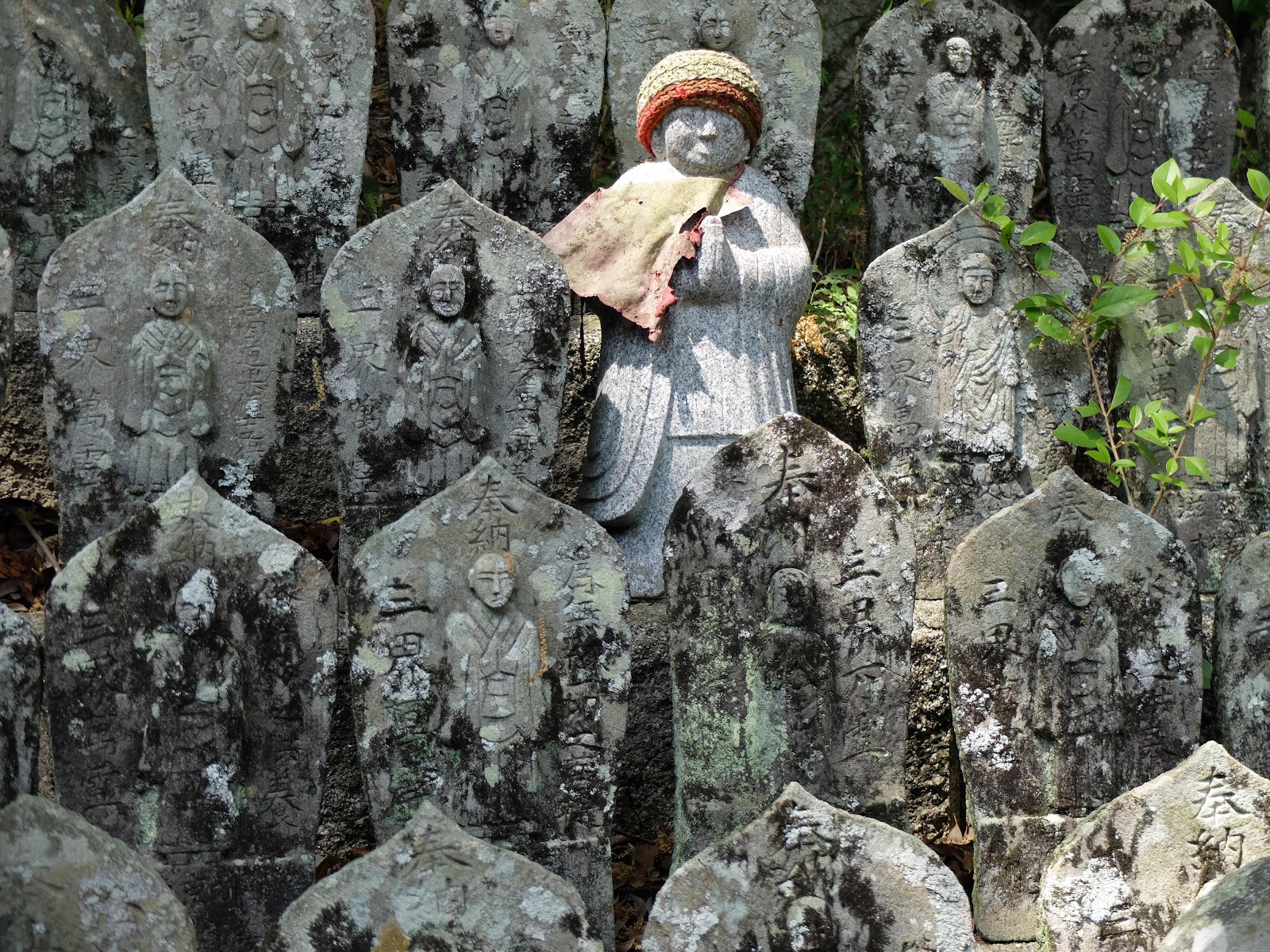
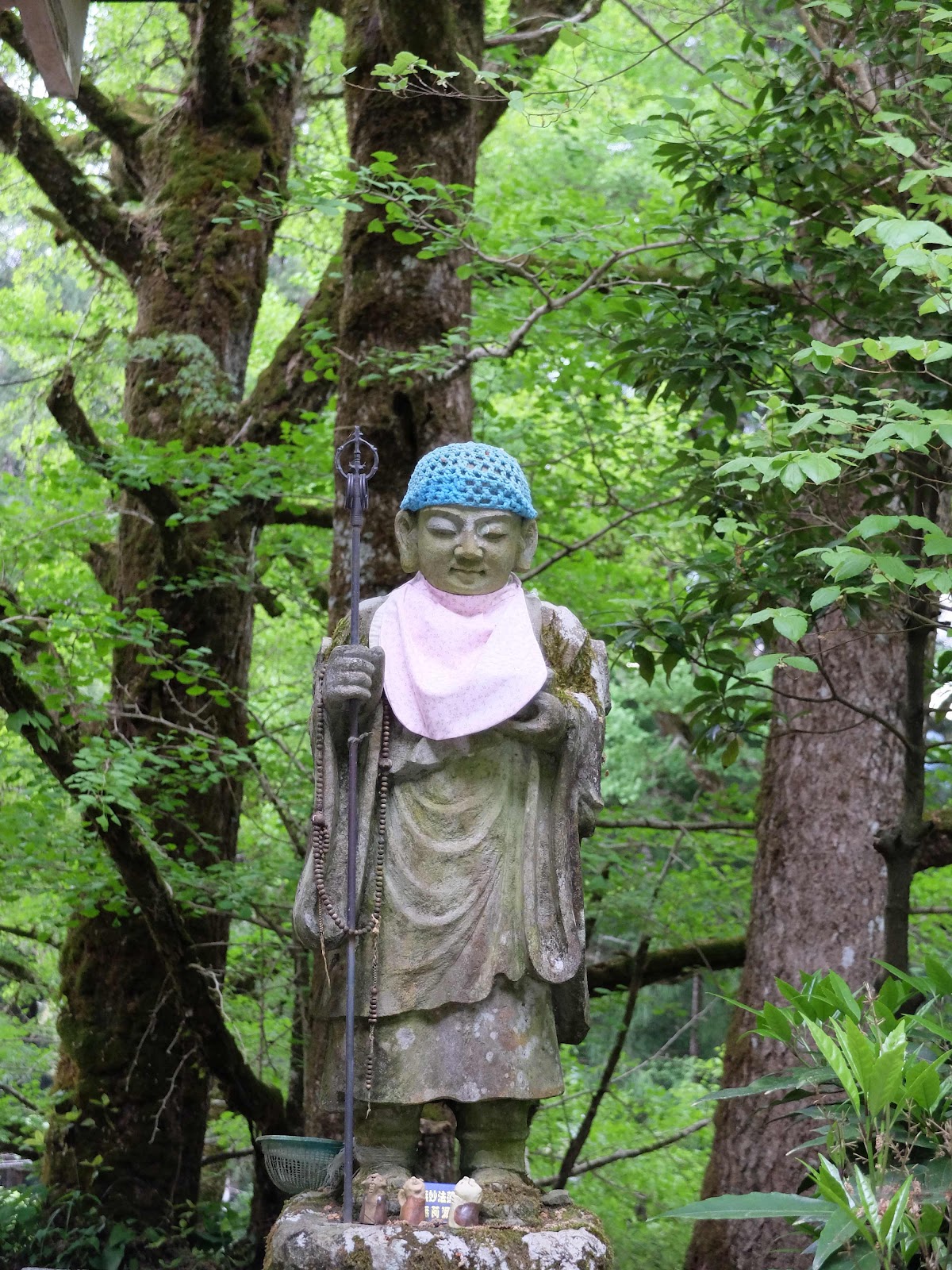
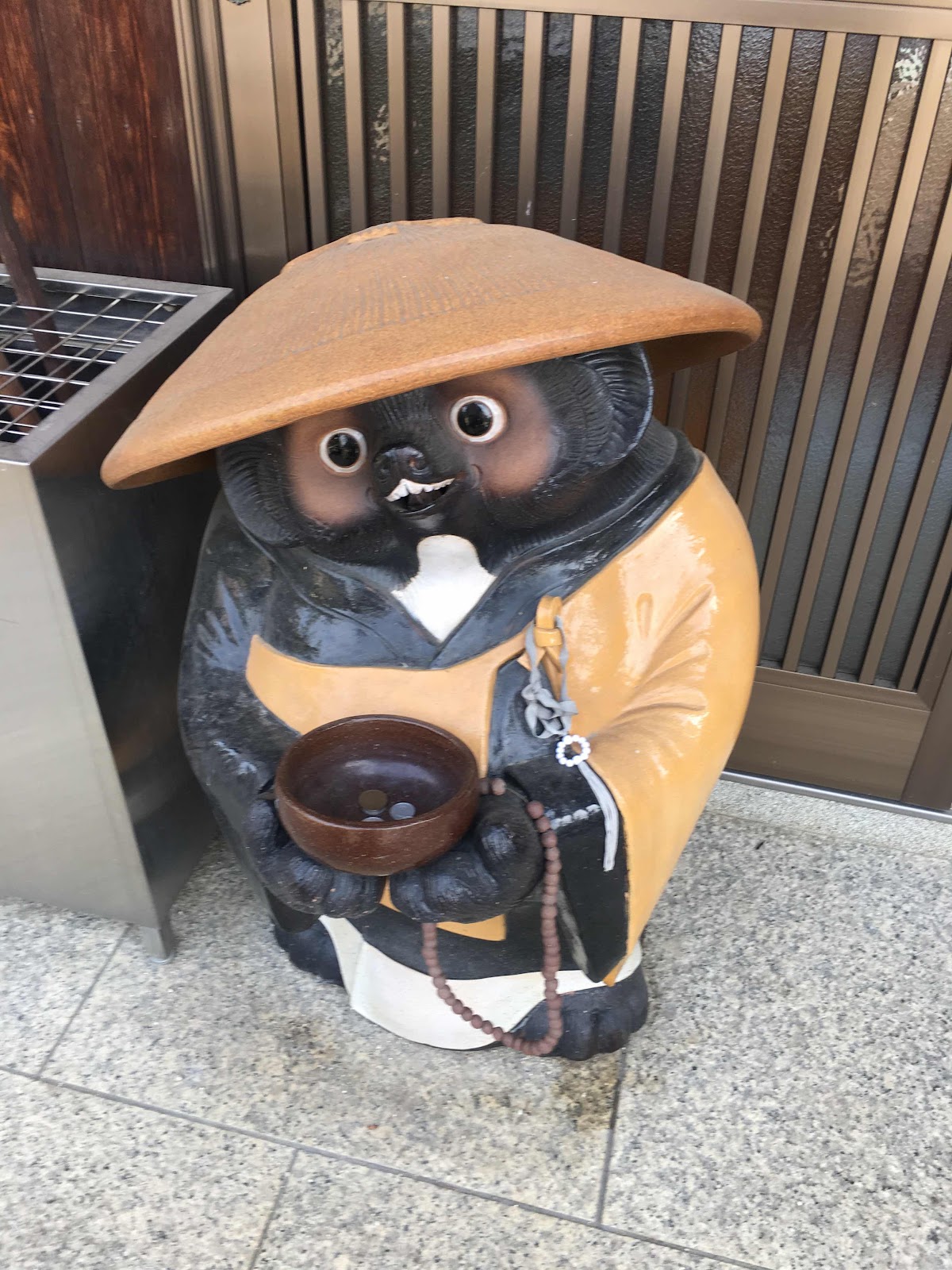
Ruth: There are moments everyday when I am struck by just how different Japan is from any other country I have visited. It goes beyond their resistance to global trends like chairs and beds, and the interesting coexistence of modernity and ancient traditions. Take this cute little creature, the tanuki. Do not be fooled by the monks garb and big innocent eyes, as I was. This character is a shape shifting little trouble maker with enormous magical balls. I kid you not, I couldn’t make this stuff up if I tried! You can’t see his magic bags because he is trying to pass as a monk, and has them hidden under that bib or diaper thingy.
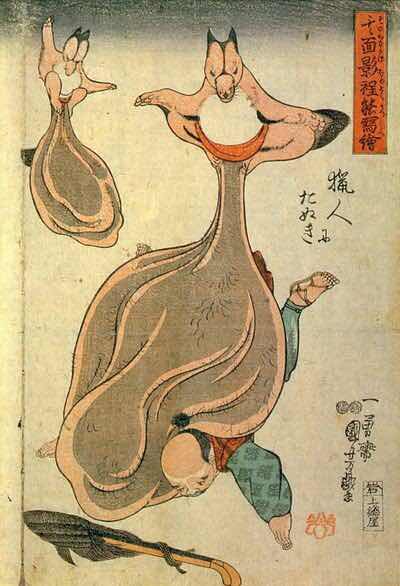
Tanukis have been a part of Japanese folk culture for centuries. They are notorious for drumming their bellies in the forest  to confuse walkers and cause them lose their way. But it’s the stories of their testicles that truly left me speechless. Whether it’s boating or battle tanukis have it covered with their endlessly stretchy scrotums.


Now while our western sensibilities might make us squirm at this graphic weirdness, in Japan these are popular stories. There is even a children’s song about the tanuki’s swinging balls. I know you won’t believe me, so here is the link:

Tanukis are actual animals that are known as “raccoon-dogs”.  They are less well endowed than their mythical cousins. 

We are spending a rest day in Matsuyama so that we can see the sights of this lovely city. After a four temple approach, I stopped to bathe at the Dogo Onsen, the oldest onsen in Japan.  It has been in use for 3,000 years.


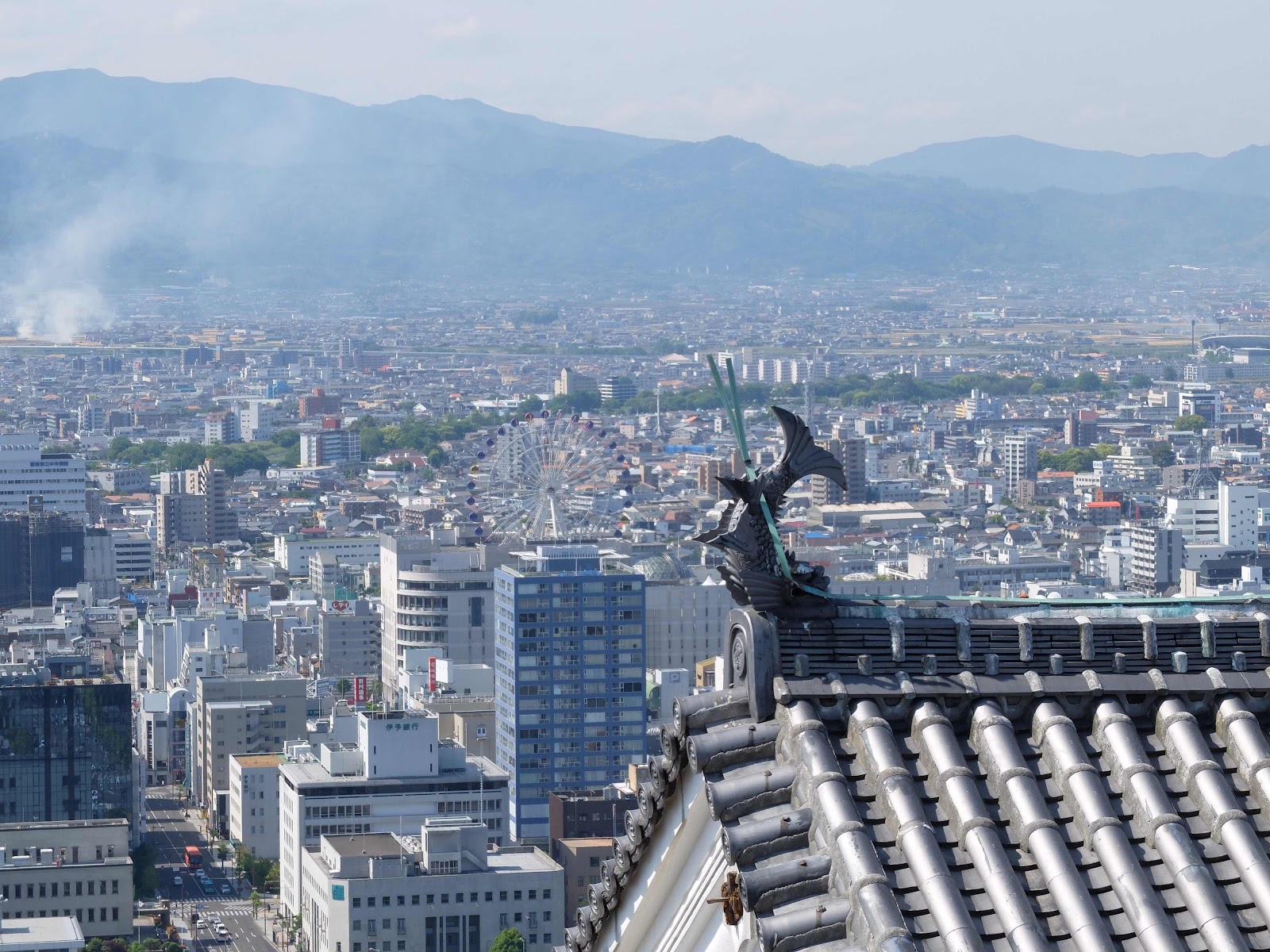
Matsuyama is also home to a wonderful castle which we explored this morning.  While at the castle I encountered a woman in a tour group wearing a full traditional kimono. I later read that it is a popular activity in Matsuyama to rent kimonos and wander about in them.   

After visiting the art gallery to see an Escher exhibit I met another three ladies dressed in kimonos. They kindly let me take their picture. 


There are Haiku boxes all over Matsuyama where anyone can submit their own poem for adjudication. Here is our contribution:

Foggy morning walk

A hairy Tanuki beats

The henro is lost


Wednesday, May 15, 2019

Mountains, Monkeys and Magic: Temples 46 & 47


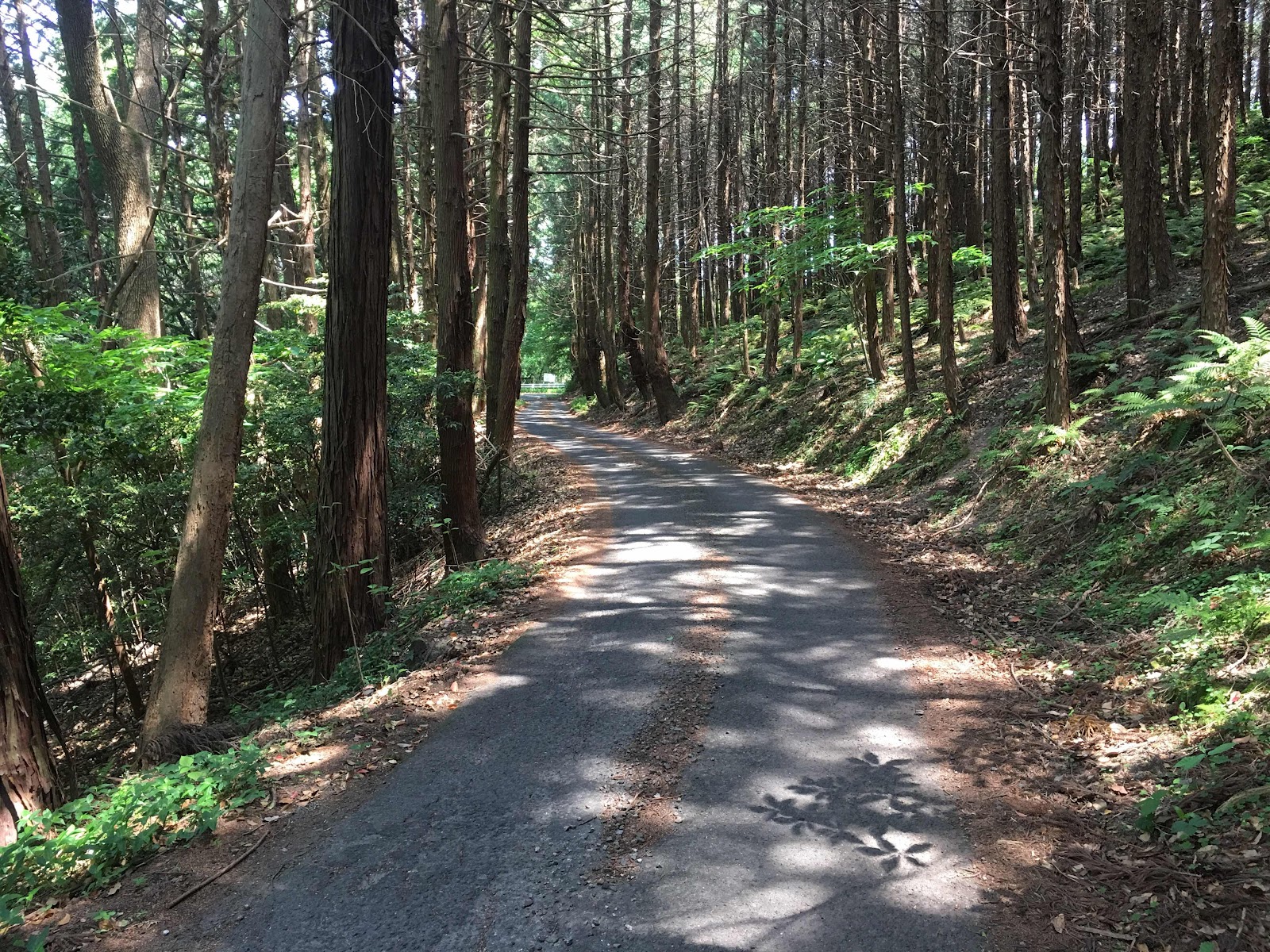
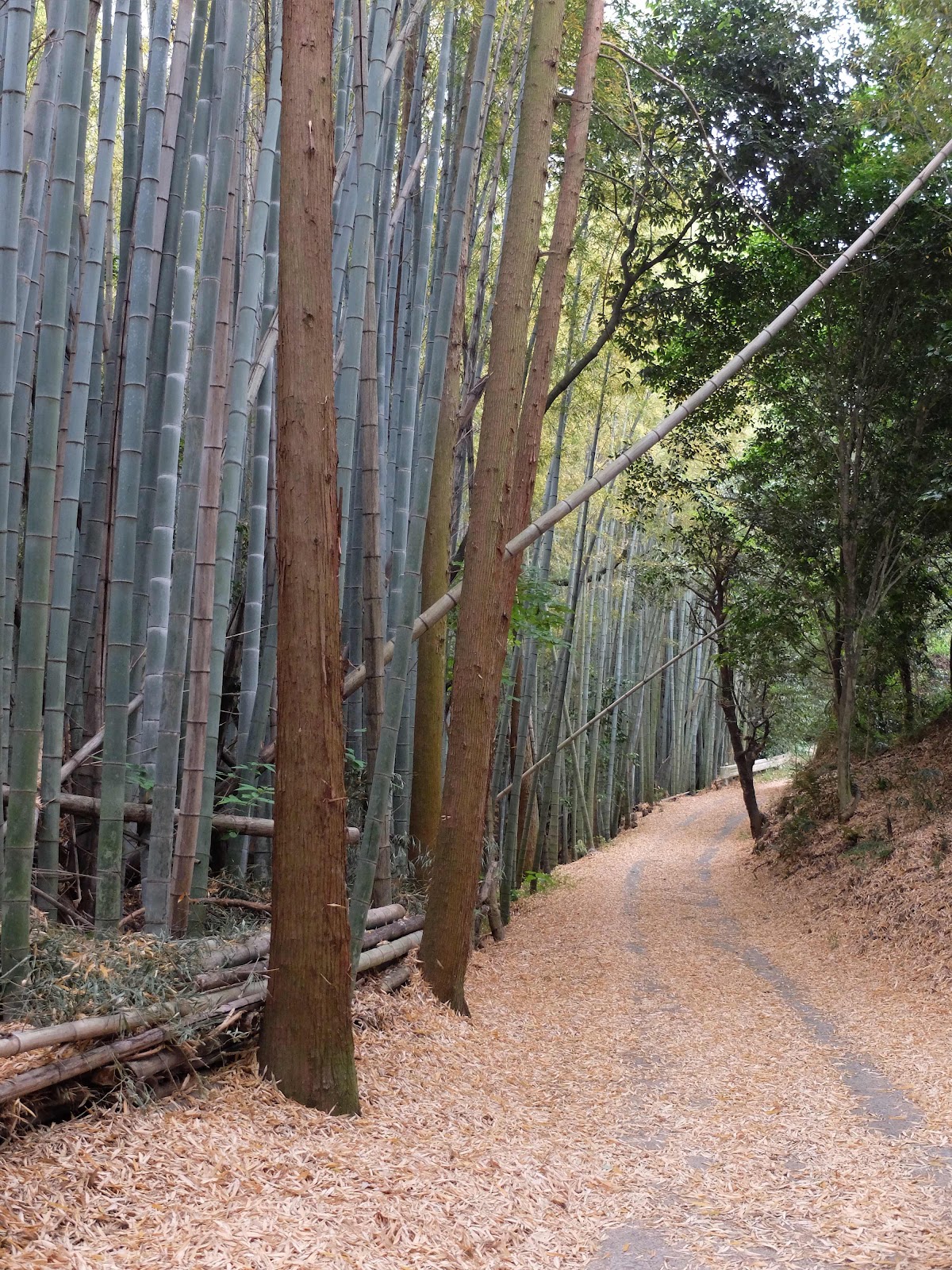
Ruth: There is usually at least one point in every trip where I have to thank my Pocket Earth app for finding me yet another magical alternate route to cycle.  This morning, after climbing up to a pass at 720 meters I needed to make a descent that would rejoin the walking route in the valley below. The link was made on this lovely steep and twisty mountain lane that took me past bamboo groves, dark forest and a group of monkeys. 
Absolutely beautiful!


Meanwhile, Gord was having his own lovely walk after a refreshing break at an osettai station.  I somehow missed the lovely lady who drags pilgrims off the street and plies them with iced coffee and cheesecake. Apparently she was disappointed that I didn’t make it, as she had already heard about me and my bike and seen my picture on Facebook. I heard from another henro that after completing the pilgrimage 30 times she moved to the route so that she could offer osettai to the passing henro. I was thinking about this as an excellent retirement plan for myself. 


I might have missed the cheesecake, but just after the mountain pass I was warmly greeted by an old man. About ten minutes later he chased me down in his truck, honking. He jumped out and gave me 200 yen. 


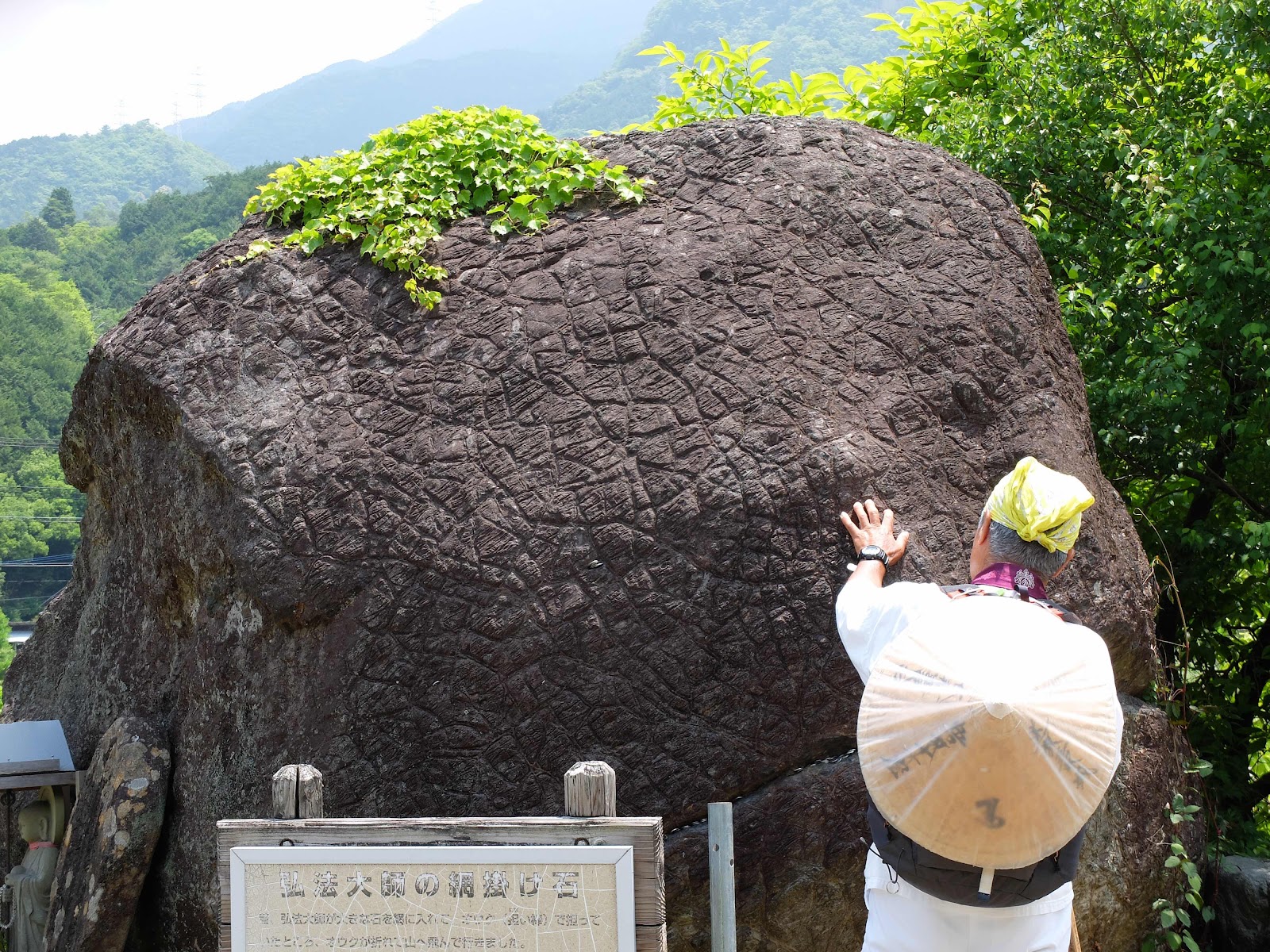
A rock that Kobo Daishi allegedly dragged in a net, leaving a fishnet pattern on it.


These three henro all claim to be over 70.  If they are not lying than they are doing something very right in Japan. 


Monday, May 13, 2019

Halfway: Temples 44 and 45


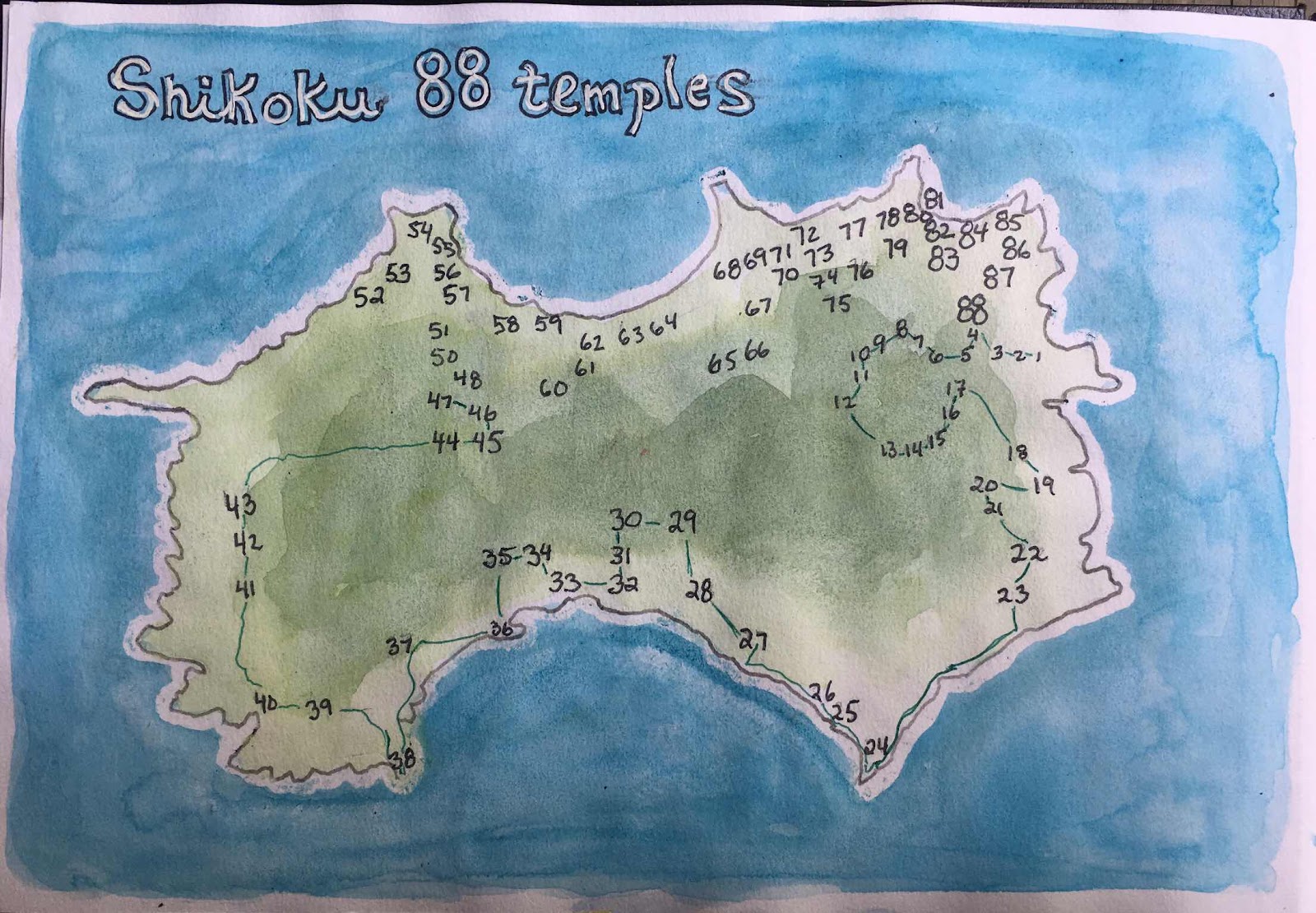
Gordon:  Near the end of a long but beautiful walk / ride we reached Temple 44 yesterday.  This means that we have now visited half of the 88 Temples on the pilgrimage.  We also passed the halfway mark in the length of our visit to Japan a couple of days ago.  Given that we have now covered 745 of the 1200 kms of the pilgrimage circuit, we are on track for a successful completion.  In fact, we need to throttle back a bit.  We have been averaging 32 kms per day over the past week or so, a pace that will cause us to run out of pilgrimage before we exhaust our time.  Ruth’s solution: “We could just start the circuit again.”  Ruth has some unfinished business at Temple 12 that bothers her a bit.  She took a taxi to that mountaintop temple, but she would like to have another opportunity to complete it on her bike.


We are back in a mountainous area in the interior of Shikoku.  Our walk yesterday took us along ever narrowing roads, until the single lane road finally became a trail.  (Ruth had to take a longer road around the last ridge.)  The landscape is stunning, with clear rivers and lush forests.  The mountain towns and villages are a delight, more traditional and very friendly.

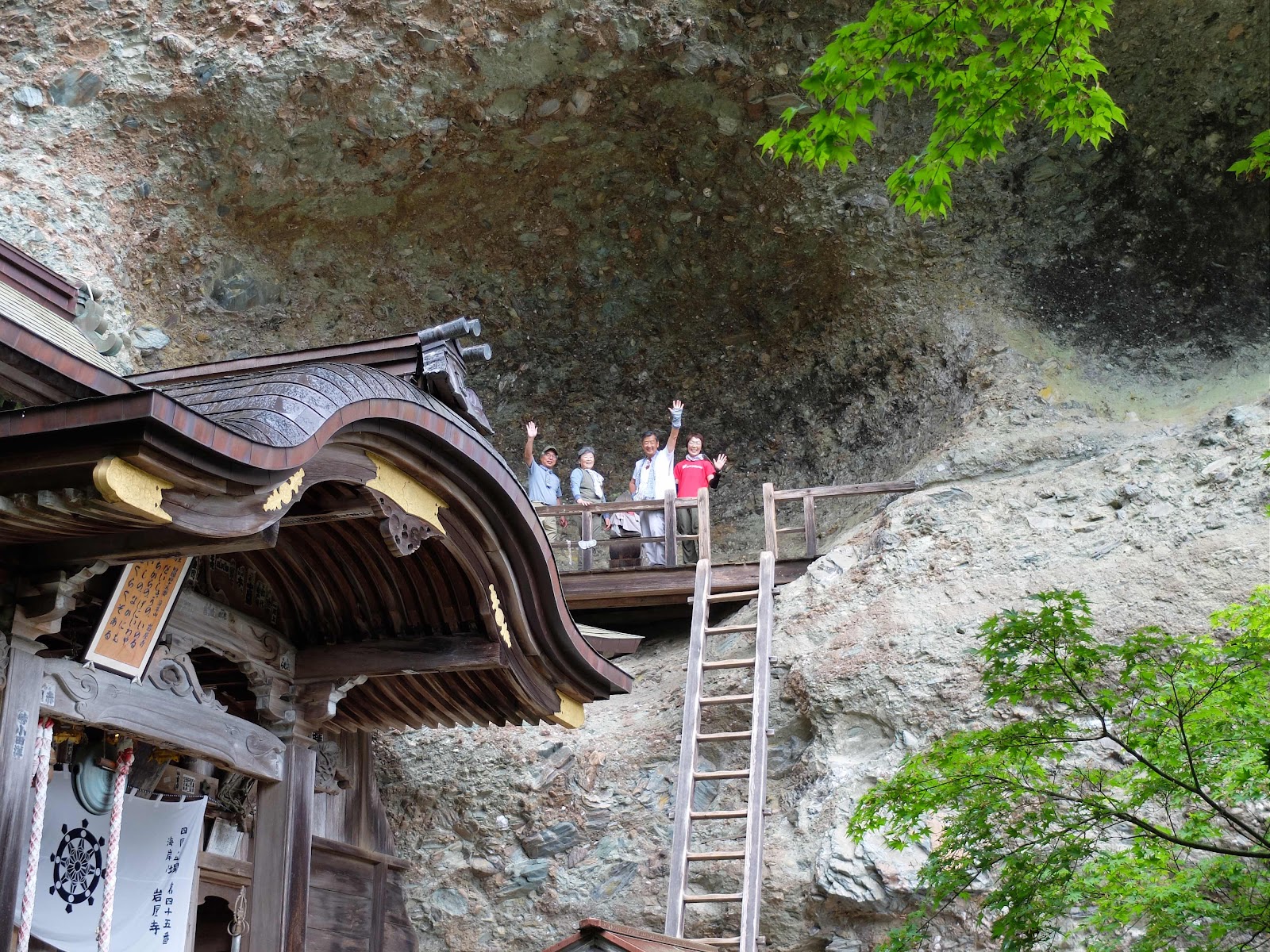
Ruth and I are both feeling a bit sore from our exertions over the past few days, so we opted to spend two nights at the same accommodation and do an easy out and back to Temple 45 today. This is an attractive “nansho” (difficult place) temple without road access.  All visitors have to climb a steep access trail to reach the Temple, and it was obviously a significant physical challenge for many of them.  

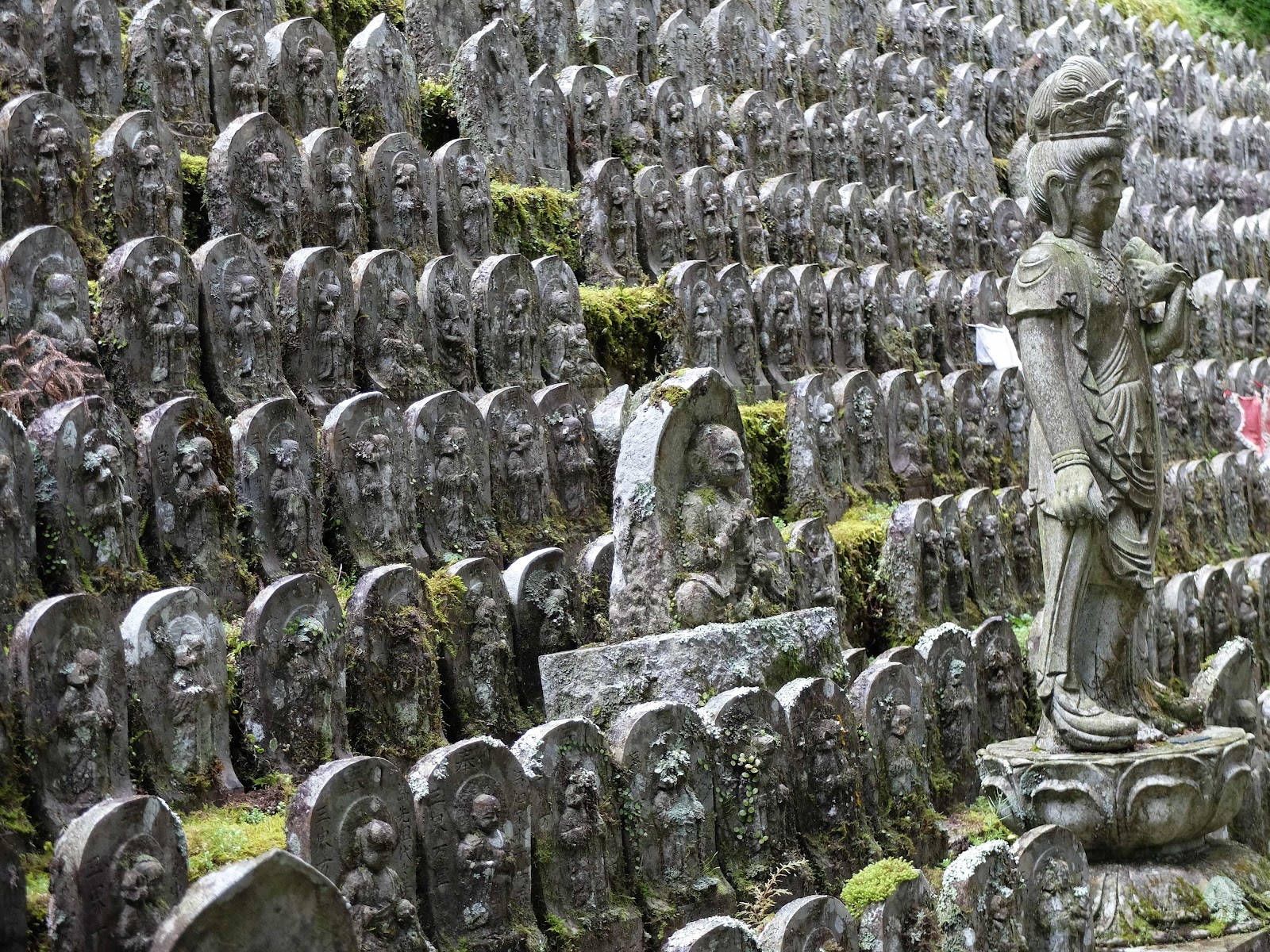
Temple 45 is known for its Seriwari-zenjo, a place where Kobo Daishi trained. This is a circuit of 36 stone statutes set on a slope in an ancient cedar forest and connected by steep and rough trails.  Since we had time to spare I completed a circuit of this Buddhist boot camp.  My legs and lungs felt good, but my karma is still flabby and wheezing.  Fortunately we still have the second half of the pilgrimage to get that into shape.


Saturday, May 11, 2019

Fair Weather means Time to Camp: Temples 41-43


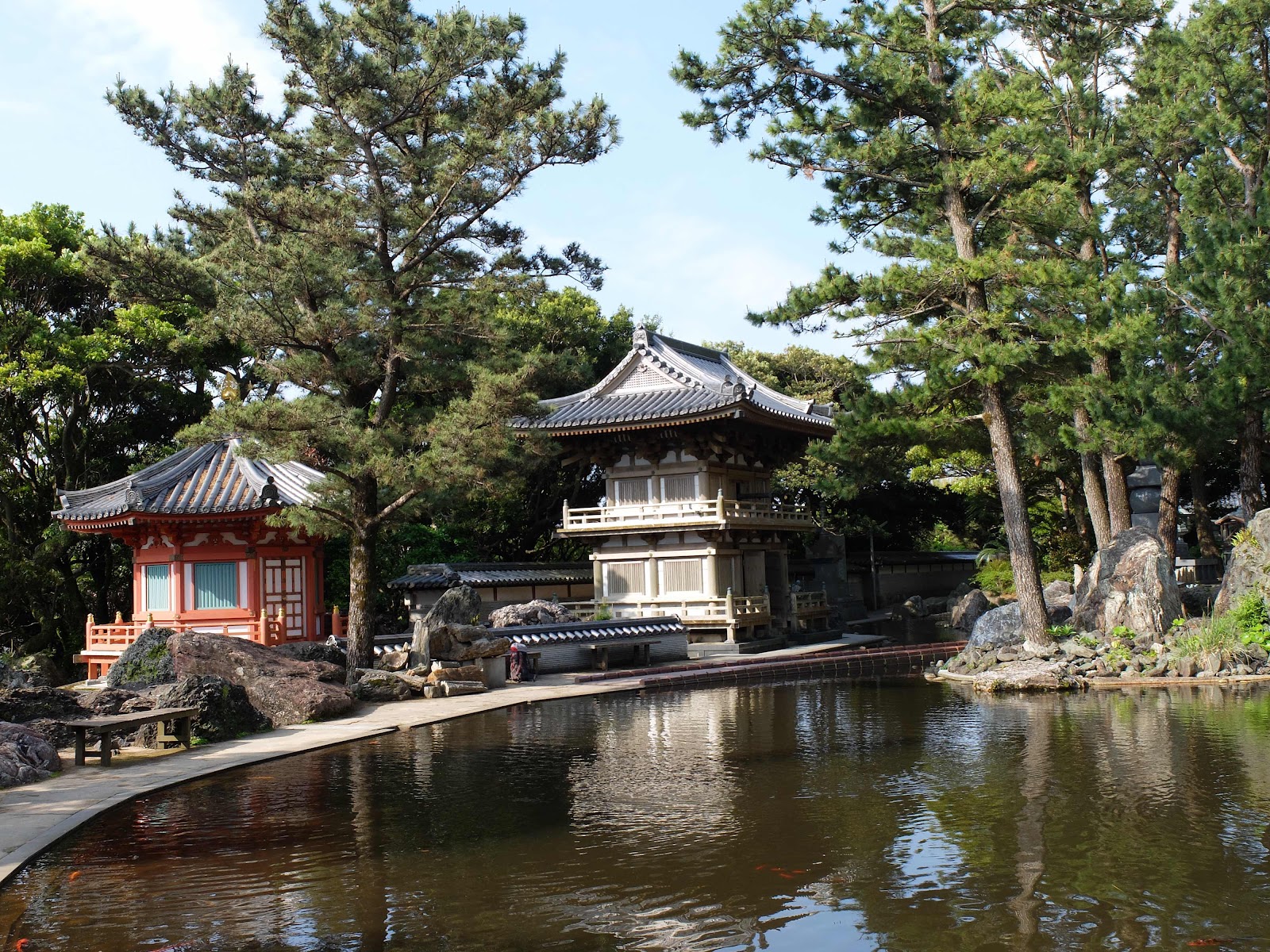
Ruth: It’s not that I don’t like ryokans (traditional Japanese inns), but we have stayed in so many lately that I have been wanting a bit of a change. In addition, we keep passing perfect camping spots. Camping in Japan is quite a treat if you manage to find the right spot. Sometimes they are not at the right distance and you just have to admire them wistfully as you pass them by. Yesterday, after passing a lovely park at midday, we pressed on towards our destination where a camping spot was marked in our guide book. We found the only place that resembled a camping spot, but it didn’t appear to have any public facilities associated with the tent platforms. After a few inquiries, a family staying in one of the adjacent rental cabins let us take a shower in their cabin. Once again I am blown away by the generosity of the people on Shikoku. Clean and refreshed we went to the park below to camp near a washroom block. It was a beautiful spot next to a pond full of lily pads and koi. 


The last three temples have been lovely places to sit and relax while I wait for Gord. 

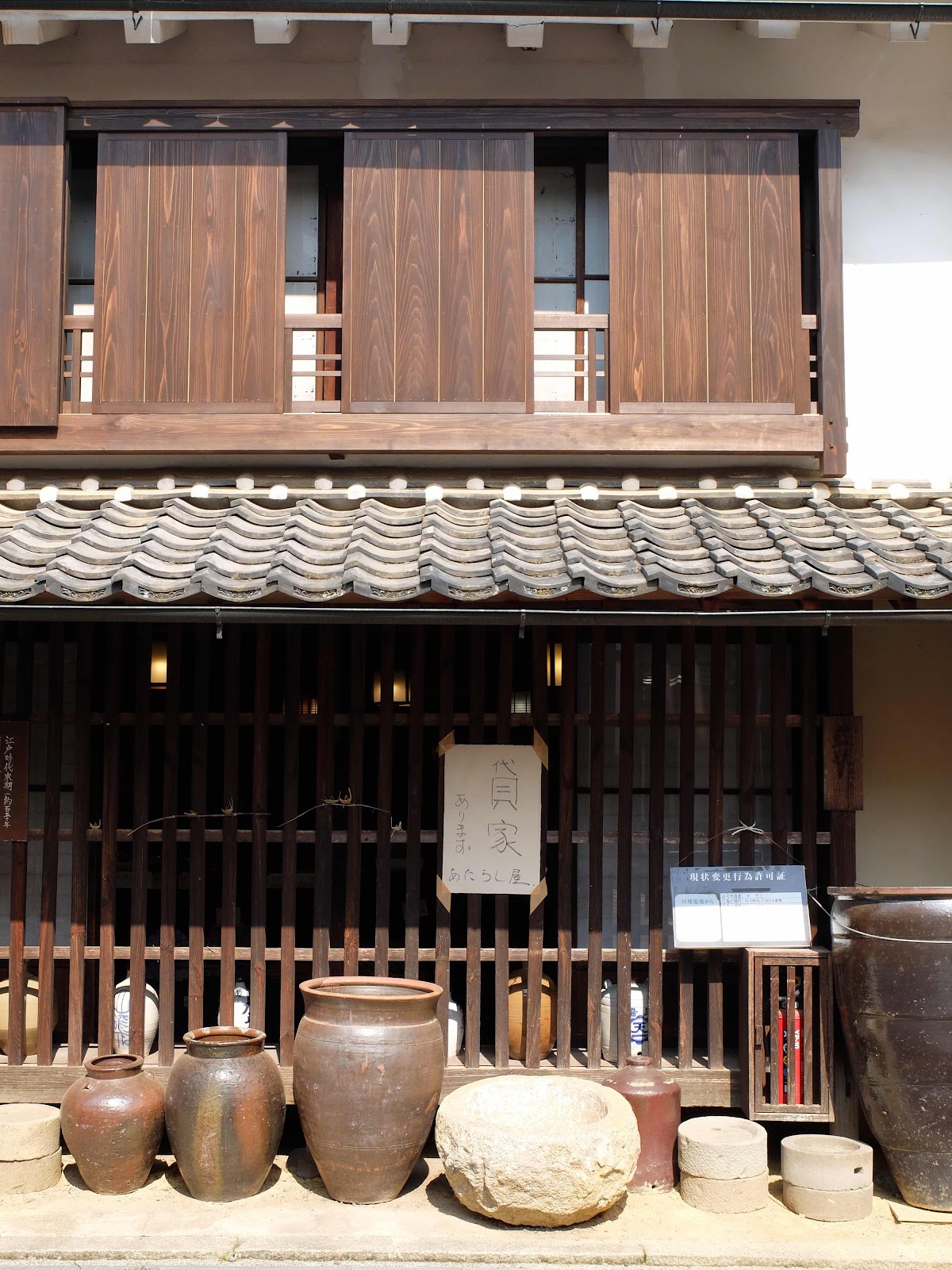
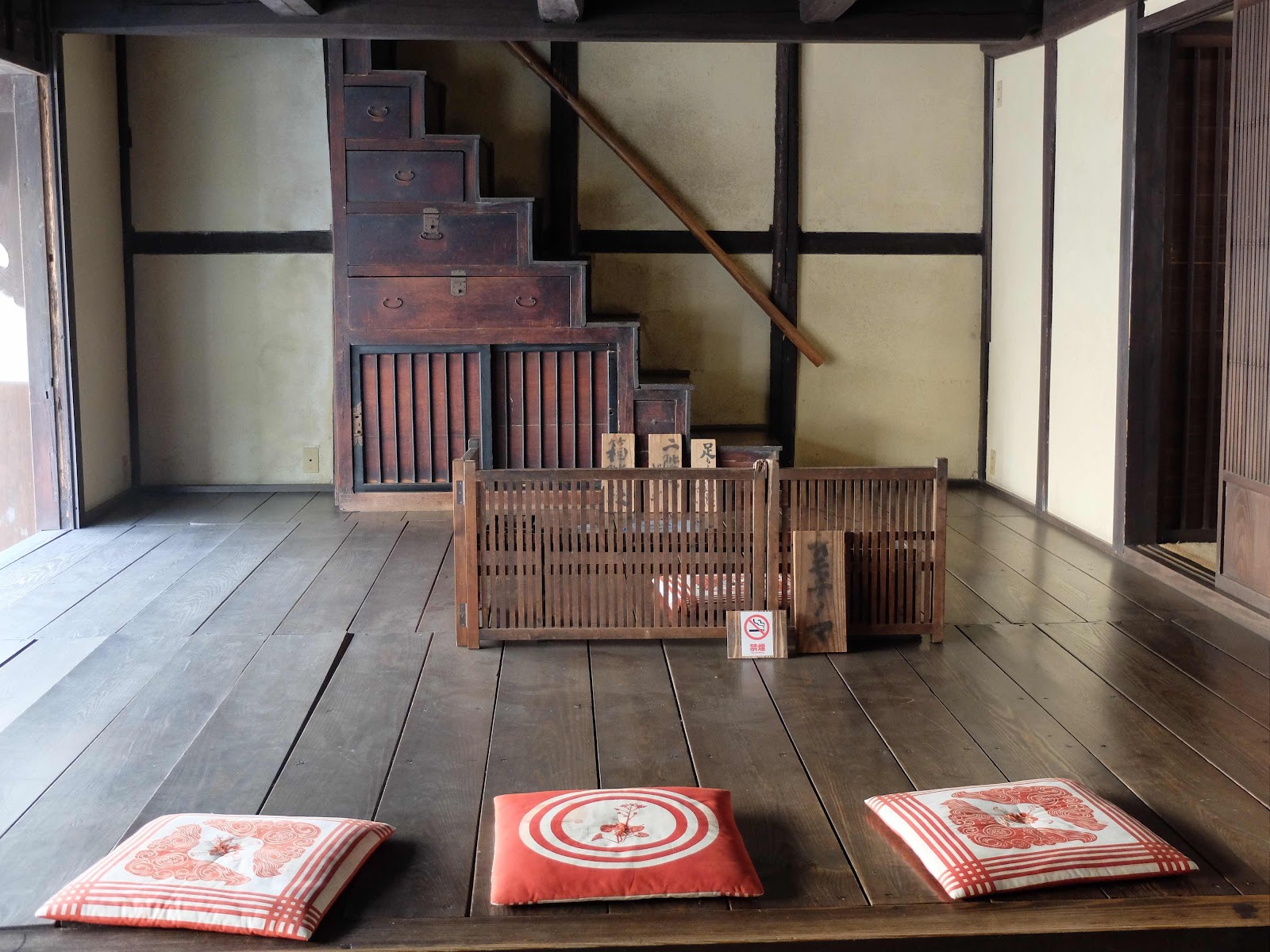
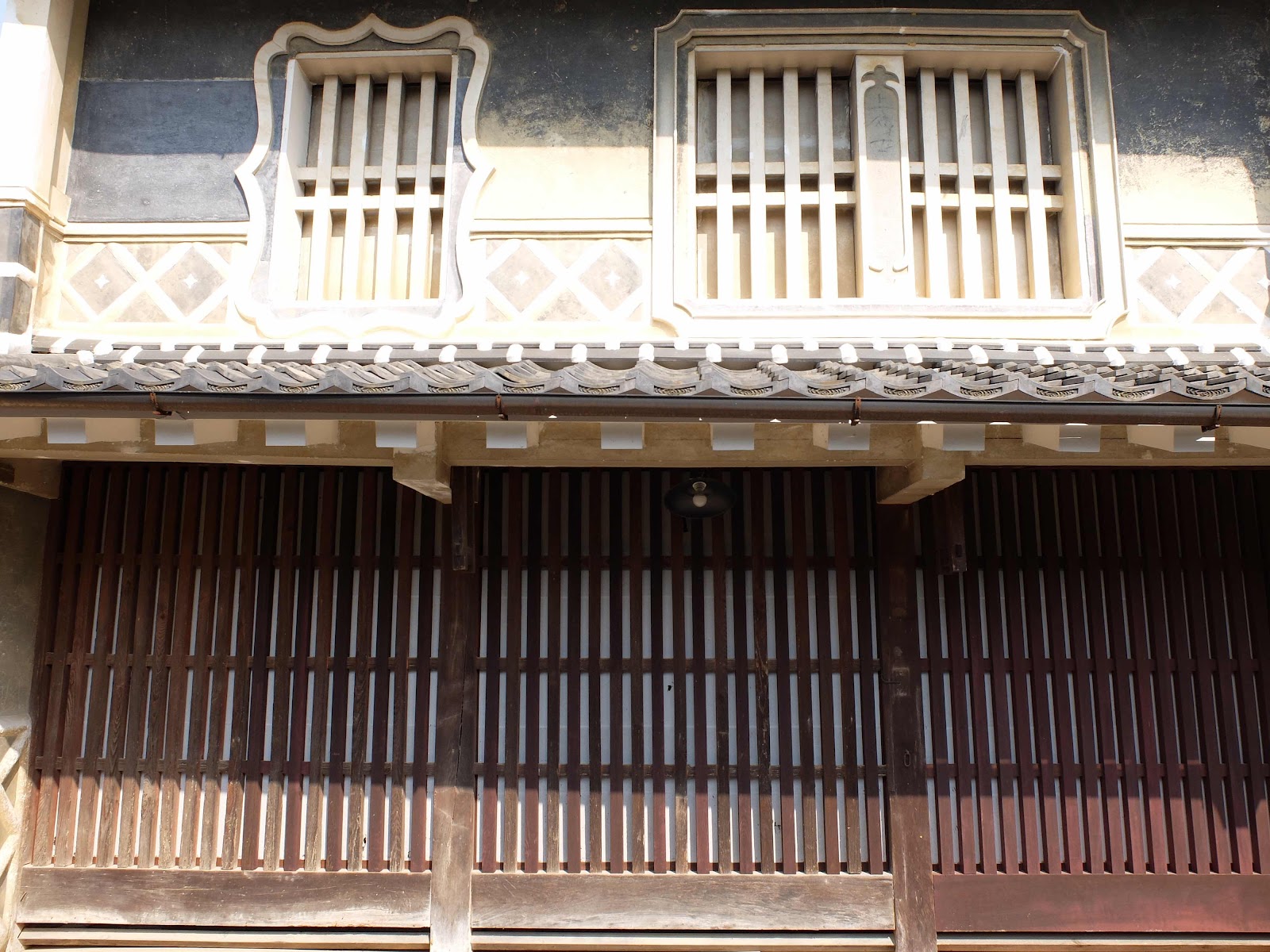
We had an unpleasant ride and walk through six kilometres of big box stores and car dealerships around midday today in the suburbs of Ozu.  It was about 26 degrees, and the only shade was at one spot where a motorway crossed above us.  Things improved immensely when we arrived at our destination accommodation, which is located on a long street of heritage homes in Uchiko.  Some of the houses are more than 200 years old, and they have been well-restored and maintained.


Tuesday, May 7, 2019

Approaching Enlightenment: Temple 38


Ruth: I can feel that we are getting closer to the edge of the Kochi Prefecture, and with that the end of the period of asceticism and the beginning of enlightenment.  Our routes for the past two days have been varied and absolutely beautiful. We have moved from the rocky headlands and beaches of the southwest tip of Shikoku into the mountains again on a tiny road snaking through the trees.  The frog chorus constantly encourages us forward on our path. 


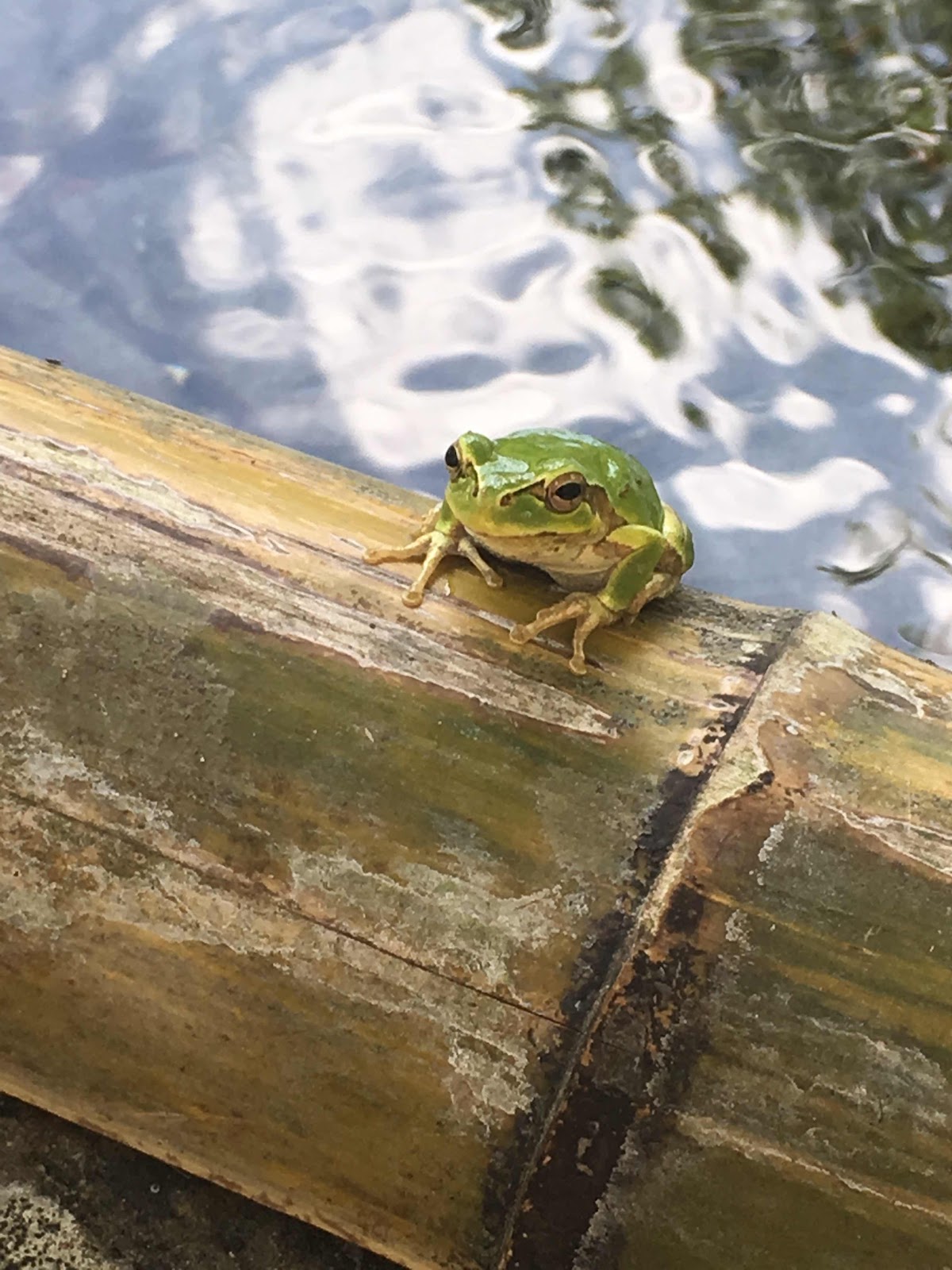
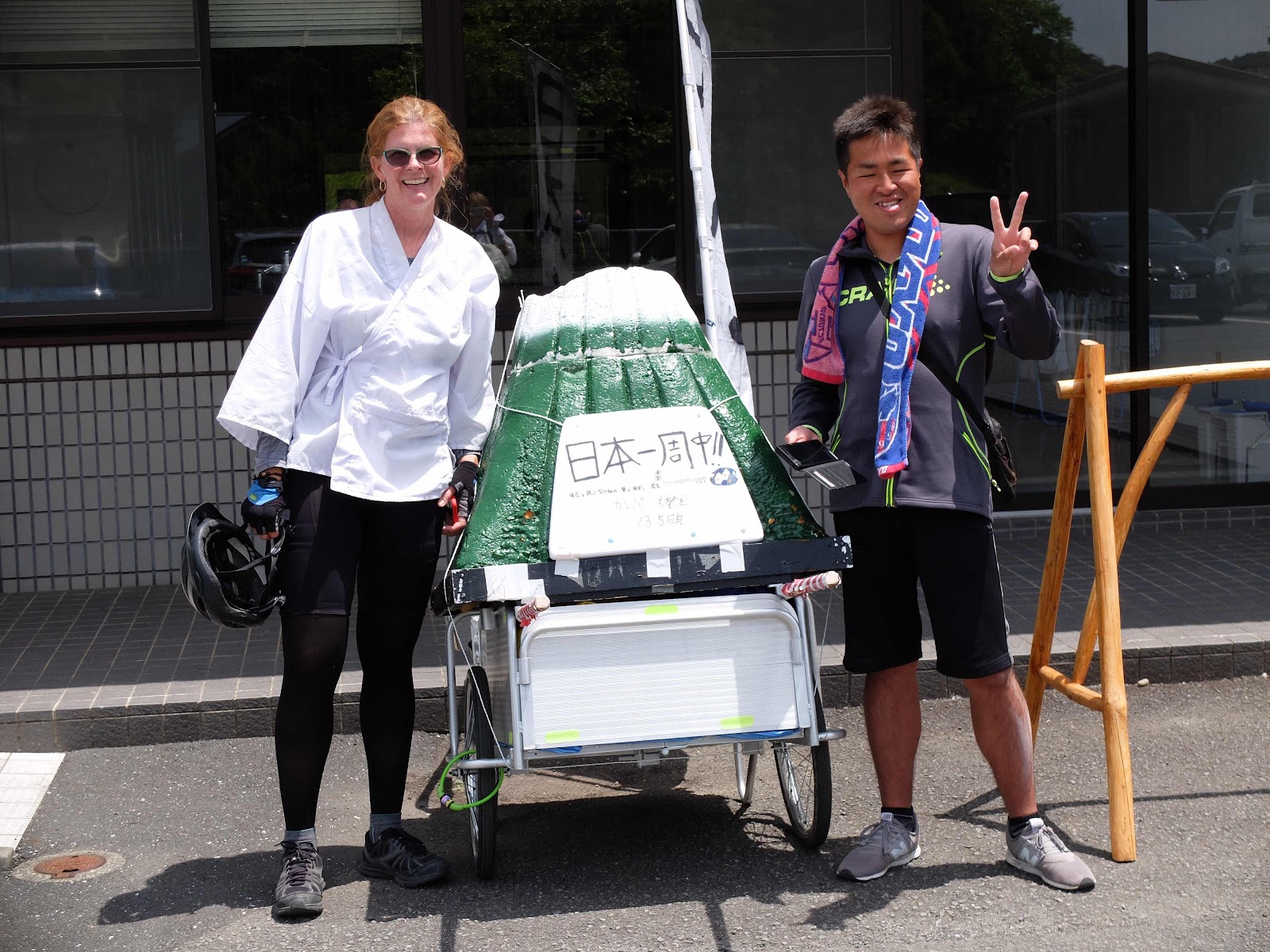
Enlightenment must be just around the corner because, after all, there have been signs. Like finding a frog waiting for me in the bathroom at a rest stop. After Gord gently picked him up and placed him in a pool of water, I’m sure he winked at me and wished us well. Or the emerald green beetle that got under my shirt and pinched me repeatedly, pushing me forward until I pulled him out and let him fly away. And surely when you see a man pulling a volcano it has to mean something! 


Our period of suffering through asceticism has been an important part of the journey. As Thich Nhat Hanh explains:

“With understanding and compassion, you will be able to heal the wounds in your heart, and the wounds in the world. The Buddha called suffering a Holy Truth, because our suffering has the capacity of showing us the path to liberation. Embrace your suffering, and let it reveal to you the way to peace.”

(From: Thich Nhat Hanh, The Heart of the Buddha's Teaching: Transforming Suffering into Peace, Joy, and Liberation page 5.)

Fingers crossed.