Translate

Saturday, April 20, 2019

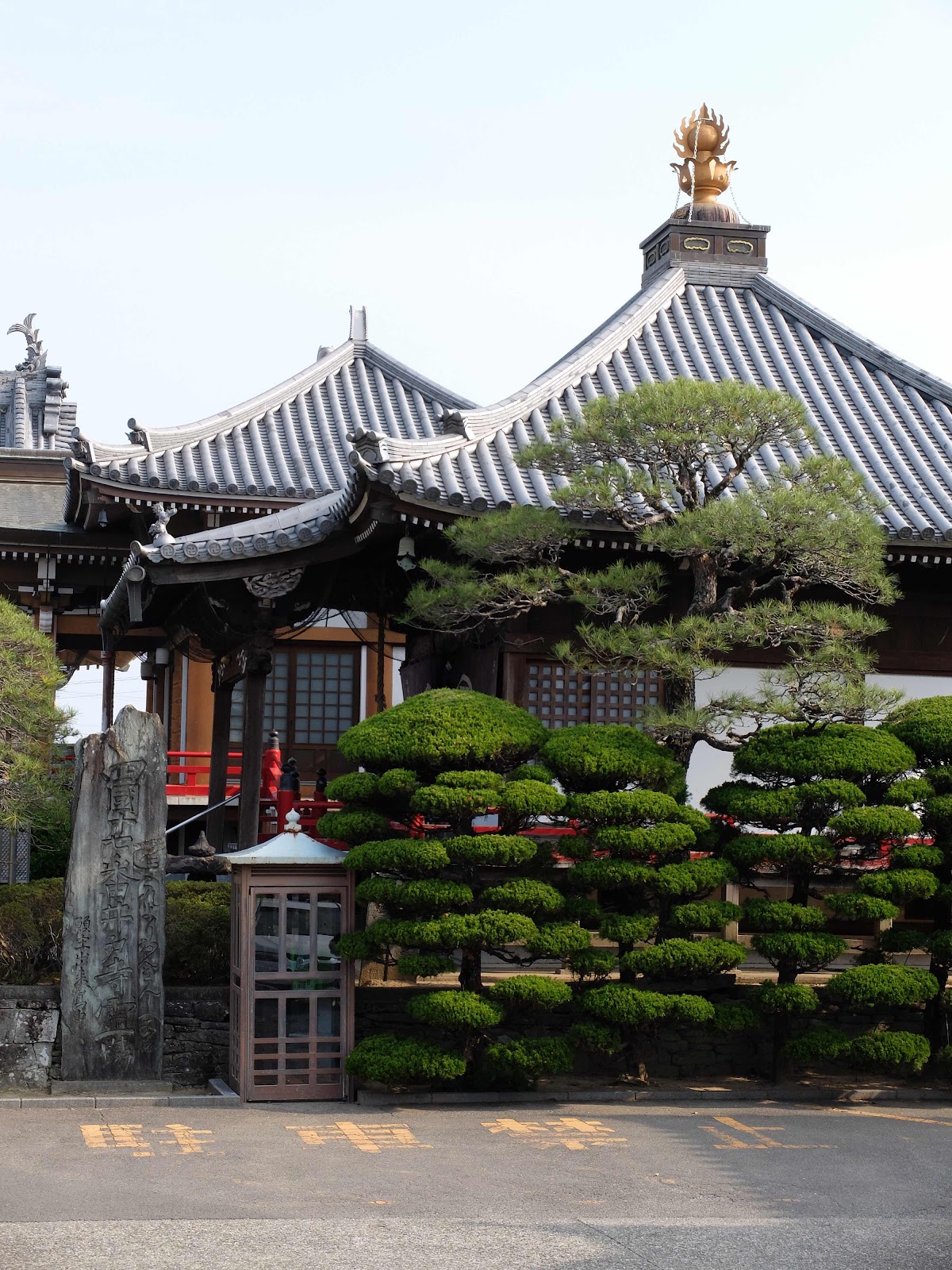
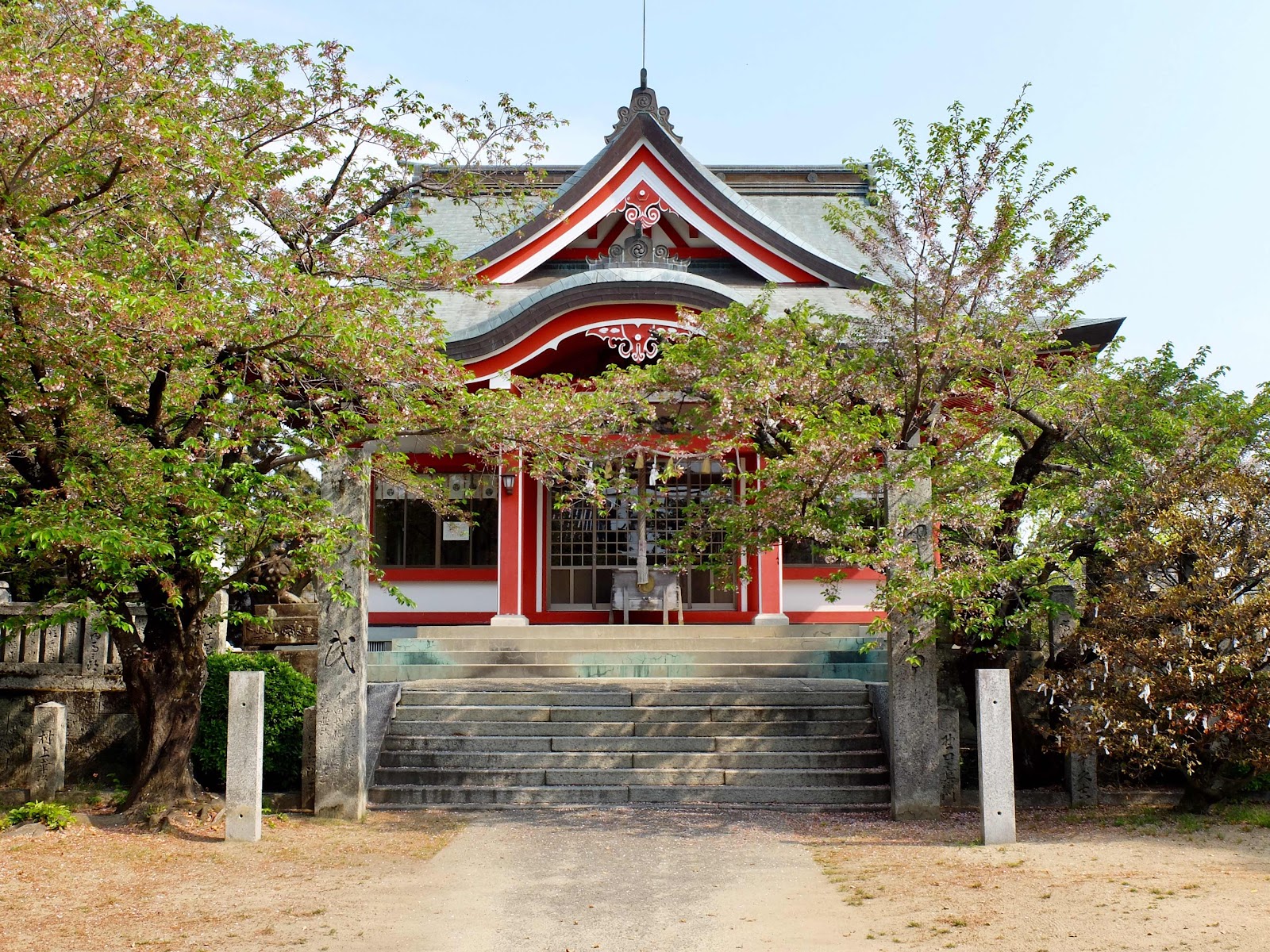
Henros: Temples 19-21


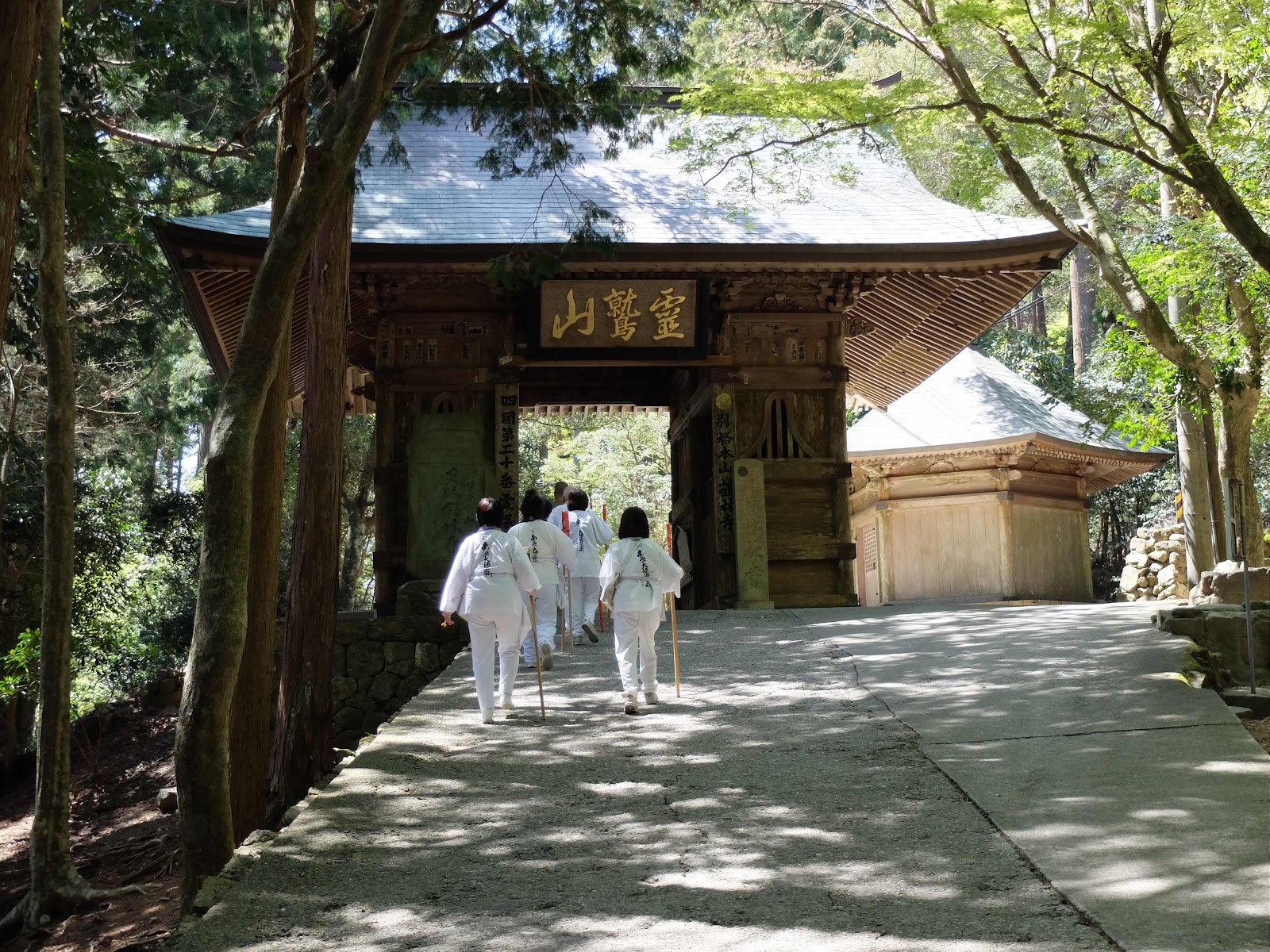
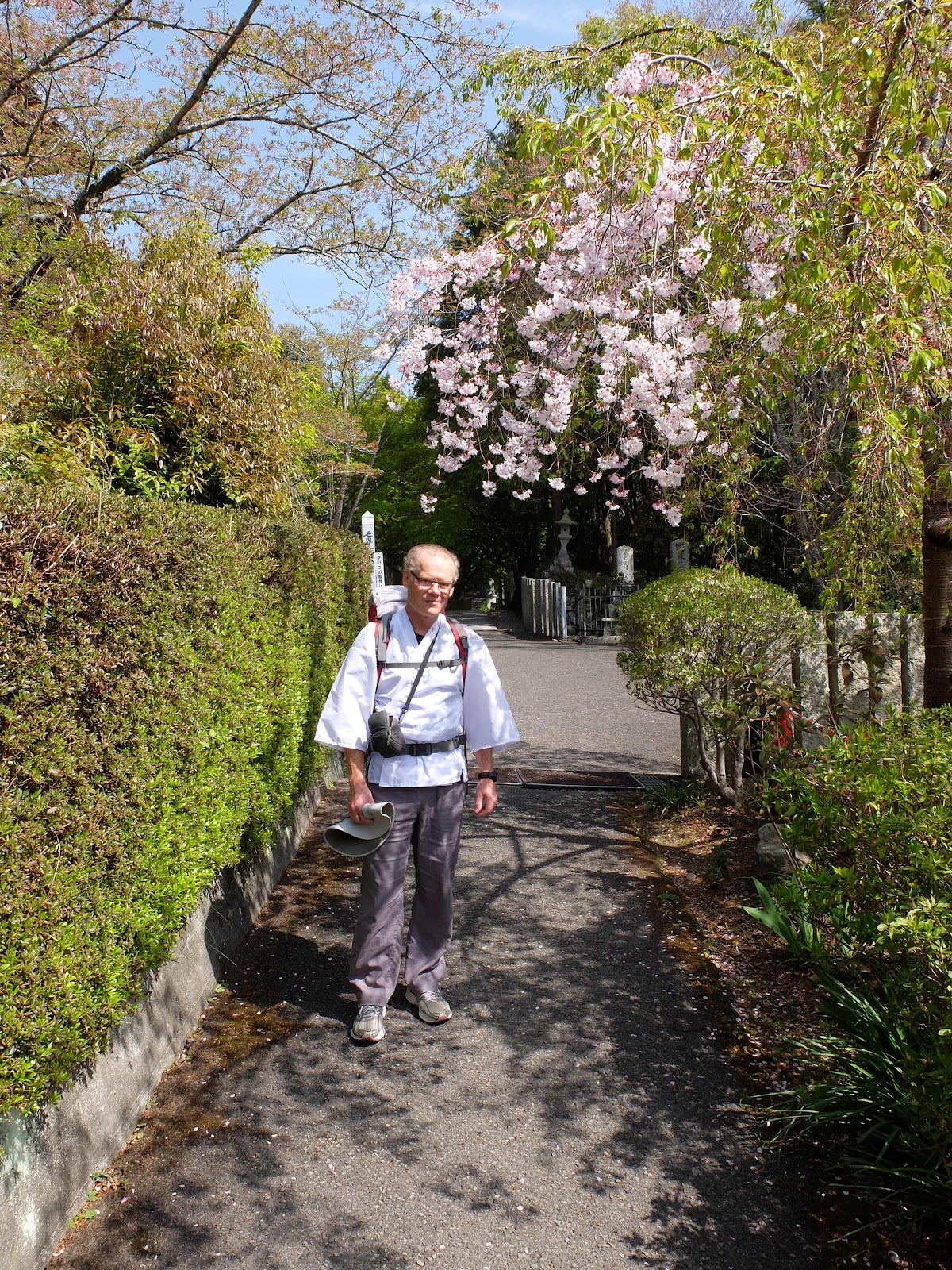
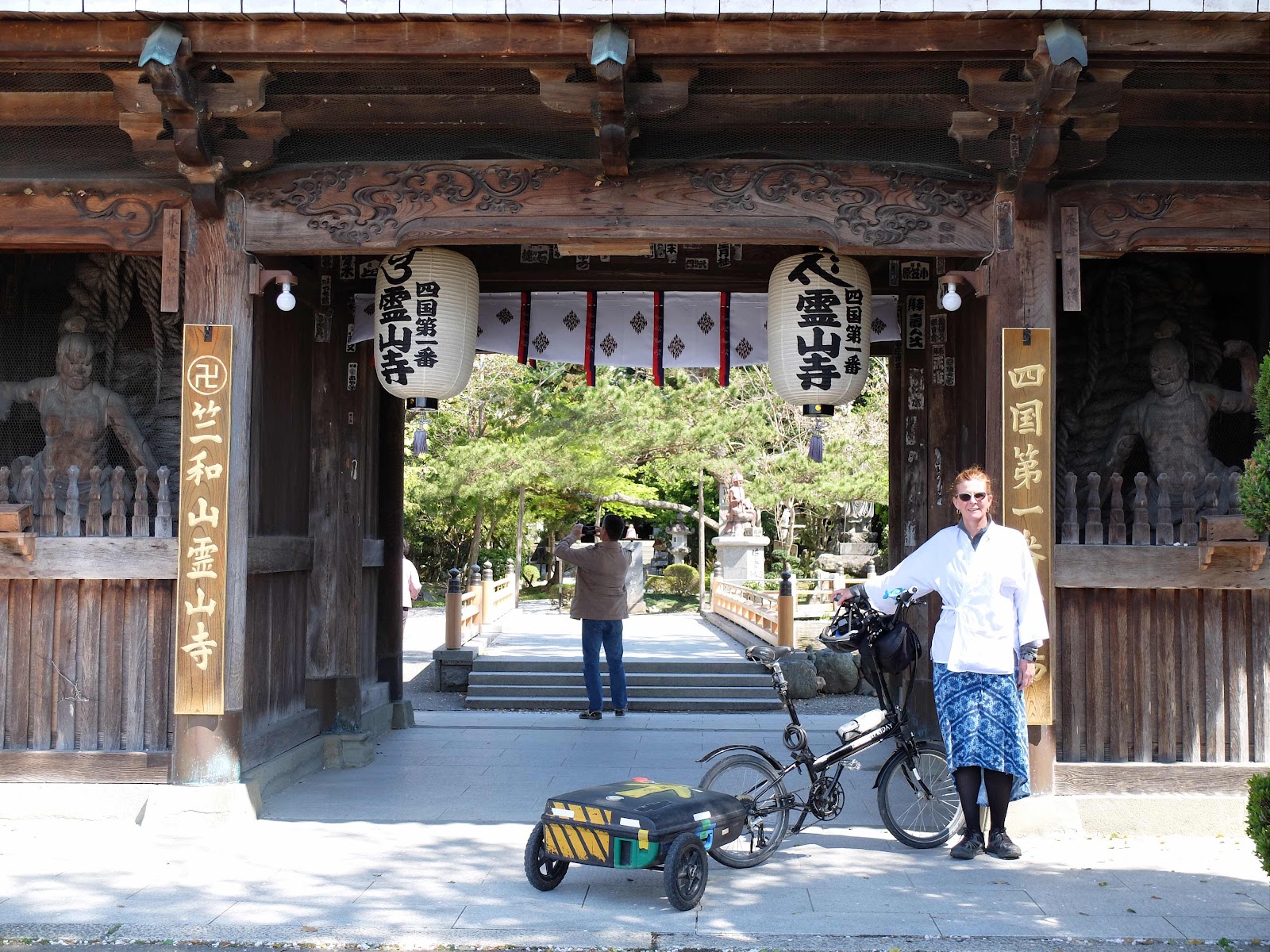
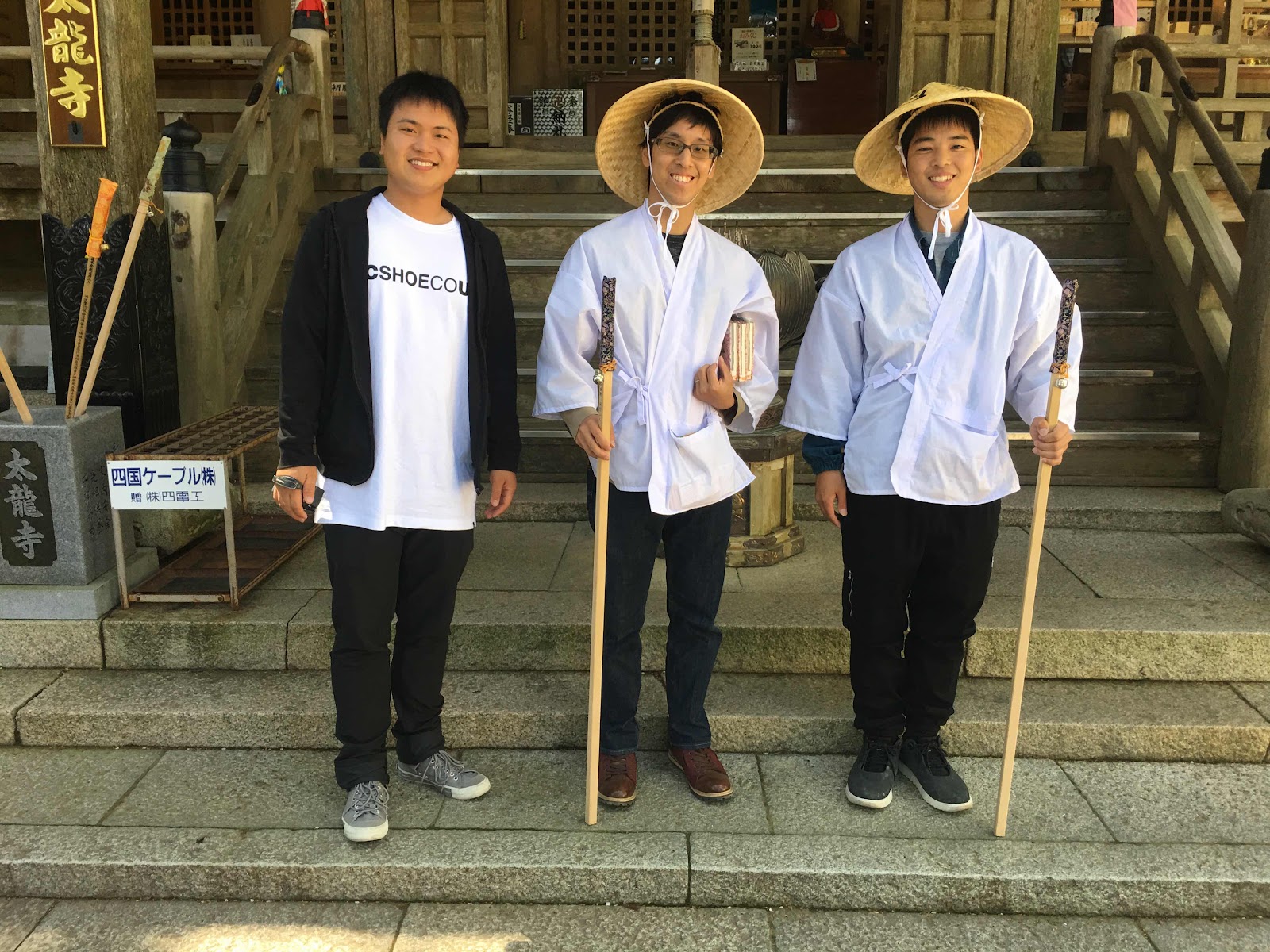
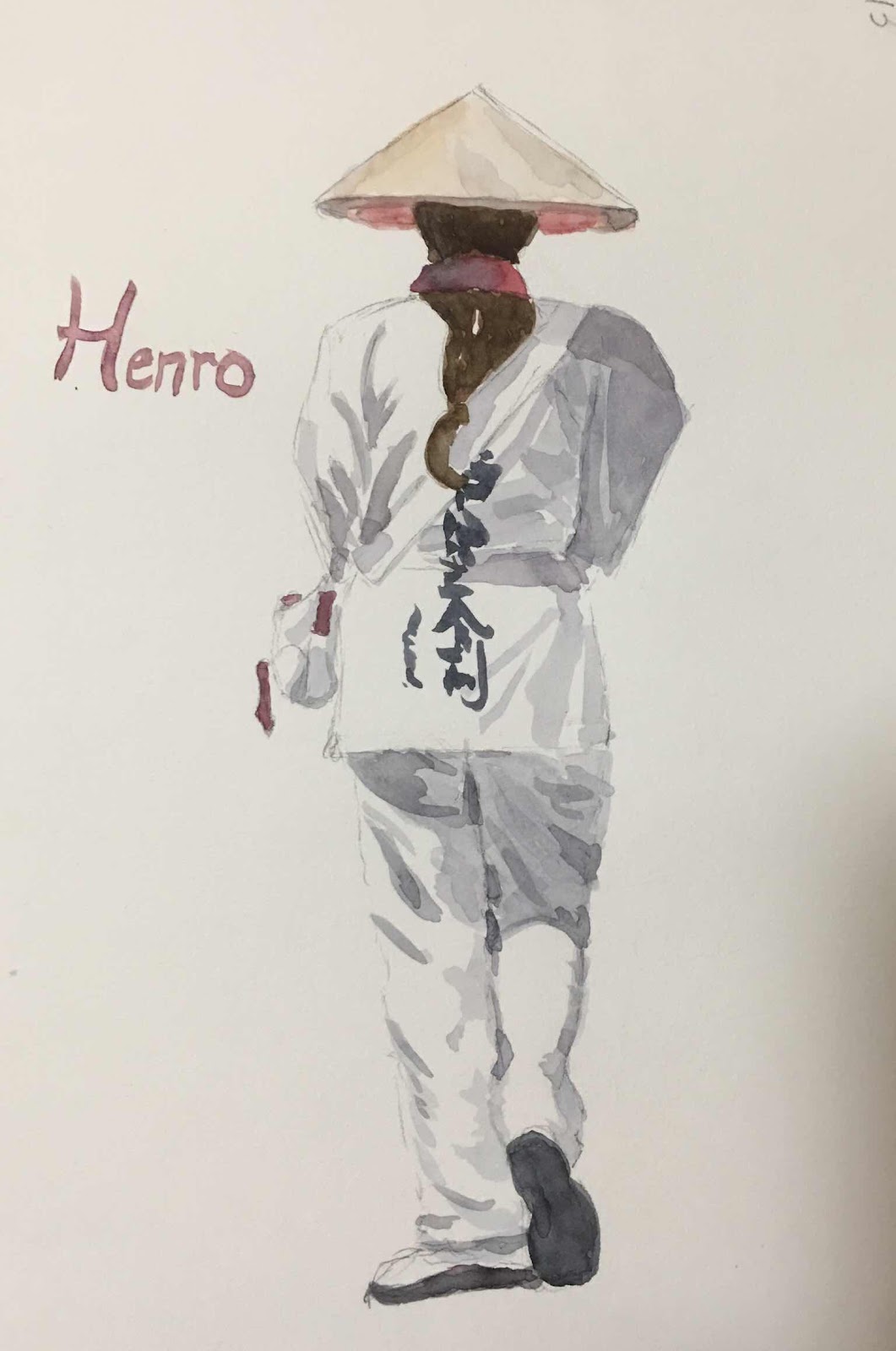
Ruth: Each morning we put on our white jackets and become  two of the many Henros (pilgrims) making their way to the temples. Most henros are Japanese, who primarily make the journey by car or by tour bus. We are part of the pulse of those walking the route. Like the Camino, we are often meeting some of the same people at the temples and then again at our guesthouses. Most are Japanese, but there is a sprinkling of foreigners. Few of the Japanese walkers have time to visit all 88 of the temples in a single trip, so they do it in sections. Yesterday and today we were saying goodbye to a few familiar faces as they returned home to resume their regular lives. 

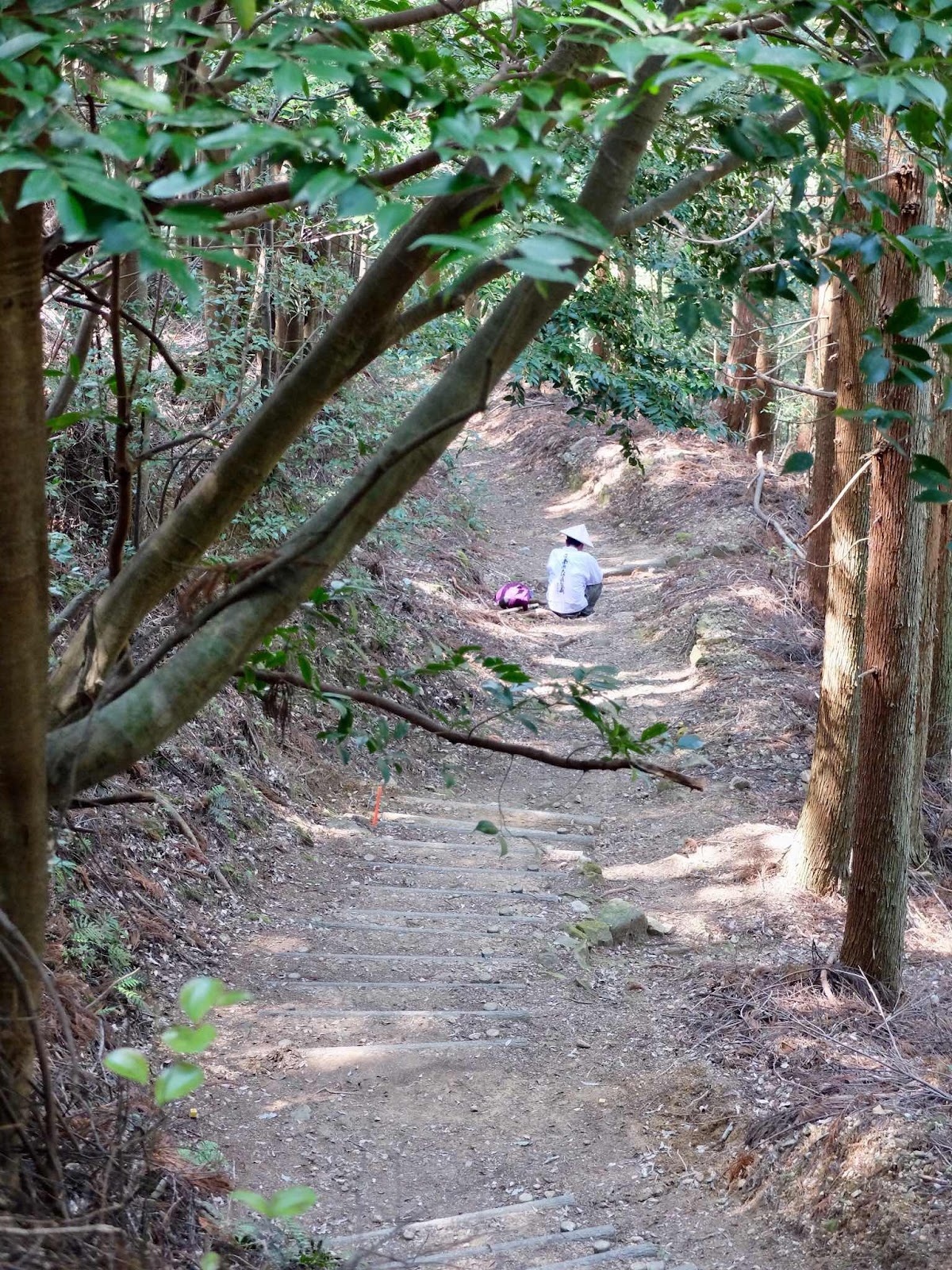
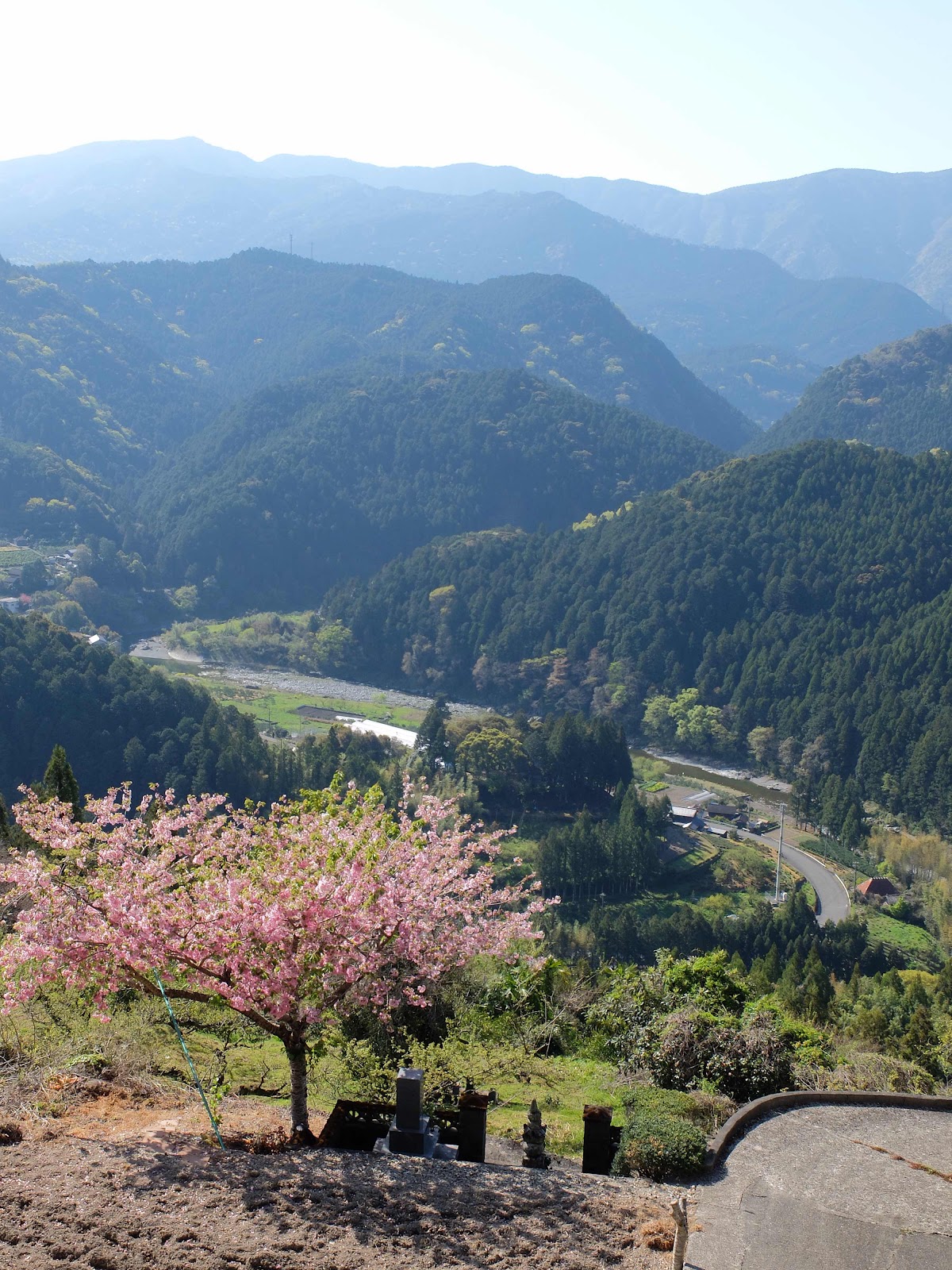
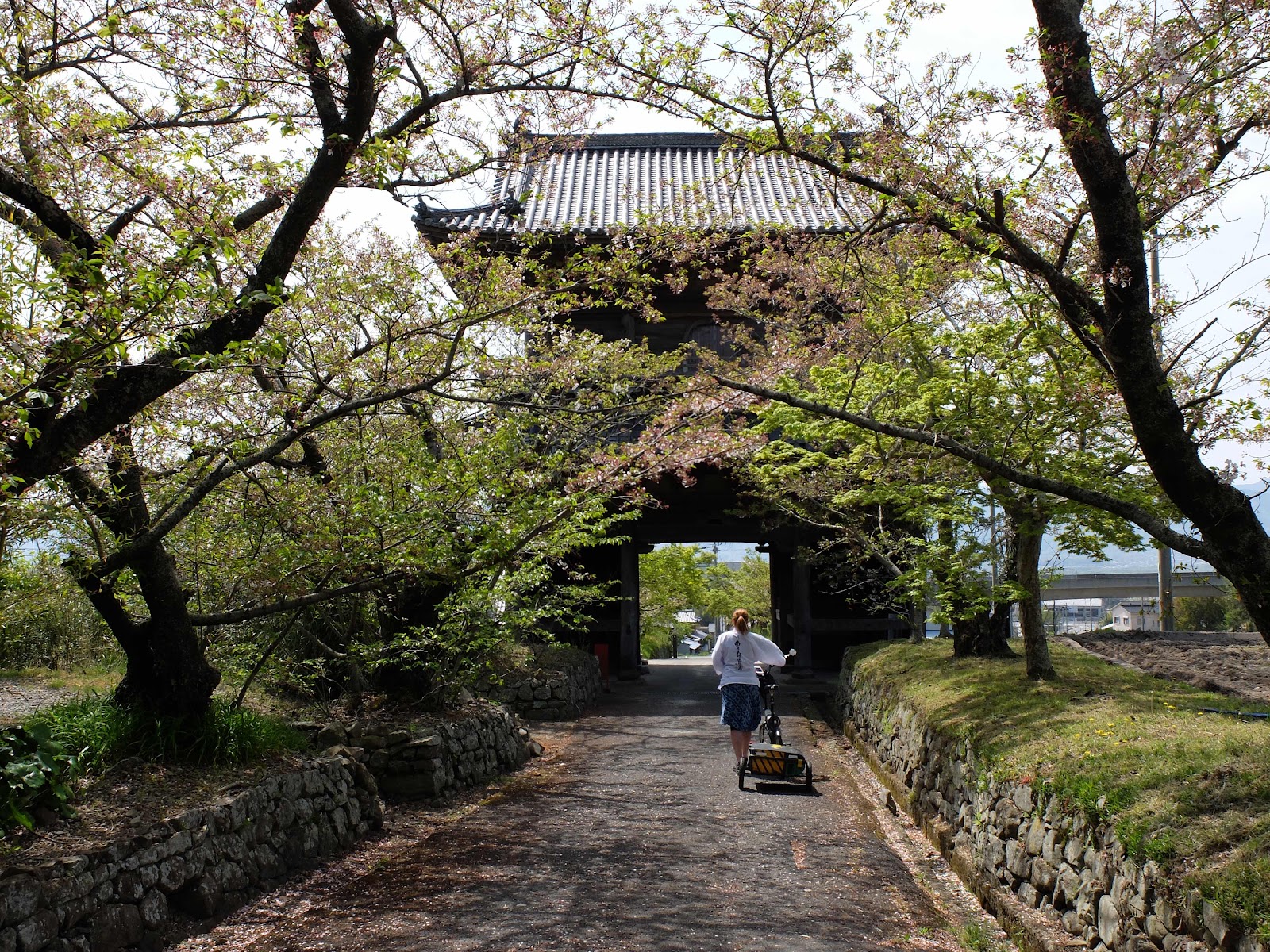
Today I climbed up 400 meters to temple 20. The last 5 kms of the climb was the steepest road I have ever pulled my Bike Friday up with a loaded trailer. It was such a tough ride my arms are tired! It was, however, very empowering to know I can manage the over 15% grades. Perhaps no more taxi rides for me. 
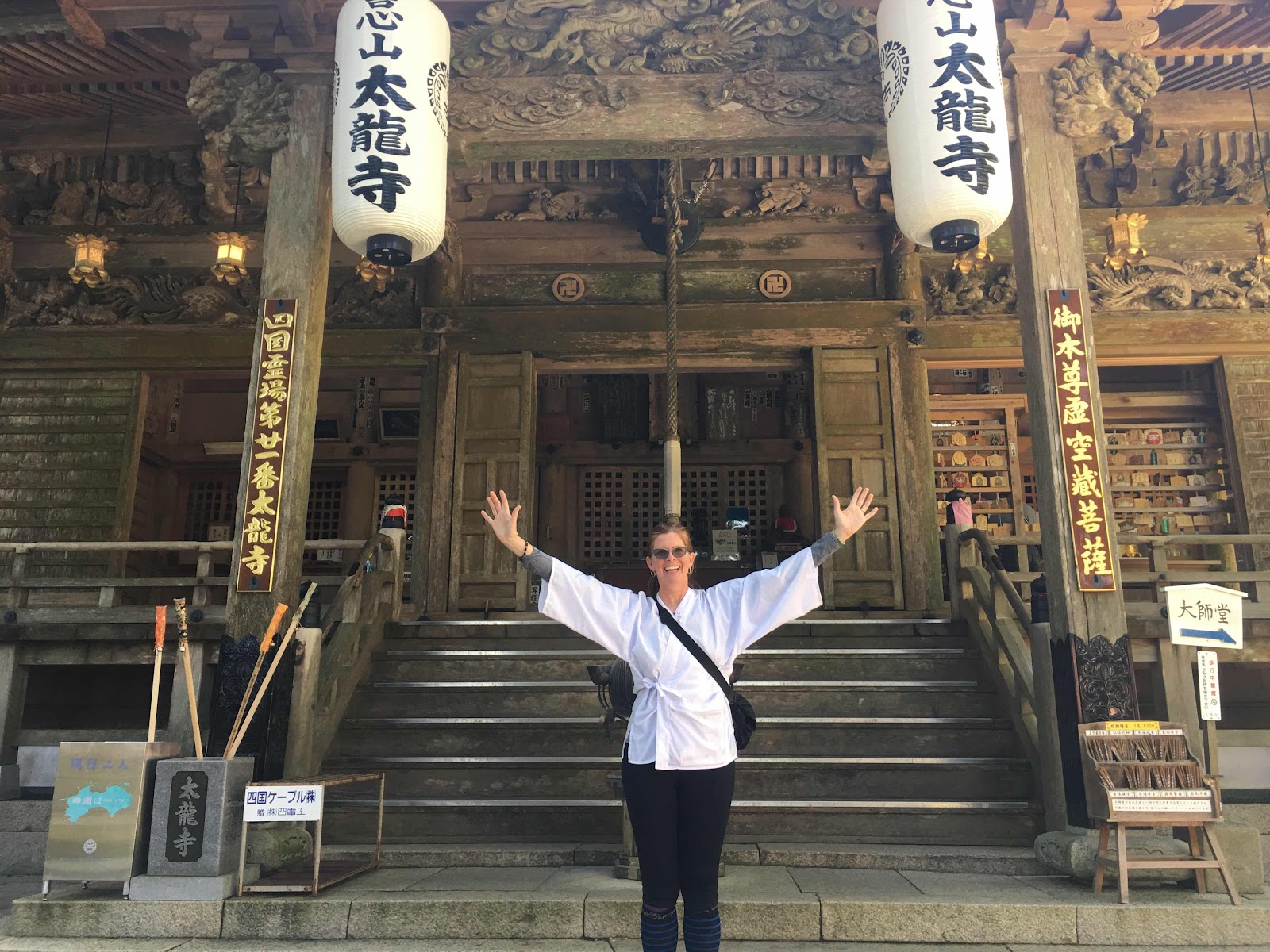


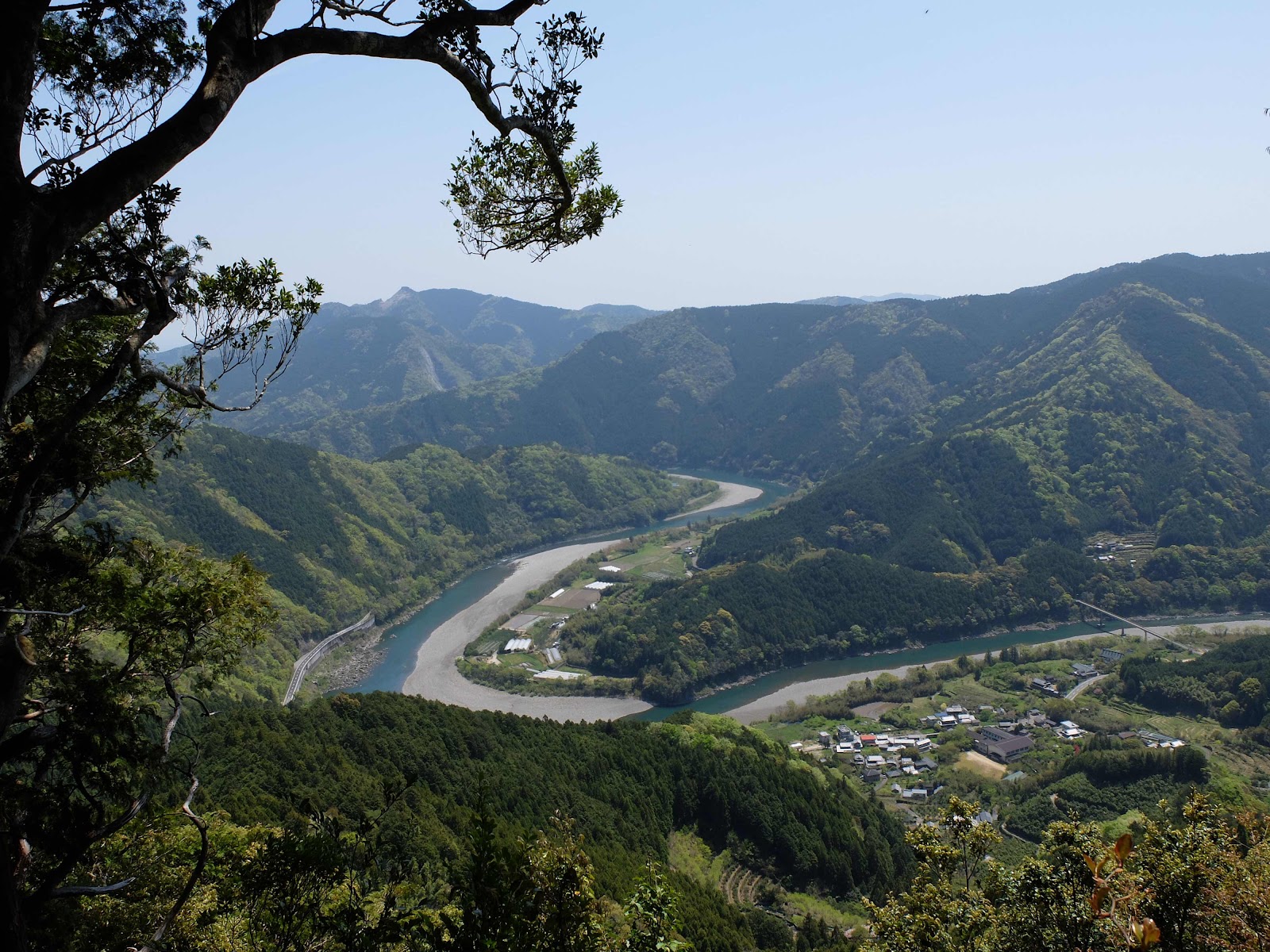
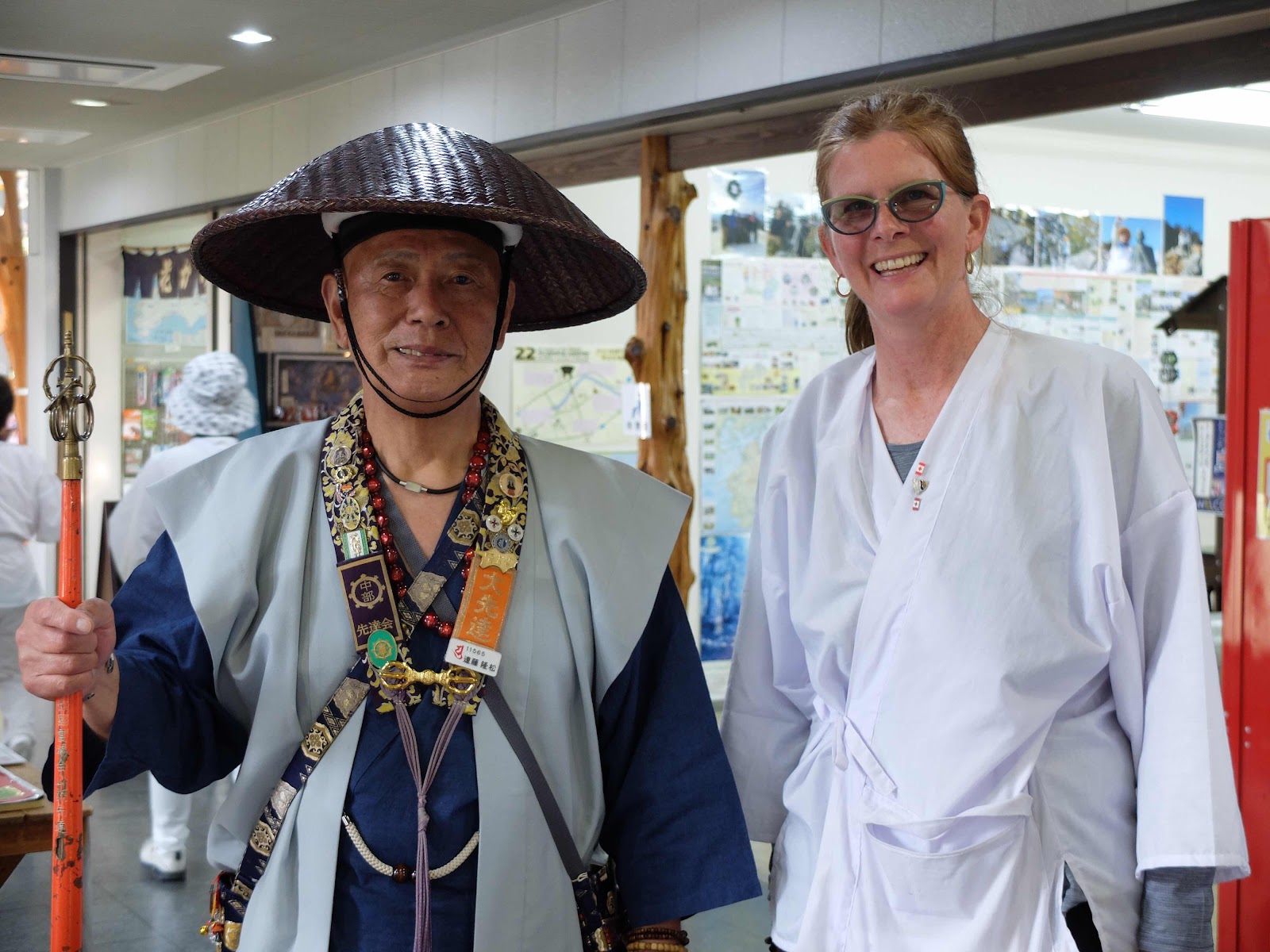
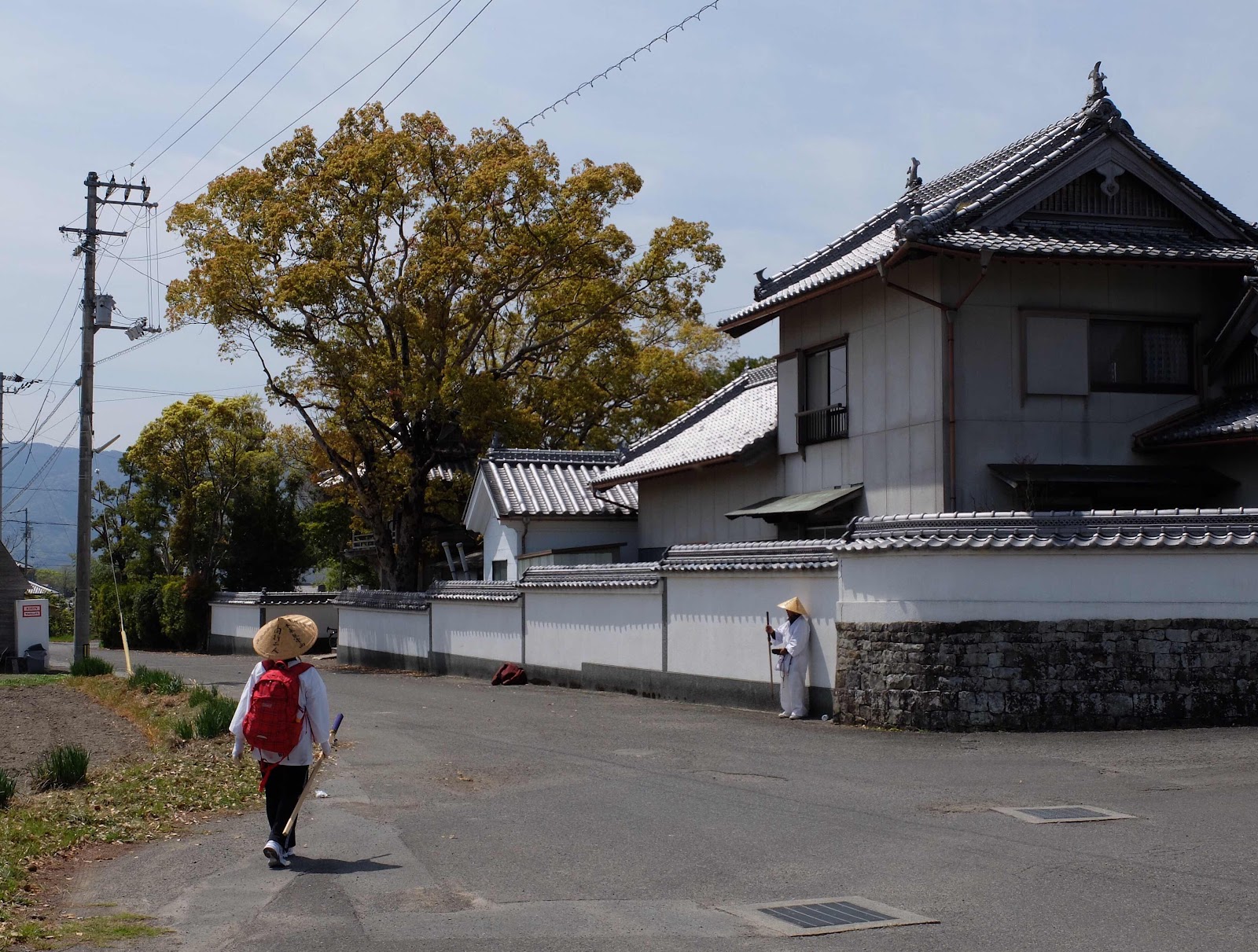
After temple 20 I descended down to the river valley and followed it to the base of the ropeway (gondola) that goes up to temple 21. On the trip down this henro gave us a brocade name slip, indicating that he has made the entire journey over 100 times. I guess when you do it so often you can justify having an extra special henro outfit made for yourself. 


Thursday, April 18, 2019

The things we should have left behind: Temples 17-18

Ruth: It’s strange to be on day five and be exactly where we started: in downtown Tokushima. The first 17 temples are in and around Tokushima, so we have slowly been circling around the surrounding foothills. 
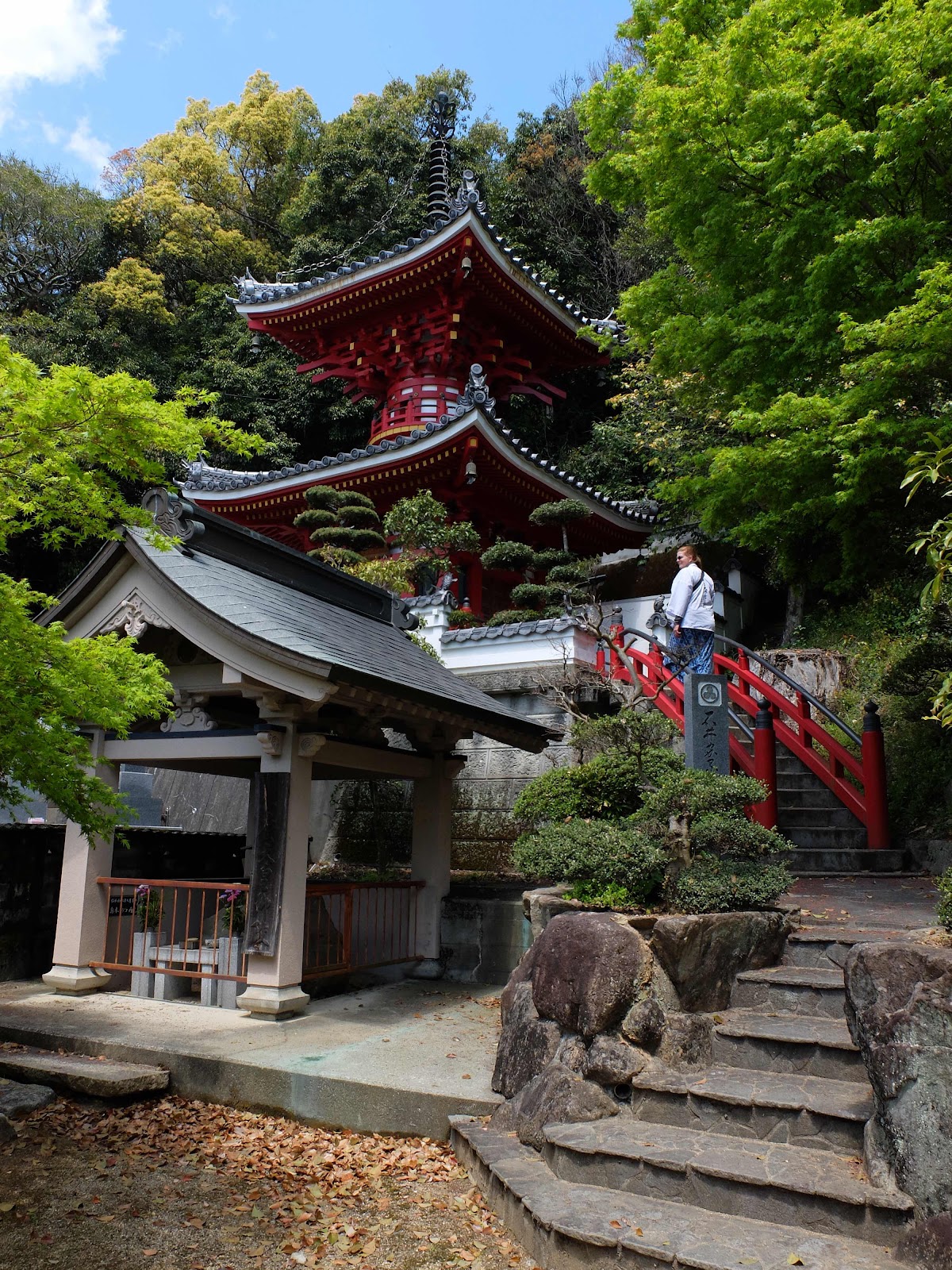


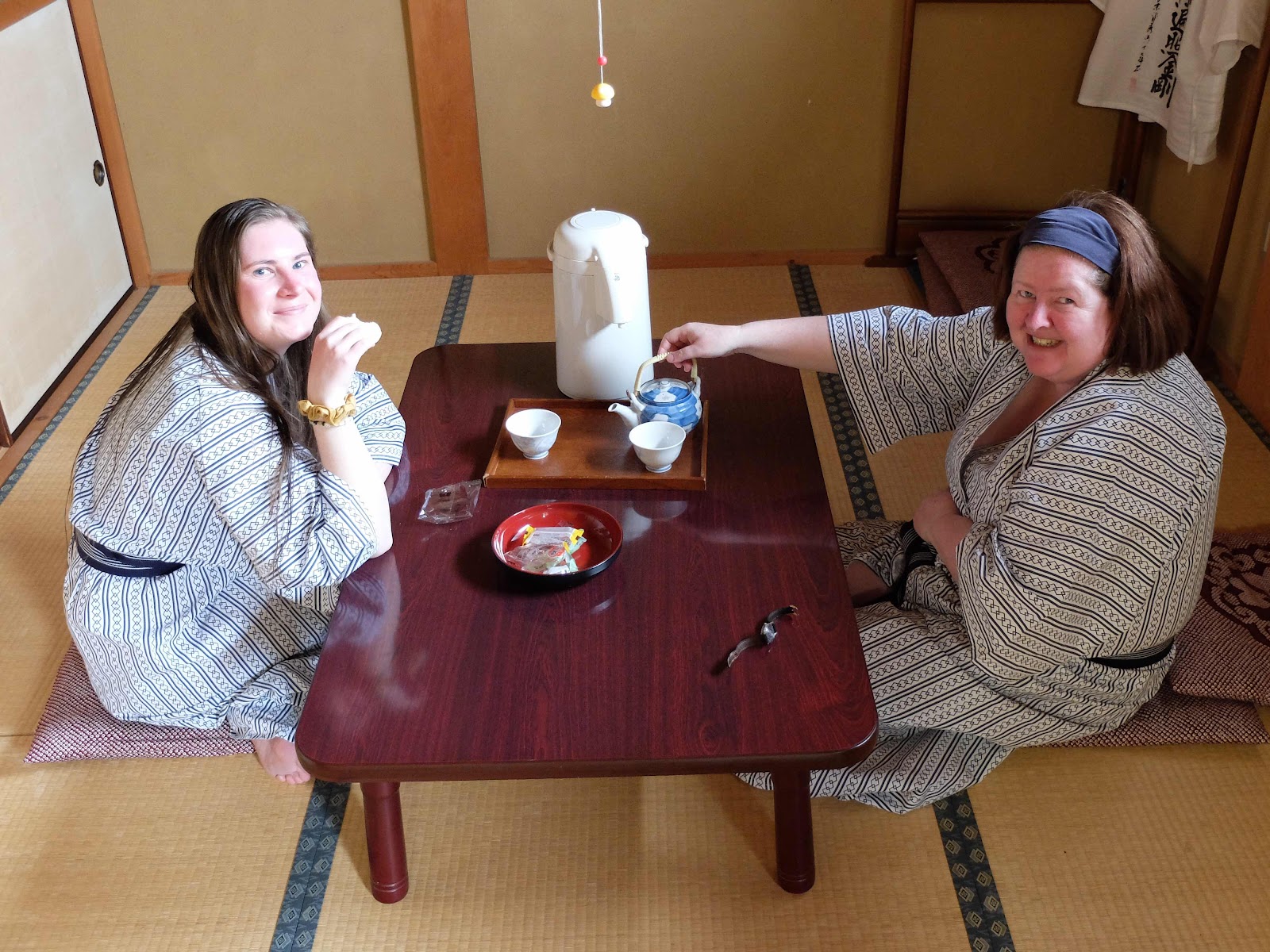
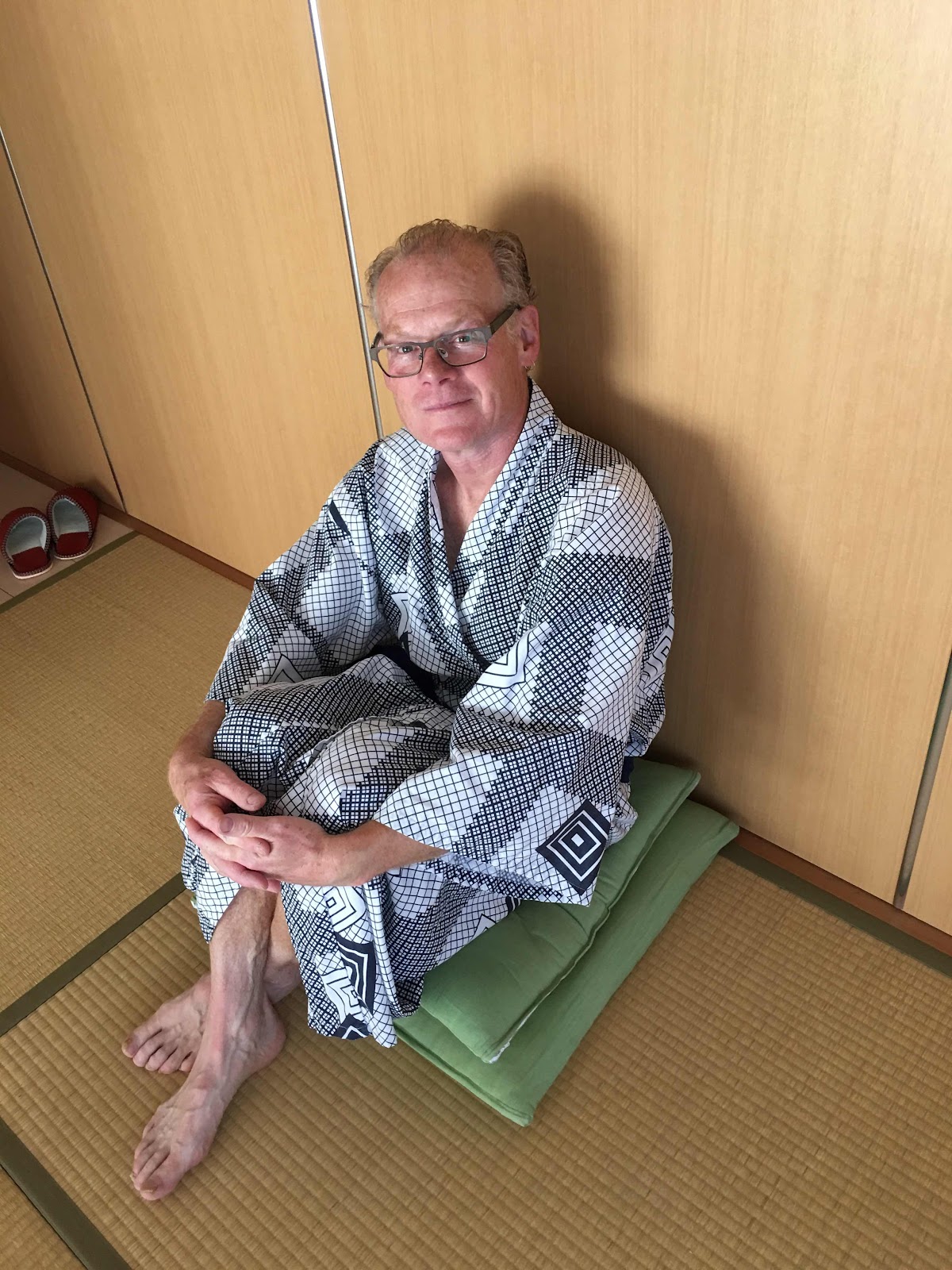
It seems important to write something about what not to pack for the Shikoku pilgrimage. My friend Mary told me in advance that I wouldn’t need to bring much at all and I should have listened. The minshukus and ryokans provide you with shampoo, conditioner, toothbrushs and single use toothpaste and towels. Perhaps more importantly, they provide you with your evening wear in the form of a kimono. People head to dinner in these delightful robes making that second outfit completely redundant. In addition, the available washing machines and dryers allow you to wash every stitch of clothing you own each night if you need to. Gord and I brought so much clothing we are doing our first laundry on day 5, but we could have easily made do with a quarter of it. 

There are a few things I am very glad to have packed, however.  My ultra-lightweight camp chair gives me a comfortable seat at the end of the day. The rooms have traditional tatami floors with pillows around a low table. They are elegant, simple rooms, but there are generally no chairs.  I am always careful to set-up my camp chair on a pillow or futon to protect the tatami mats from marks. 

I am also very happy to have my two tiny inflatable camp pillows. The beds are thin futons with much less cushioning than we are used to. One pillow between the knees and another for the head works well for me. Pillows in Japan are often filled with buckwheat hulls.  Many people love them, but I find them a bit too hard. 


Wednesday, April 17, 2019

Best Birthday Ever: Temples 13-16


Ruth: Today might just be my favourite birthday and it isn’t even noon yet. Not the manic, hyper-happy of some birthdays when I was young, but a warm contentment and wonder as I slowly pedal through beautiful mountain scenery between temple 12 and 13. Word of my birthday got out early at temple 12, where I was given a birthday present from a Japanese henro who has been staying at some of the same places. This morning a small mountain town threw me a surprise party with everyone lining the streets to greet me. It was sensational. 


The last touches to the decorations were still being done.


Now I have settled into our  beautiful ryokan while I wait for dinner. On arrival we are given our kimonos and told where the bathroom is. Bathing in Japan is such a treat. Imagine after a long walk or hike you arrive and someone has already drawn your bath! 


My birthday  evening will be spent with Geraldine from Ireland and Julianna from Denmark. We have some cake rolls from the store to cap off a lovely day. 


Tuesday, April 16, 2019

“Where a Pilgrim Falls Down” : Temple 12


Gordon:  An elevation profile of the Shikoku pilgrimage looks like the ECG of the last few moments of a person’s life: mostly flat, but with random spasmodic spikes.  In pilgrim parlance these climbs are known as “henro korogashi”: “where a pilgrim falls down”.  

Today, I braved the first of these climbs to go from Temple 11 to 12.  I had walked 55 kms in the previous two days, which was an ambitious start to the pilgrimage.  At the end of the second day I was feeling quite knackered, with an incipient blister on one foot, and most concerning, an inflamed tendon in one knee. Because of my beat up state, and the notoriety of the walk to Temple 12, I was actually concerned about how it would go.

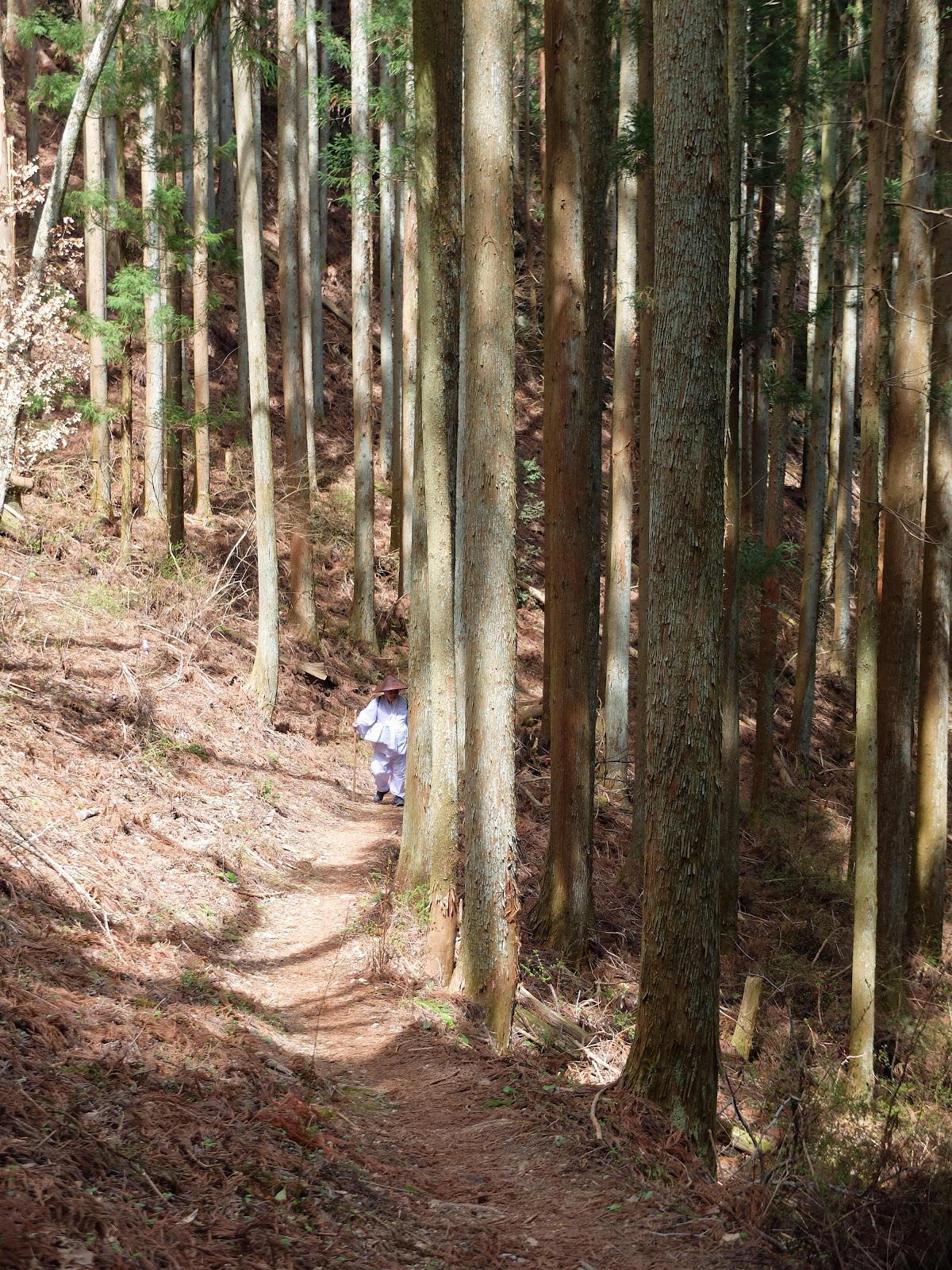
As it turned out, it was a beautiful walk in the woods.  The trail passed through magnificent cedar forests and crossed crystal clear streams.  There were endless small statues lining the path.  It was rather strenuous, with three climbs totalling 1100 metres, and similar descents.  I felt quite strong, and despite the risk, I managed to not fall down.


Ruth had been worrying and strategizing about the stage to Temple 12 for several weeks.  It is only 12 kms to walk the distance, but multiples of that to get to the temple on a road suitable for a bicycle.  In the end, she arranged to share a taxi with Geraldine, an Irish pilgrim.  Temple 12 is set in a forest of enormous cedar trees, providing a beautiful setting for Ruth to paint while she waited for me to walk to the temple.


Geraldine


The Heart Sutra: Temples 6-11


Ruth: We diligently recite the Heart Sutra at every temple. Our guide book provides the Sutra in phonetic Japanese, but I think I stand a better chance of enlightenment if I at least know what I am saying. Knowing, does not, however, mean understanding. After 11 tries it’s still not clear. 

We brought with us a a recent English translation of the Sutra written by Thich Nat Hanh.  He explains that he wrote it to clear up some of the misunderstandings around an earlier translation. Then he wrote a book to explain his own simplified version. His title for the sutra is “The insight that brings us to the other shore.”  Today’s route did bring us across to the other shore on the opposite side of a broad valley, but it was google maps and not insight that got me there. I guess I have more work to do. 

Ritual is everywhere on Shikoku, from the temple procedures to life in the ryokans (Japanese style inn).  We are learning new rituals every day. I should have packed half the clothes I brought, because each day after our bath we are given kimono robes to lounge in through dinner and into the evening. That nice second outfit I brought stays packed in my bag. 

I don’t think that the path to enlightenment is to be found in coffee.  I bought an iced coffee in a vending machine at temple 11 late this afternoon and now, at 10 pm, I am wide awake.  I will be tired tomorrow, further compromising my ability to grasp the Heart Sutra.. 


Monday, April 15, 2019

First day as Pilgrims: Temples 1-5


Gordon:  We had beautiful weather for our first day on the Shikoku 88 Temple pilgrimage.  We made our way to Temple 1 under our own power, adding about 14 kms to the distance of about 13 kms from Temple 1 to Temple 5.  With 83 more temples to visit our appreciation of them may diminish, but we enjoyed the first five a great deal.  They are tranquil places, with a variety of pavilions, sculptures, ponds, and other features.  

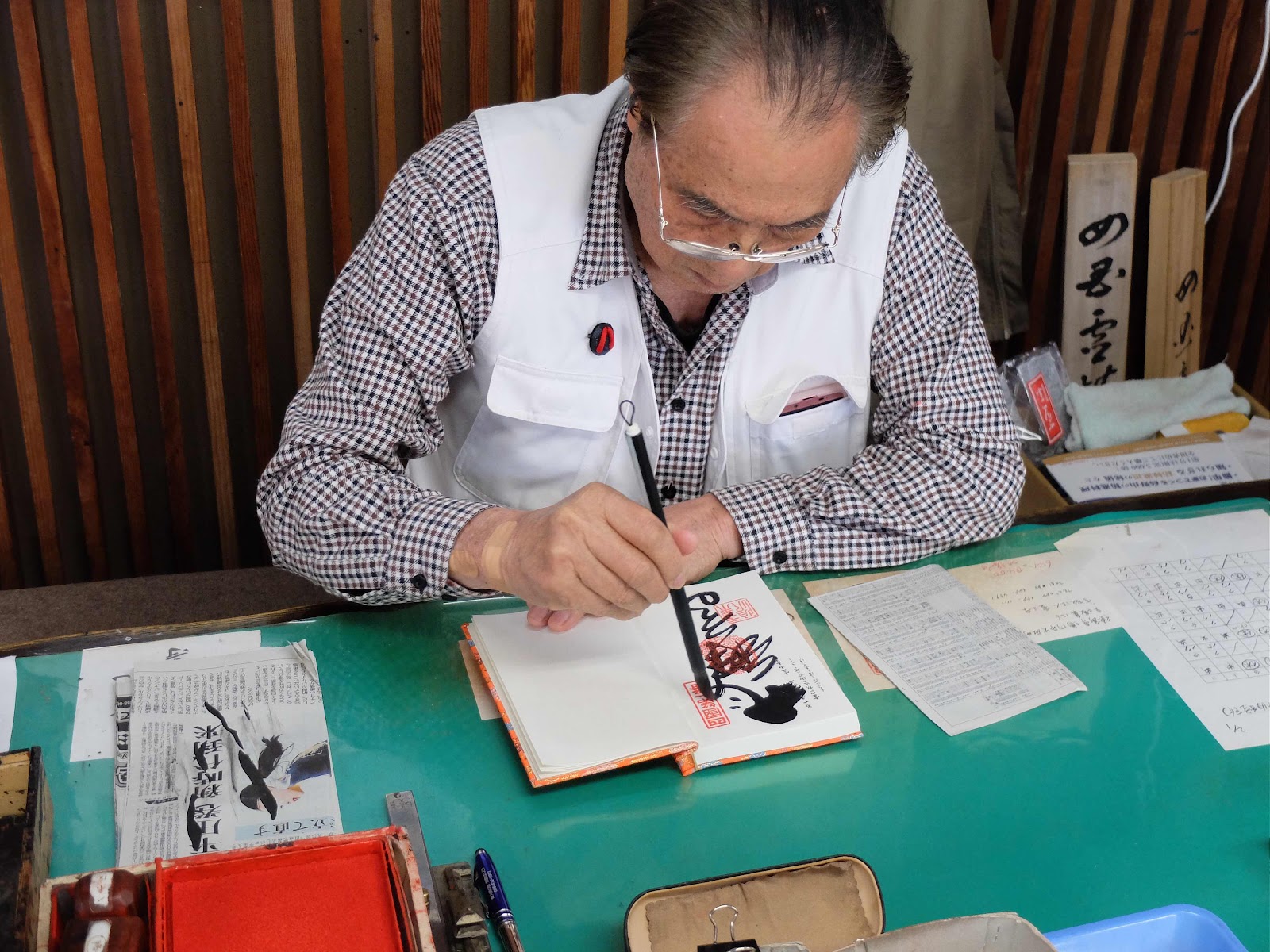
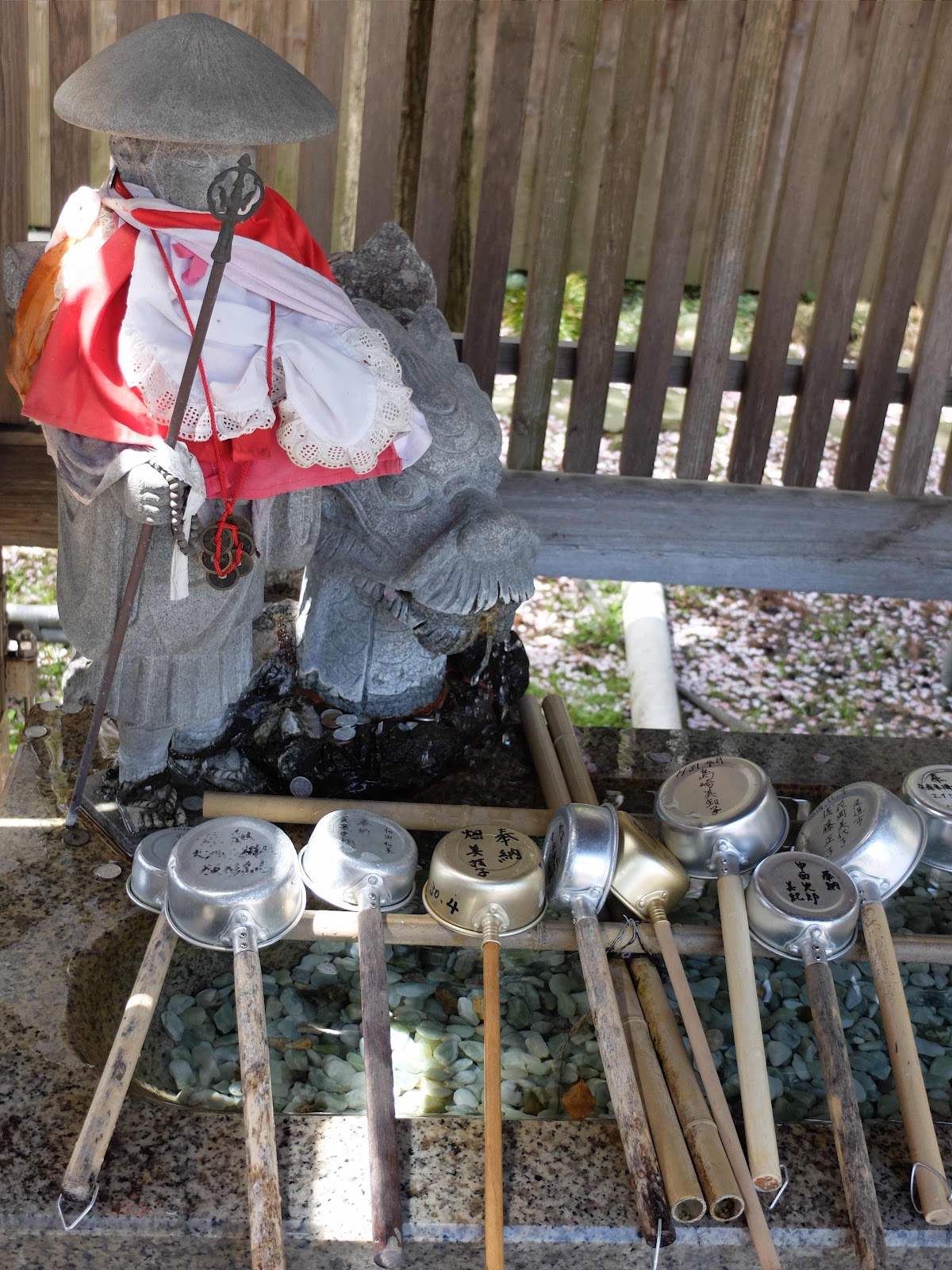
We have decided upon a protocol that sees us ringing a gong, cleansing ourselves at a fountain, taking turns reading stanzas of the heart sutra at the principal temple, and then going to the shop to have our books stamped and calligraphied.  This is quite beautiful to watch, and easily shows why calligraphy is an art form in Japan.

The walks between temples are mostly on small lanes with minimal traffic, although there are also some stretches on paths.  Much of the land is under cultivation, with carrots currently being harvested, and rice being planted.  There are also large areas devoted to pear and apricot orchards.

We were both almost giddy today, and we look forward with eager anticipation to tomorrow’s outing.


Saturday, April 13, 2019

Making our way to Shikoku to do the 88 Temple Pilgrimage

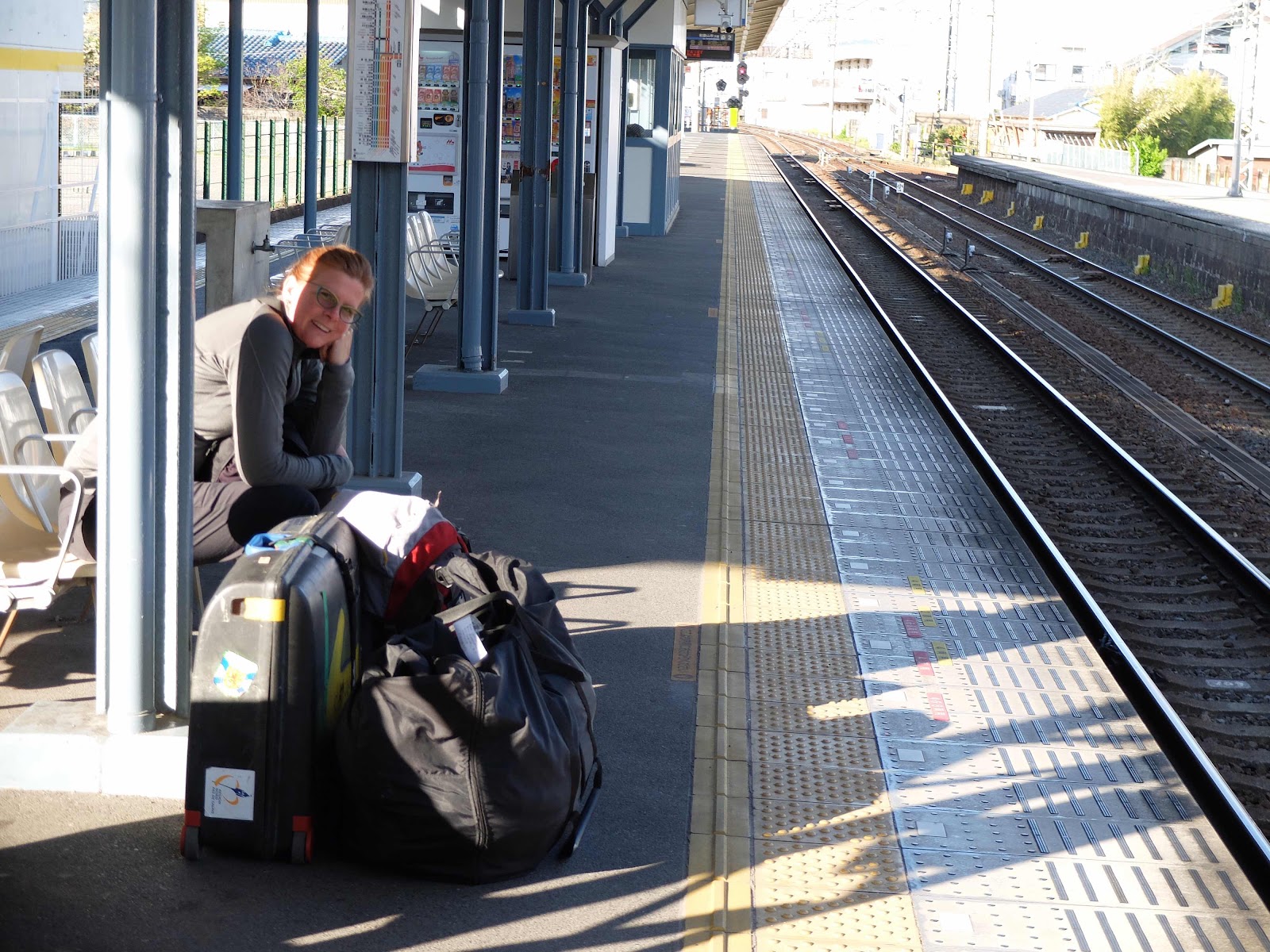
Waiting for the train with my bike in its suitcase.
Waiting for the train with my bike in its suitcase. 

Ruth: Our travel day from our guest house near Kansai airport to Shikoku was seamless and surprisingly easy. Our host dropped us back at the Ozaki train station where we bought a combination train and ferry ticket to Tokushima. 
I spent the two hour ferry ride talking to a lovely lady in a combination of Japanese, English, google translate and charades. It was really fun. 


At the Port in Tokushima we were met by David Morton, who is originally from Canada but has lived in Japan for almost 30 years. He is the author of the English guide book for the Shikoku pilgrimage and is a professor at Tokushima University. His area of research focuses on Western pilgrims on the Shikoku route. Who better to give us our first orientation to the pilgrimage!


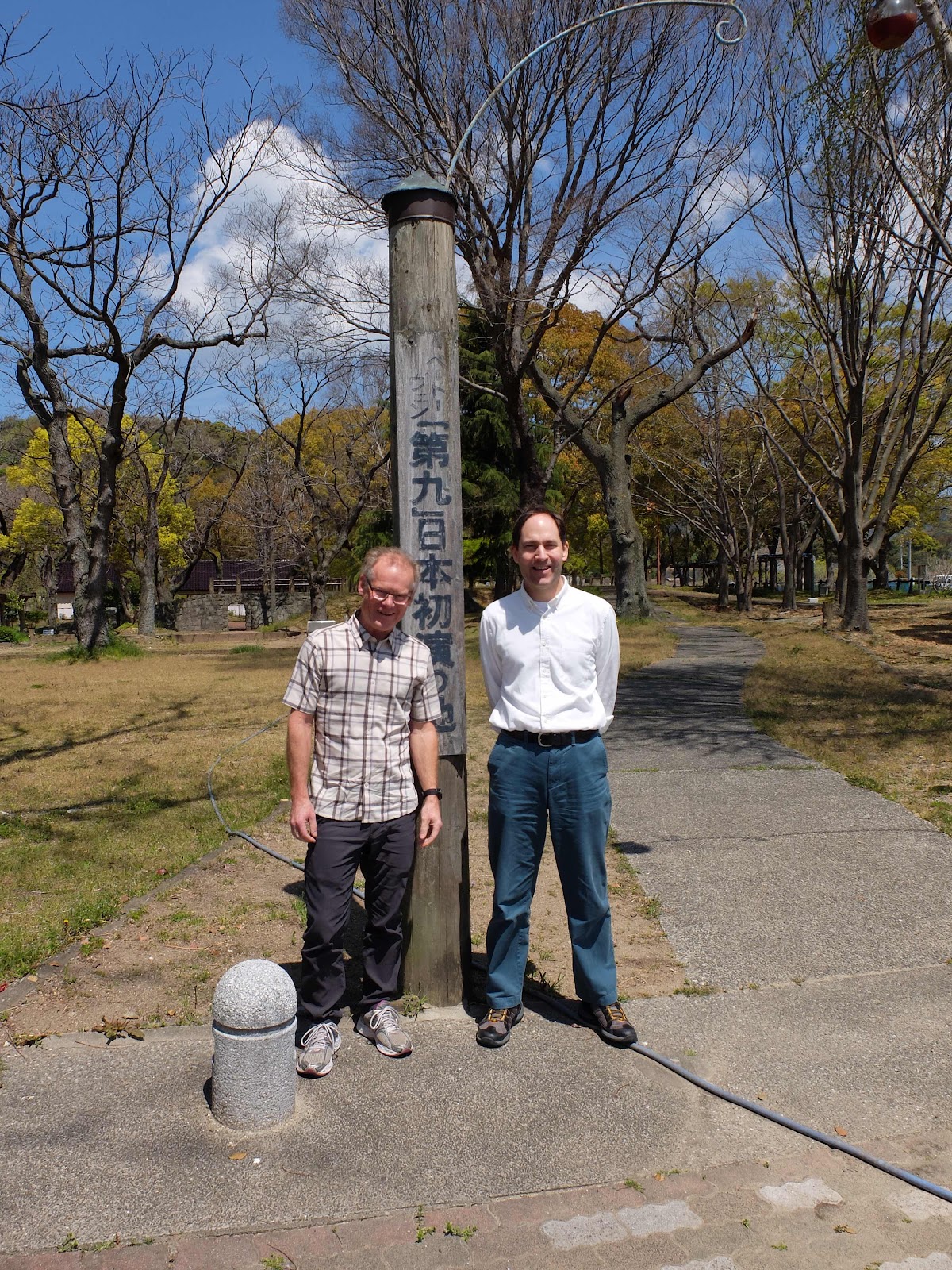
Gord and David at Bando German POW Camp. 

David generously offered to take us to Temple 1 and  to purchase supplies needed for the trip. However, we went first on a side trip to Bando Camp, the site of a German POW camp during the First World War. The head of the camp viewed POWs not as enemies but as brave men who had served their country well. His own family had suffered as POWs in a previous period, so he managed the camp more humanely. The only rule was that the Germans could not return home before the end of the war. They had a bowling alley, two boat ponds, ran marathons through town and had several orchestras. At the end of the war the Germans didn’t want to leave. In a gesture of thanks for their good treatment they performed Beethoven’s Ninth Symphony at Bando. This was the first performance of the symphony in Japan. Most returned to Germany a few years after the war, but some remained in Japan for the remainder of their lives.


Temple 1 Ryōzenji

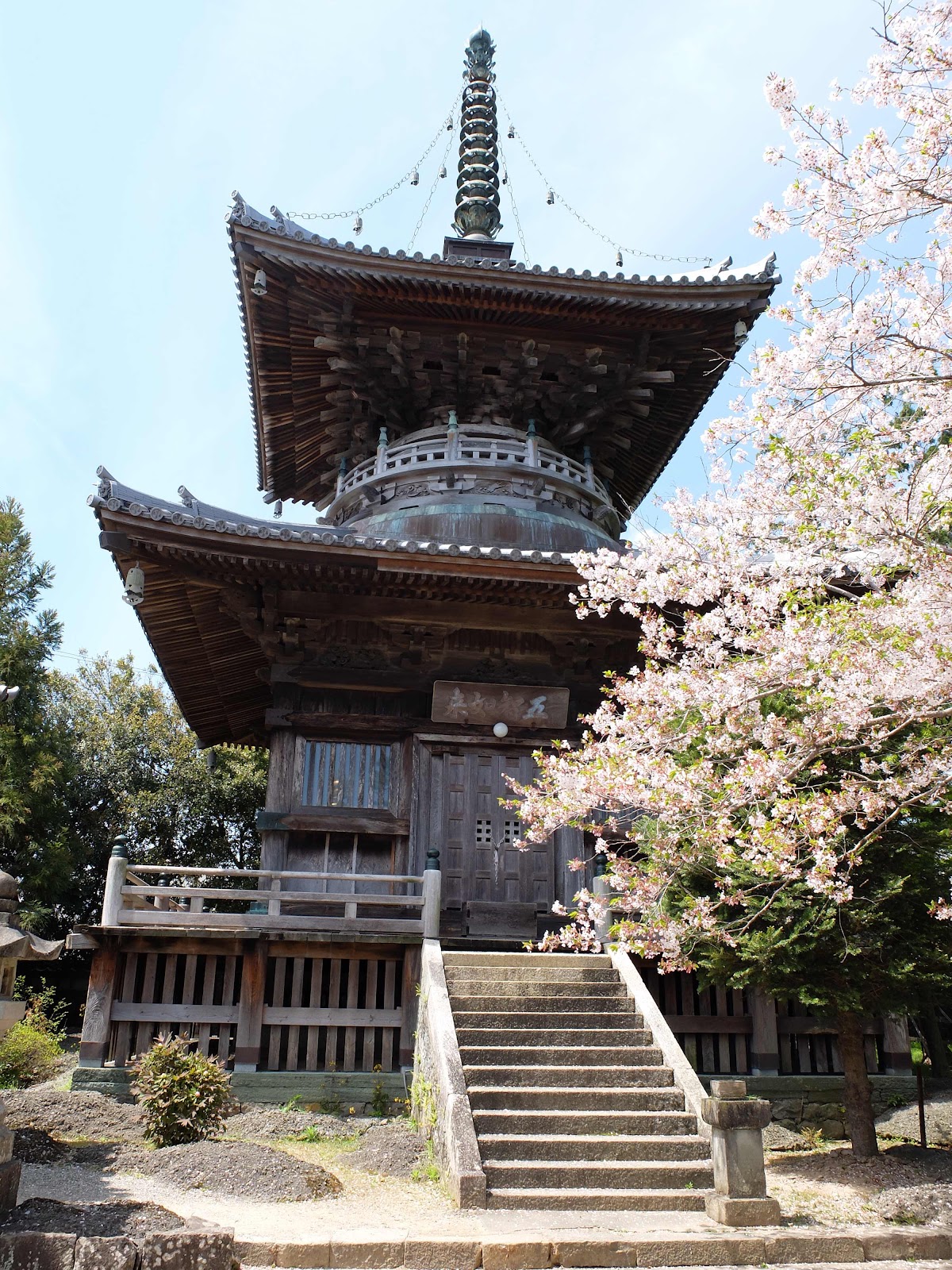
We have arrived just at the tail end of the cherry blossom season. Ryōzenji, Temple number 1, was stunning with cascading cherry petals and pools filled with gigantic koi. 


David gave us an excellent orientation of the pilgrim protocol at the temple. 


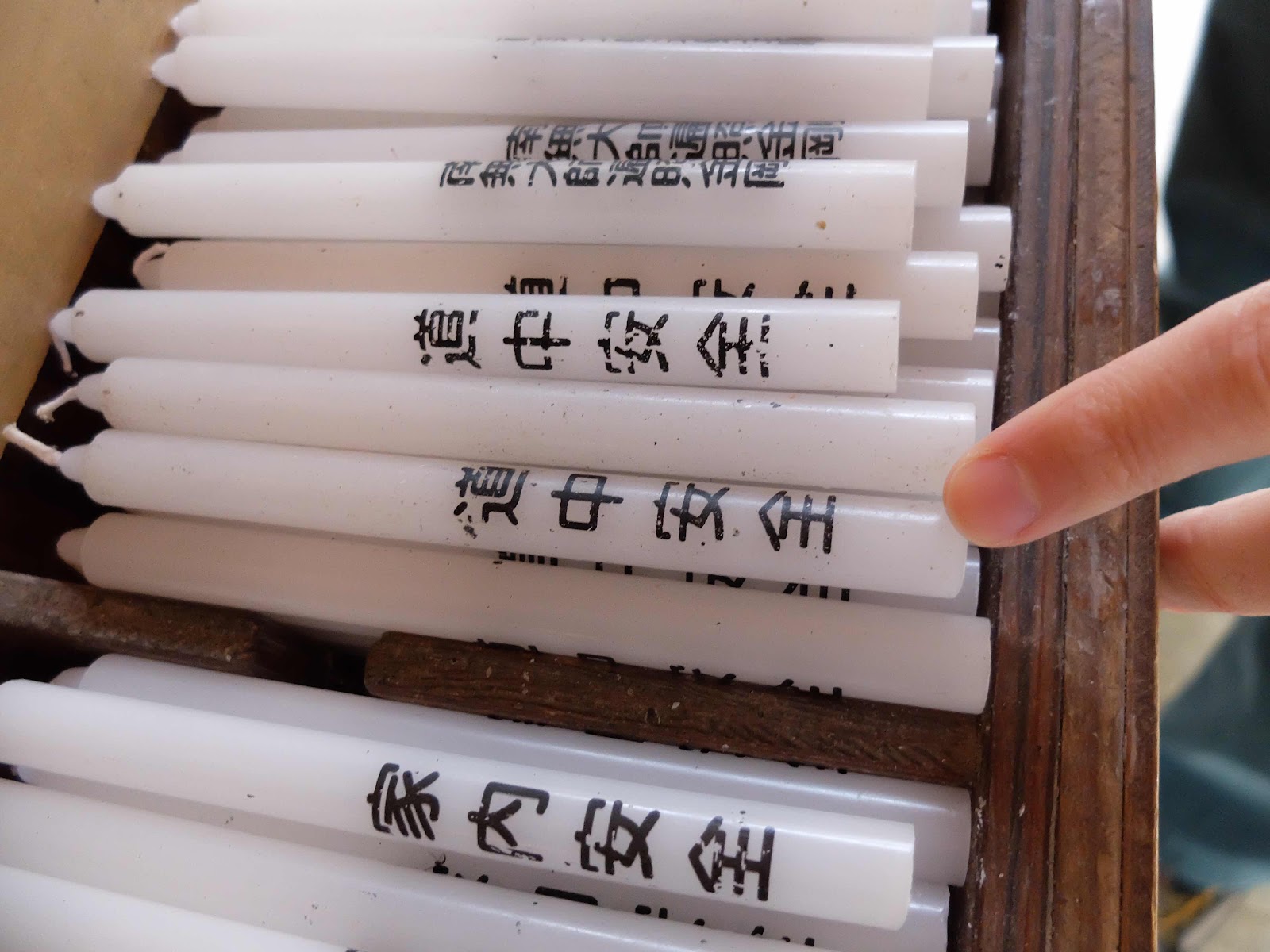
Each candle is for a different purpose. I am pointing to the one for safety on the road. I wanted to photograph it so I didn’t mix it up with the one for fertility. 


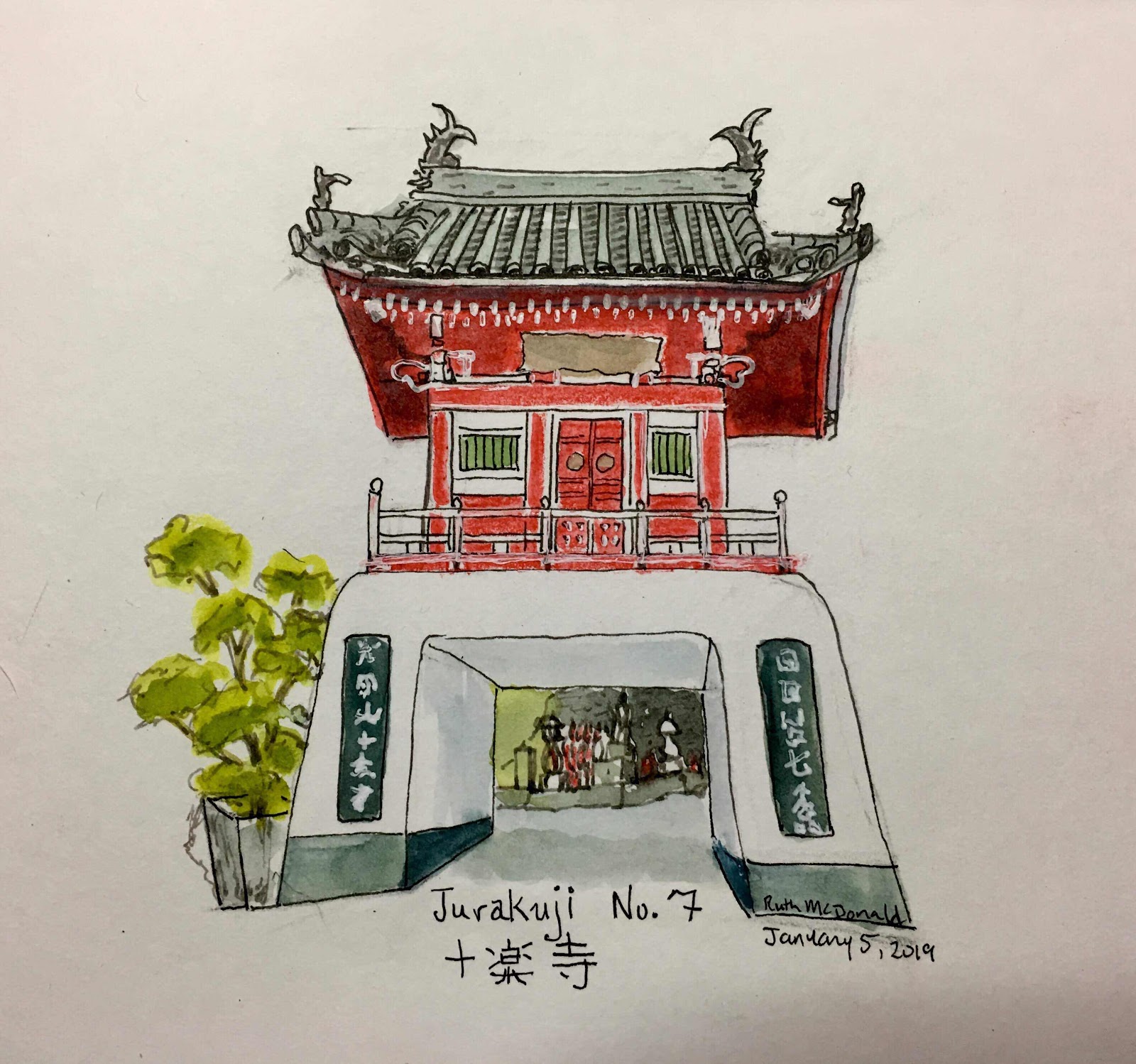
This one was painted back in Victoria from a picture on the internet. Much better to see it for real and with the cherry blossoms.