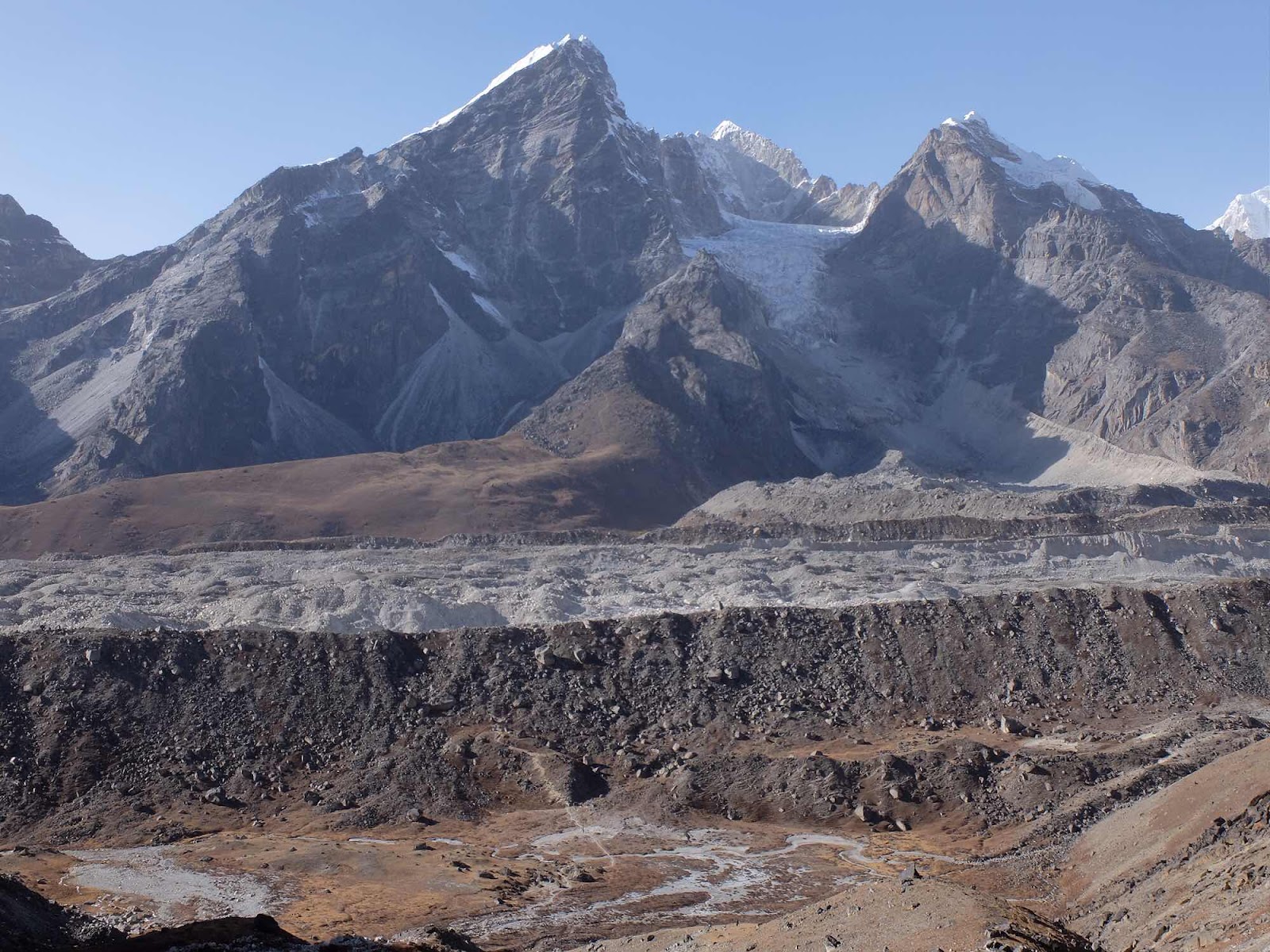
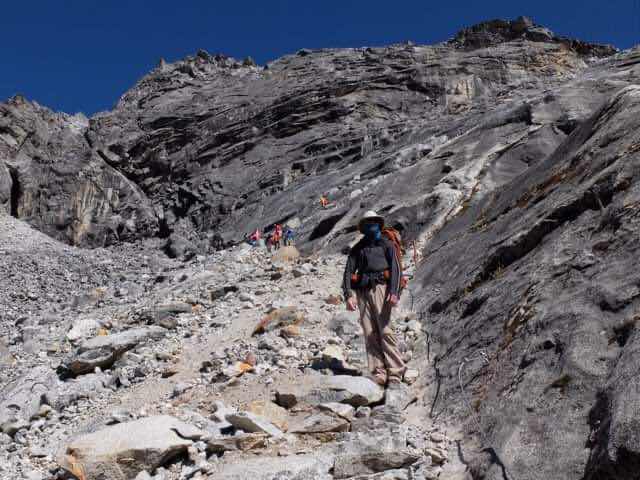
 Yesterday we walked down a bit from Gorak Shep (Everest Base Camp) before turning off the main trail towards Cho La. The number of trekkers per day immediately dropped from about 300 to about 50.The trail to Dzongla, at the base of the Cho La, was gorgeous, with impressive peaks and a large, emerald green glacial lake.Dzongla itself was charming, with excellent views and perhaps eight relaxed lodges. The guesthouse where we stayed was our best so far on the trek. We were able to have a hot shower and do some laundry, both way overdue. The shower cost about CAD12, but the gas to heat the water would have spent many days on a yak’s back before placed at our service.Today we crossed the Cho La, the second of the three high passes we will traverse on this trip. It was not as difficult as the Kongma La, but after 7 hours of walking we were quite tired. There were several steep sections, some provided with fixed cables. We were also on a glacier for about half a kilometre, finally justifying our purchase of glacier glasses and YakTrax, MicroSpikes or instep crampons.We are still running out of energy on the long, challenging days, particularly Bruce and I. I have a theory that we are just not eating enough, due to the altitude. In the future we are going to stop midday for 30 minutes and force down a Cliff bar or other snack. Other than at dinner time food remains almost repellent to us. We generally force ourselves to eat something for breakfast and eat nothing until dinner. No doubt we are losing lots of weight, a North American dream, but at the cost of lacking the energy to complete our walks in a comfortable manner.
 It is surprising that I have not noticed the smell of anyone in the crowded dining rooms at the trekking lodges, because personal hygiene is challenging while trekking. This has been brought home to us at Gorak Shep, where there is so little water that none of the lodges offer showers.Most of the lodges at lower elevations do have showers heated by gas from cylinders, usually for about $6, similar to the cost of a room. For that fee you generally receive a trickle of water that fluctuates wildly in temperature as you adjust the flame or the flow rate.Other forms of personal hygiene present their own hurdles. For instance, a basin with a mirror is a rare sight. It also takes some commitment to shave in icy water when the air temperature is near freezing. As a consequence, many of the tourists are growing beards.It is risky to consume the tap water in any of the trekking lodges, so it is always necessary to treat it or purchase bottled water for tooth brushing or drinking. We have consistently treated our own water, but there is so little water available in Gorak Shep that we have been compelled to purchase it.Washing laundry is also difficult to do, because of the cool temperatures and limited access to basins and drying lines. We often climb into our cold sleeping bags wearing the clothes we have been walking in.It is now three days since we have been able to shower, six days since we did laundry, and a week since we shaved. As a result we and our clothes are becoming increasingly dirty, to the point that we are feeling a bit uncomfortable. We are hoping for at least a shower at tomorrow night’s accommodation.
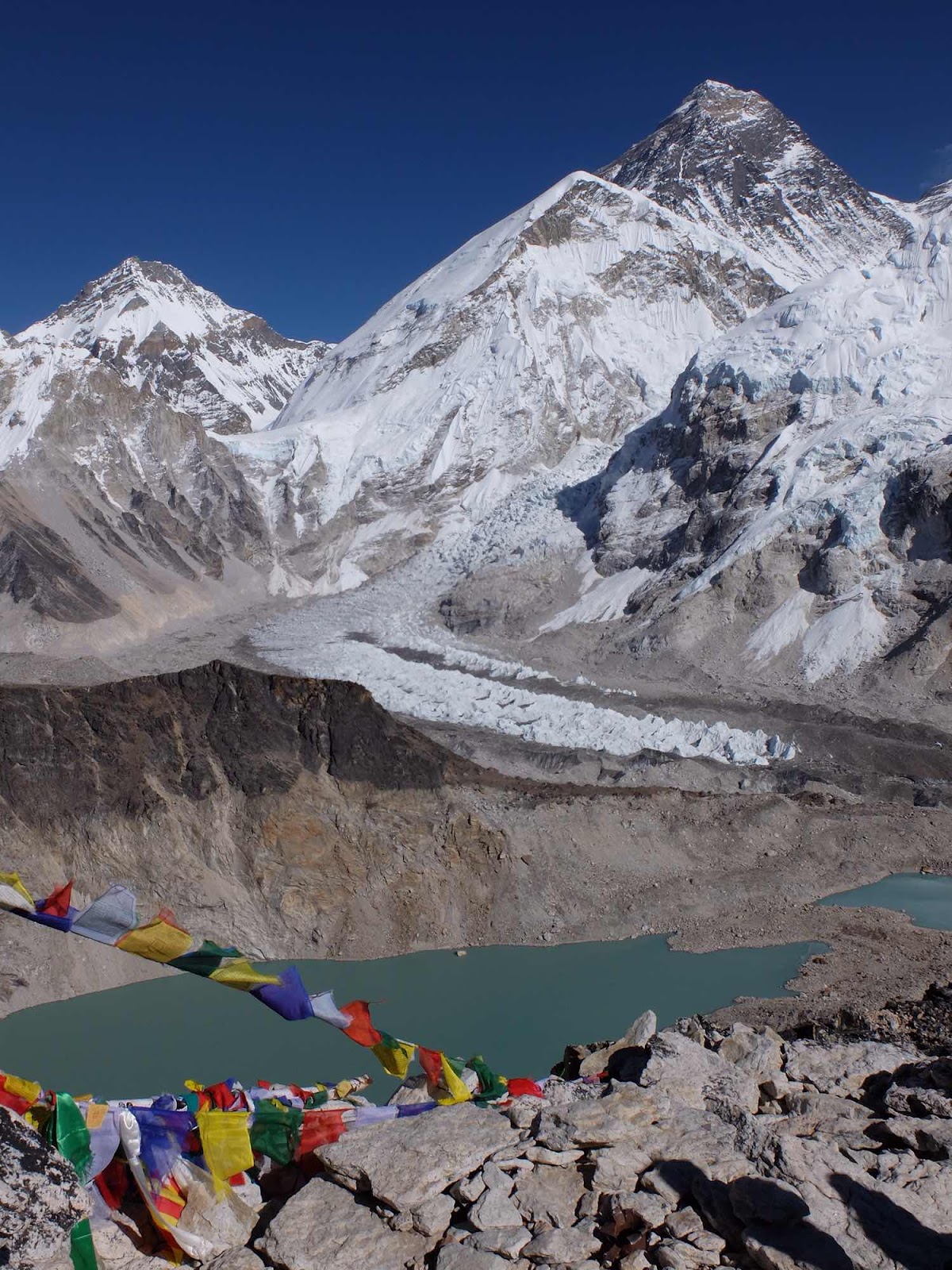
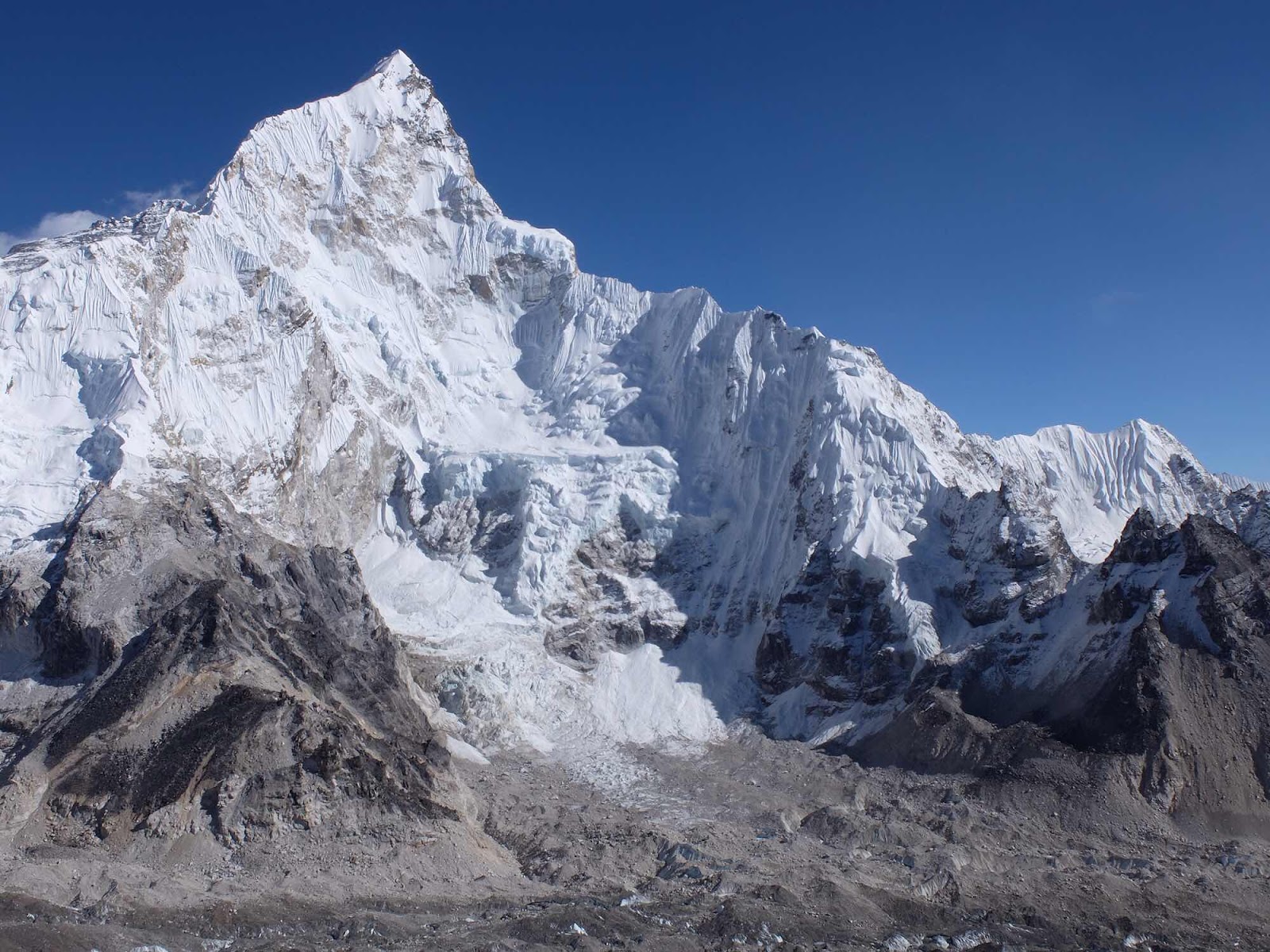
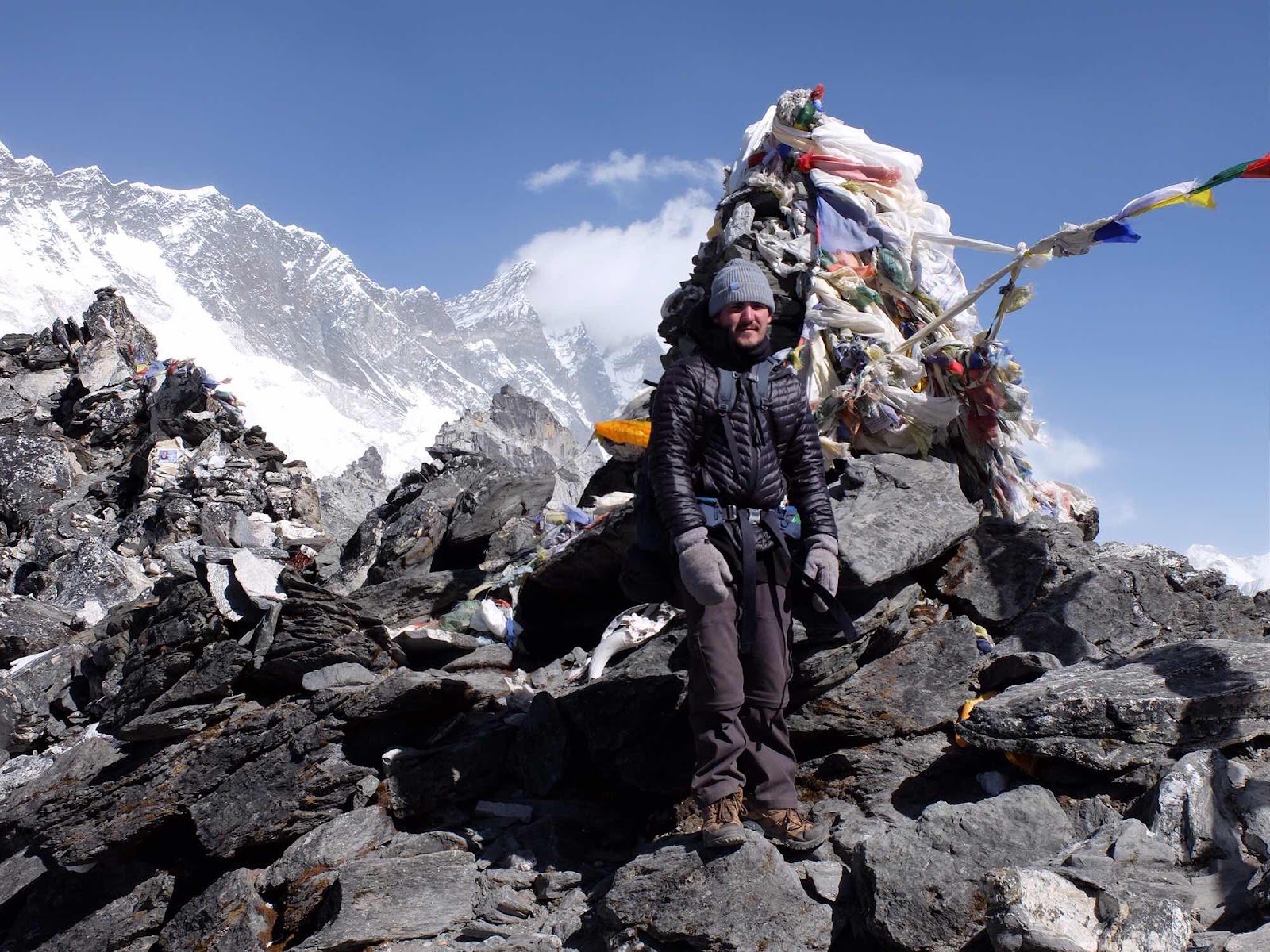
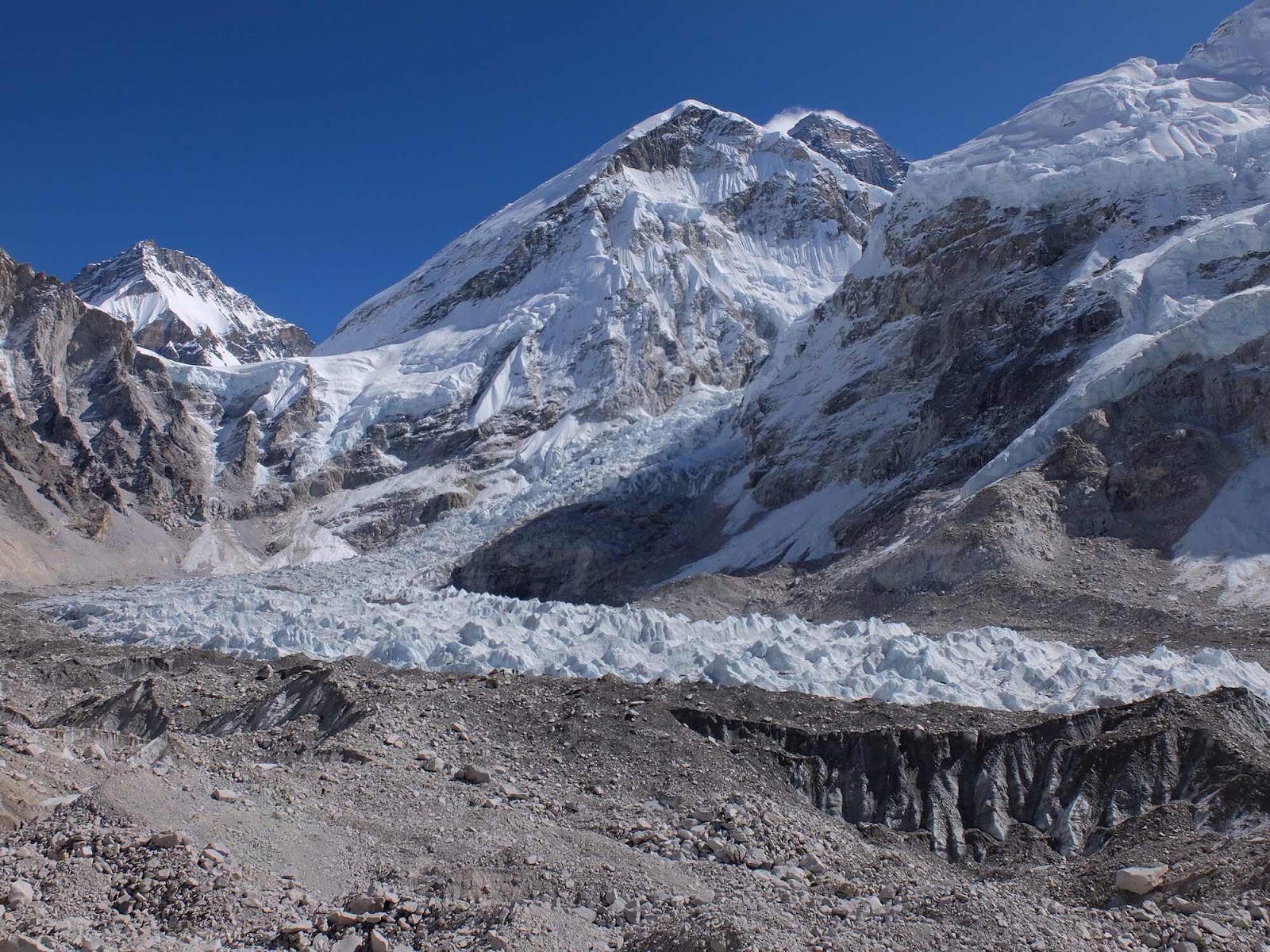
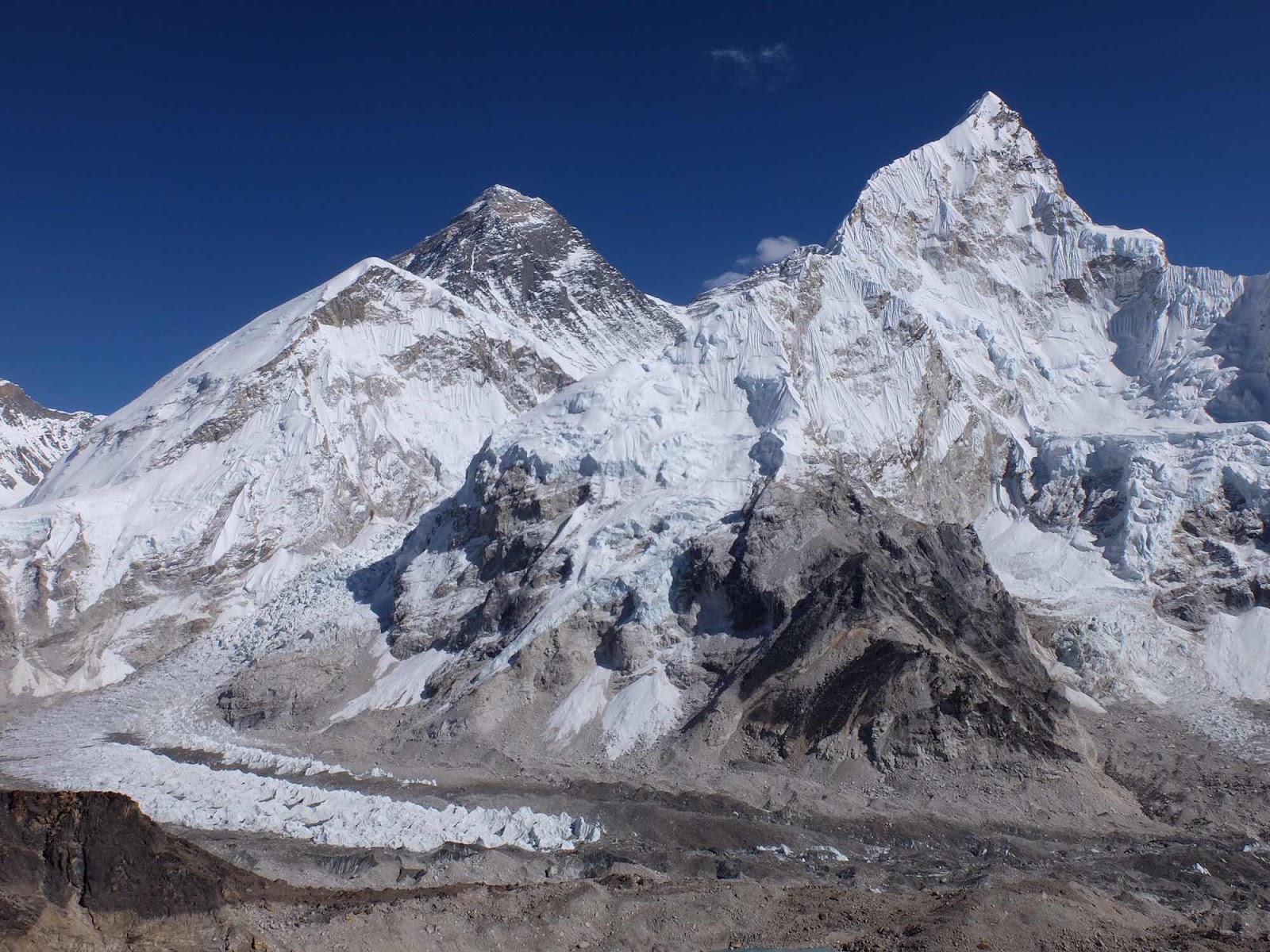 Today we walked from Lobuche to Gorak Shep. Located at 5200 metres, this is the last outpost of trekking lodges on the Everest Base Camp trek. From here it is possible to walk to the Everest Base Camp, which we will do tomorrow. The other day hike is to Kala Pattar, which provides a good view of Everest.We arrived in Gorak Shep before noon, and the weather was crystal clear, so we chose to visit Kala Pattar this afternoon. It was a steady two hour climb to the 5550 metre summit of Kala Pattar. The footing was mostly good, but it is simply difficult to climb in this thin air. Partway to the summit I started to think of the slow climb as an exercise in mindfulness. I focused on my breathing and the slow movement of my feet, allowing them to kiss the earth, in the words of Thich Naht Han. Hypoxic as I was, I felt that the earth carried me towards the summit. I found myself smiling and enjoying the moment, no longer struggling to reach the summit. The spell was only broken when I had to climb through a boulder field near the top.It was quite pleasant at the summit of Kala Pattar, with stunning views of Everest, the Khumbu glacier, and Nuptse, which steals the show as the most beautiful peak in the area.
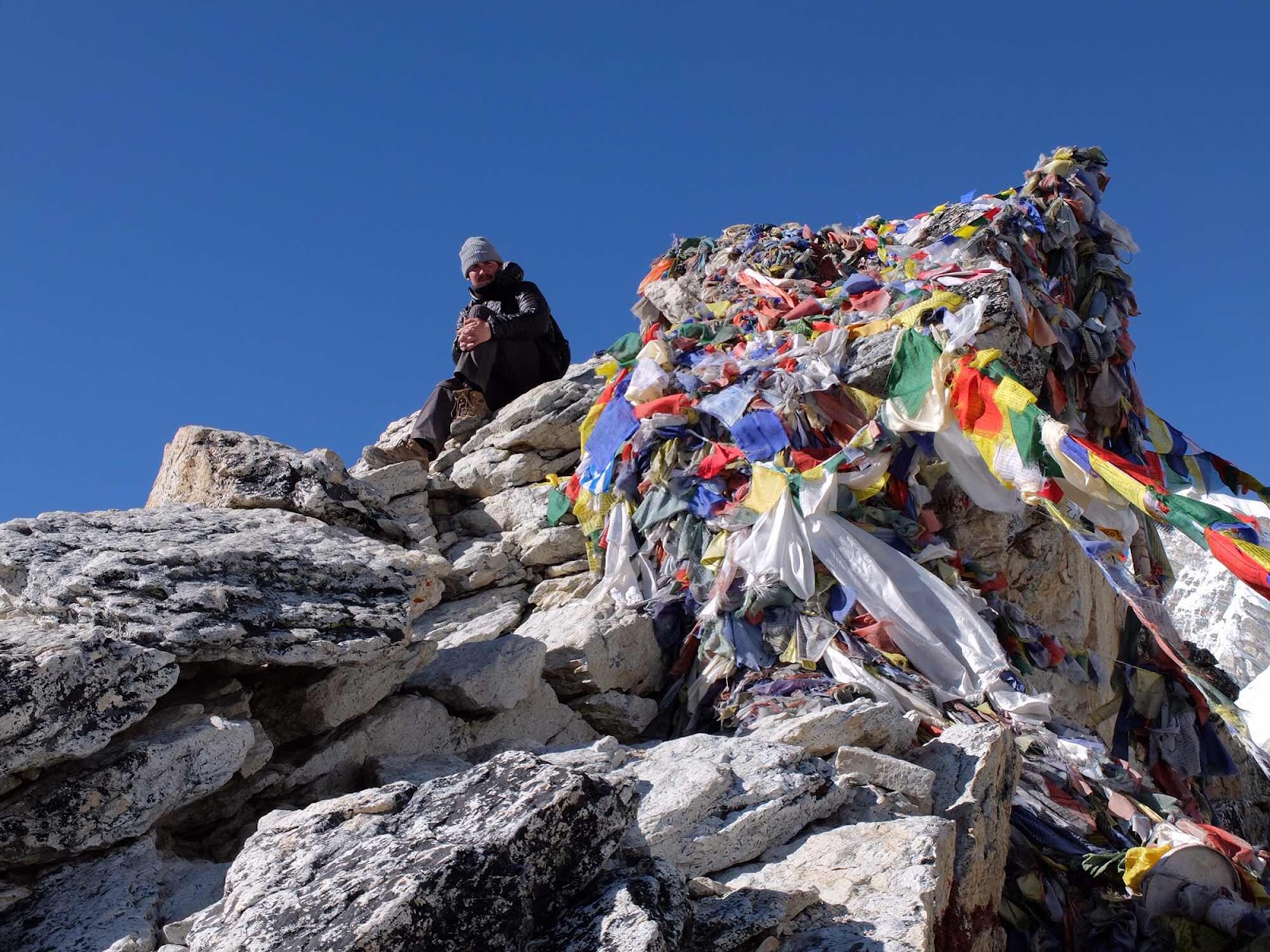
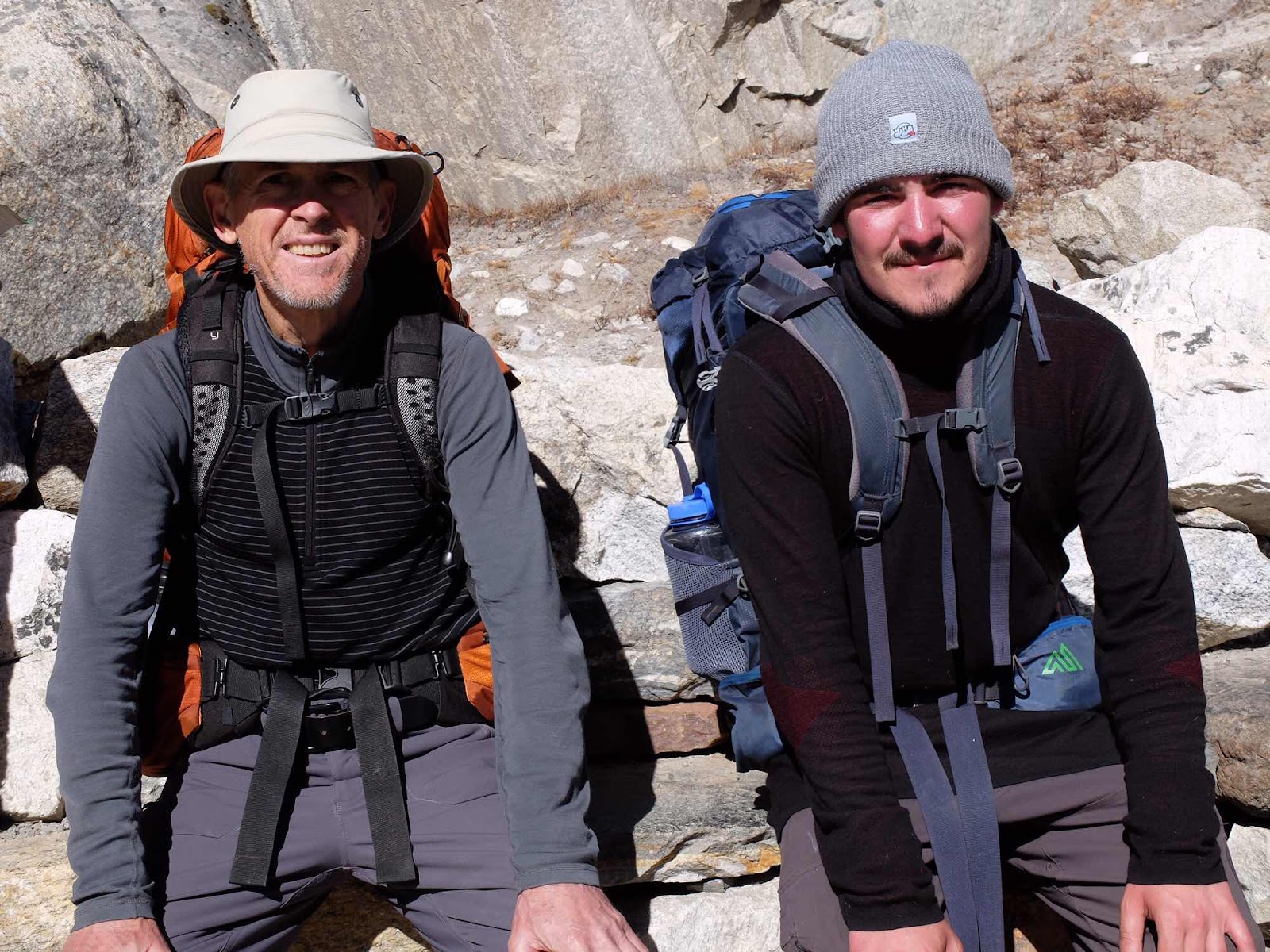 The Kongma La is the highest, longest and least used of the three high passes we hope to traverse on this trek. That’s a good thing, as our transit of it yesterday was the toughest day’s walk I can ever recall.The walk did not start on an auspicious note. The braided stream that we had easily crossed the previous afternoon had partially frozen overnight, creating a swollen mix of ice, water and slippery rocks. Bruce did slip, soaking himself to the waist and doubling the weight of his boots. It took some time to wring out his socks and get underway again.The climb to the pass was challenging, with the altitude, our packs and our less than outstanding physical condition slowing our progress to a crawl. There were two sections that are so steep and rocky that we were scrambling.It took us five hours to reach the 5535 metre pass, a notch in a knife edge ridge. The views were spectacular, with 8,000 metre Lhotse so close you could almost touch it.We were exhausted when we reached the pass, but the day’s work was far from over. We could clearly see our destination of Lobuche, but it took us another five hours to reach it. We first descended through a boulder field described by the guide as the toughest part of the hike, then steeply through softer material with hidden bits of ice. Wobbly on our feet, we then faced the final obstacle, described by the guidebook as a sucker punch, a traverse of the kilometre wide Khumbu glacier. You can see little of the glacier’s ice, but there were hillocks of glacial till to be climbed and lakes to be walked around. When we reached the top of the lateral moraine at the other side of the glacier and found ourself looking at yet another large moraine, Matthew said “Oh, shit”. Fortunately, a few steps to the side revealed Lobuche only a half kilometre away. Matthew and I walked for 9 1/2 hours yesterday, and when Bruce arrived a half hour later it was almost dark. We were all so tired we just gobbled a quick dinner and crawled into our sleeping bags at 7:00.
Three blogs to be published today now that there is Wi-Fi again.
November 10th
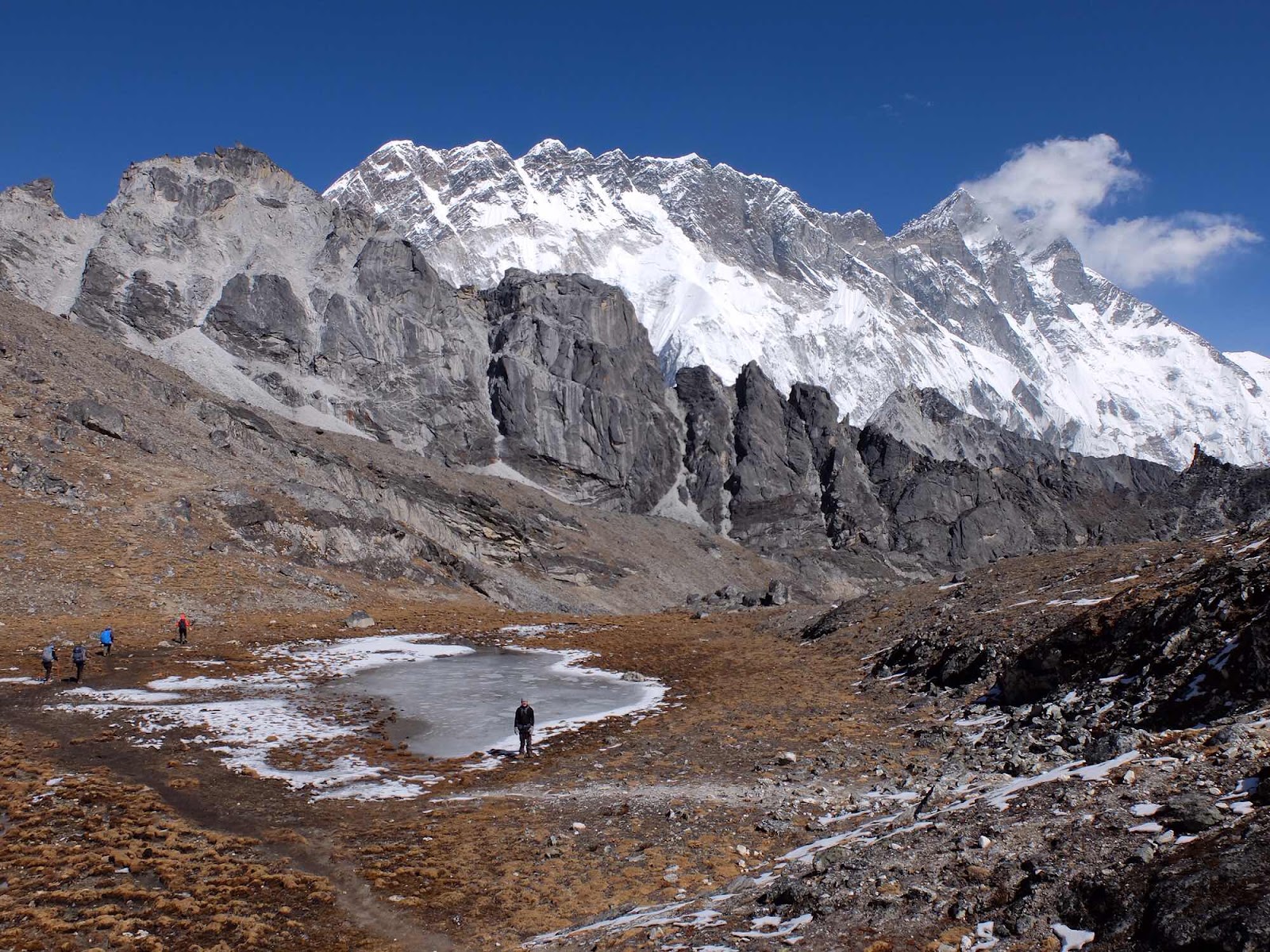 We have spent the last couple of days climbing towards the first of the three high passes on our trek. This morning we parted company with the principal trail to Everest Base Camp and worked our way up a side valley to the cluster of trekking lodges known as Chhukung. Located at 4700 metres, it services trekkers and climbers heading for several of the trekking peaks, as well as the Kongma La, the 5535 metre pass we hope to traverse tomorrow.Chhukung is situated in a sea of glacial moraines, and almost surrounded by spectacular peaks. Notable among these is Lhotse, one of a handful of peaks over 8000 metres.At our current altitude it is below zero in the morning, but pleasant in the afternoon sun in the absence of the wind coming off the glaciers around us. Some cloud cover develops in the afternoon, but most of the day we enjoy crystal clear air in bright sunshine.Matthew has developed a cold, but otherwise we are all feeling stronger and acclimatized to the altitude. The climb tomorrow will complete our acclimatization process, leaving us free to complete the trek without further concerns about mountain sickness. We are all very excited about tomorrow’s hike.
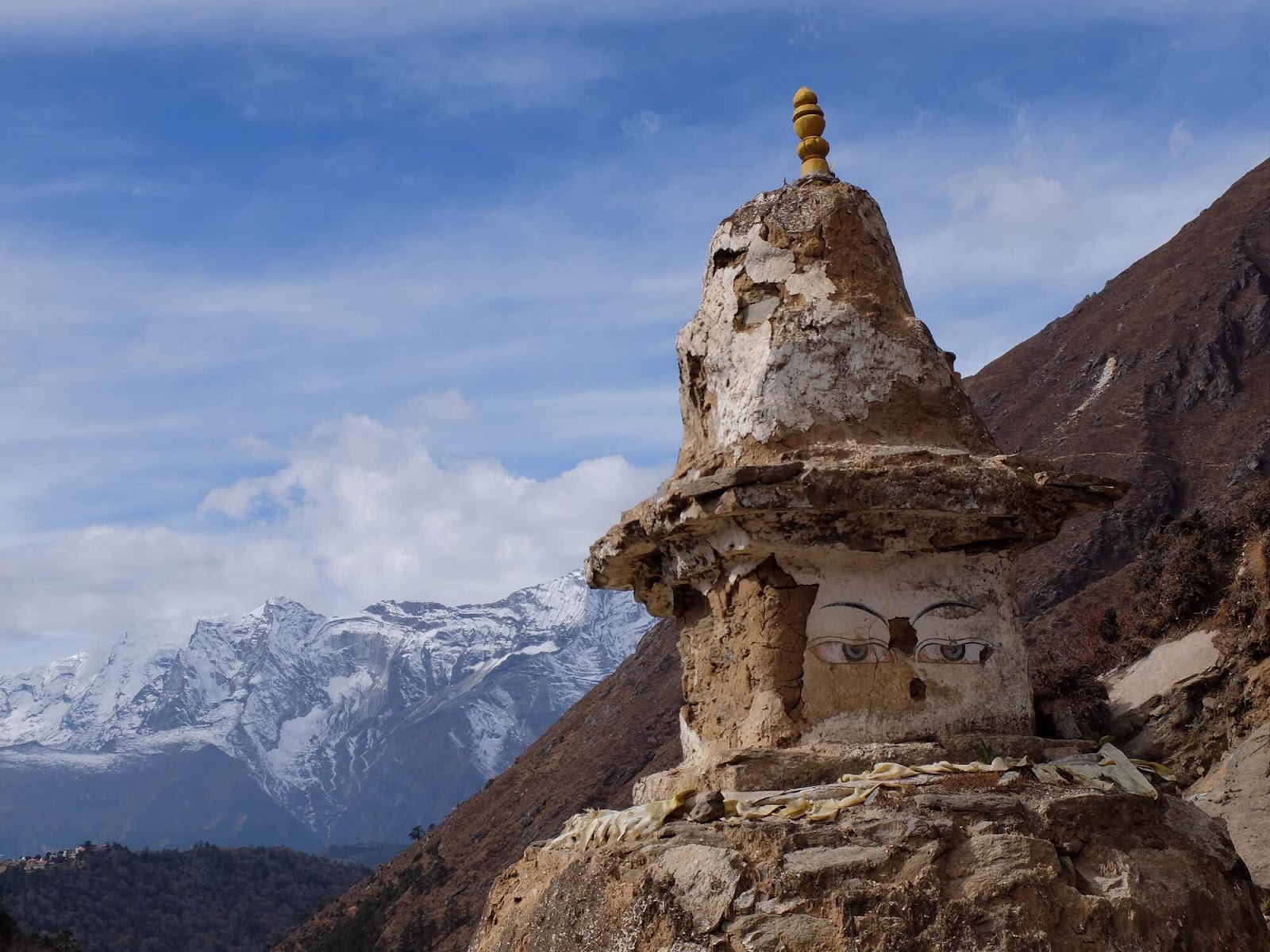
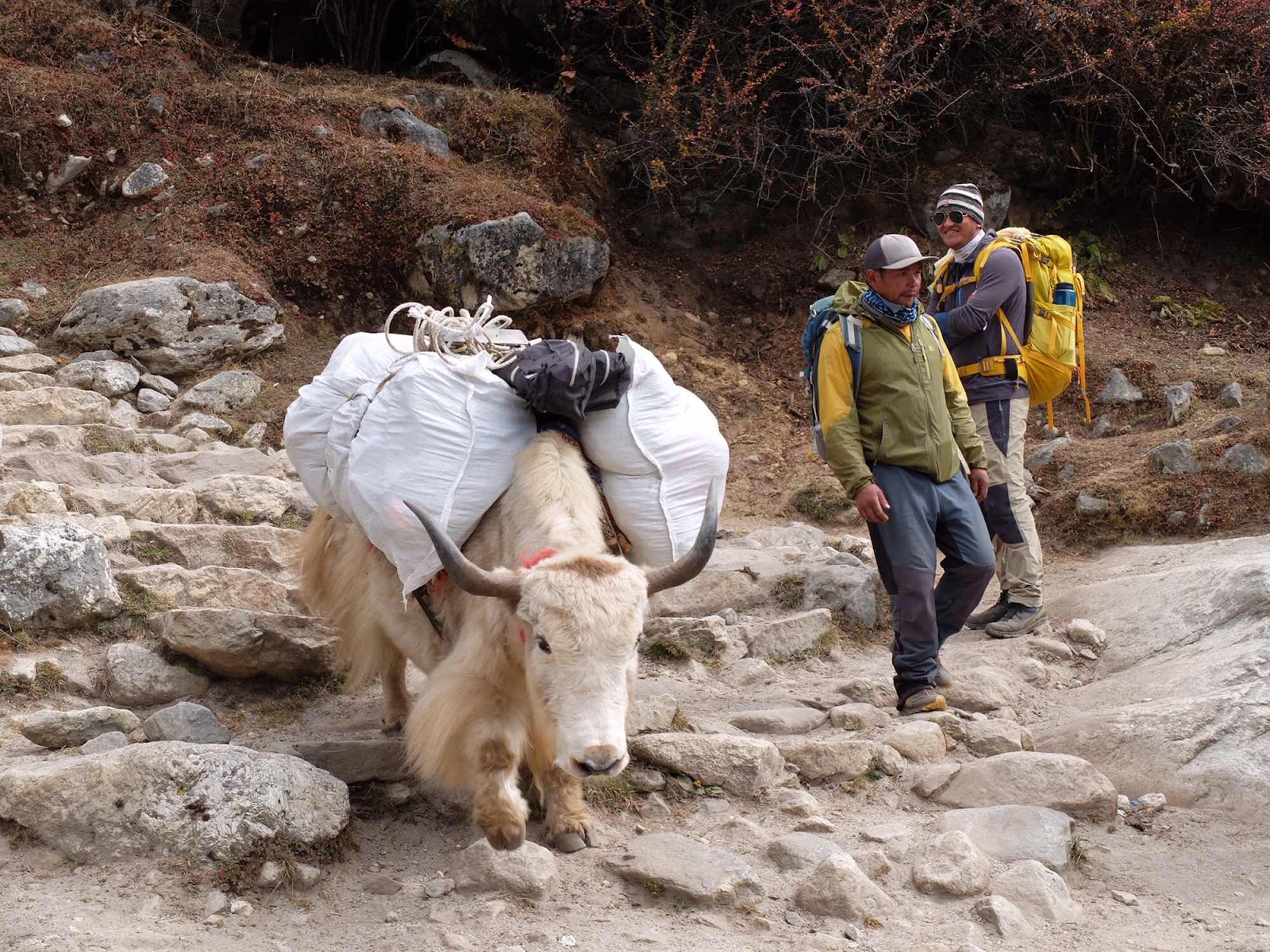
 We are slowly climbing and acclimatizing as we head toward the first of the high passes that we will traverse. We have been pacing ourselves so that we are now at almost 4000 metres without any symptoms of altitude sickness.Last night we stayed at Tengboche, the site of the largest monastery in the Khumbu. We attended the afternoon prayers, where two dozen monks droned their religious texts, punctuated by the ringing of bells and blowing of various horns. It is quite a mesmerizing experience.November is the second busiest month of the year on trail to Everest Base Camp, after October, and the traffic of man and beast is almost constant. Most of the trekkers are supported by guides and porters, and there are additional porters carrying the materials needed by trekkers and the local population. There are also frequent trains of yaks and ponies carrying all manner of goods.One of the advantages of the Three Passes Trek is that part of it is along the busy trail to Everest Base Camp, but much of it is passes through less visited areas. We will be leaving the main trail for a few days after tomorrow.
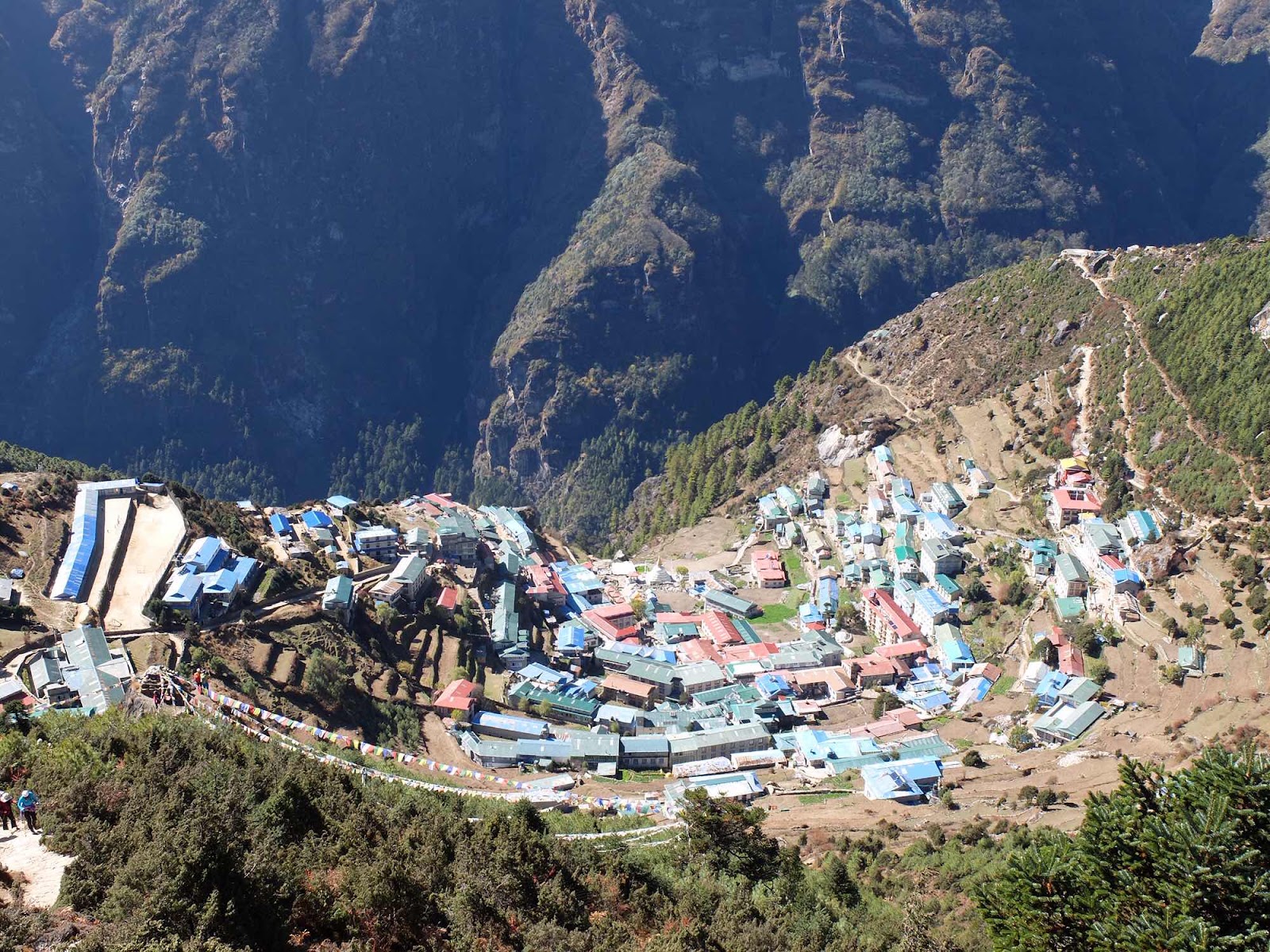
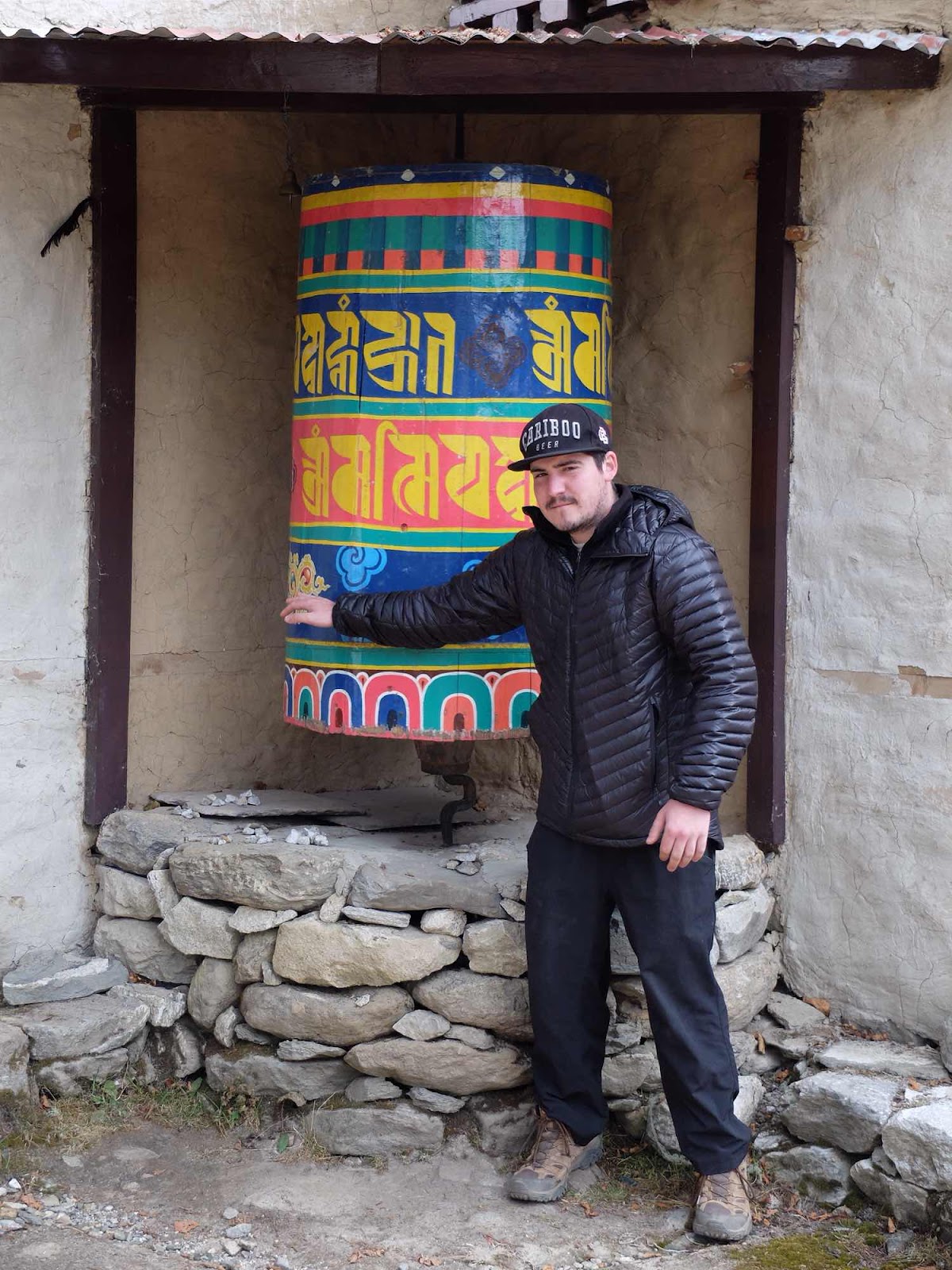
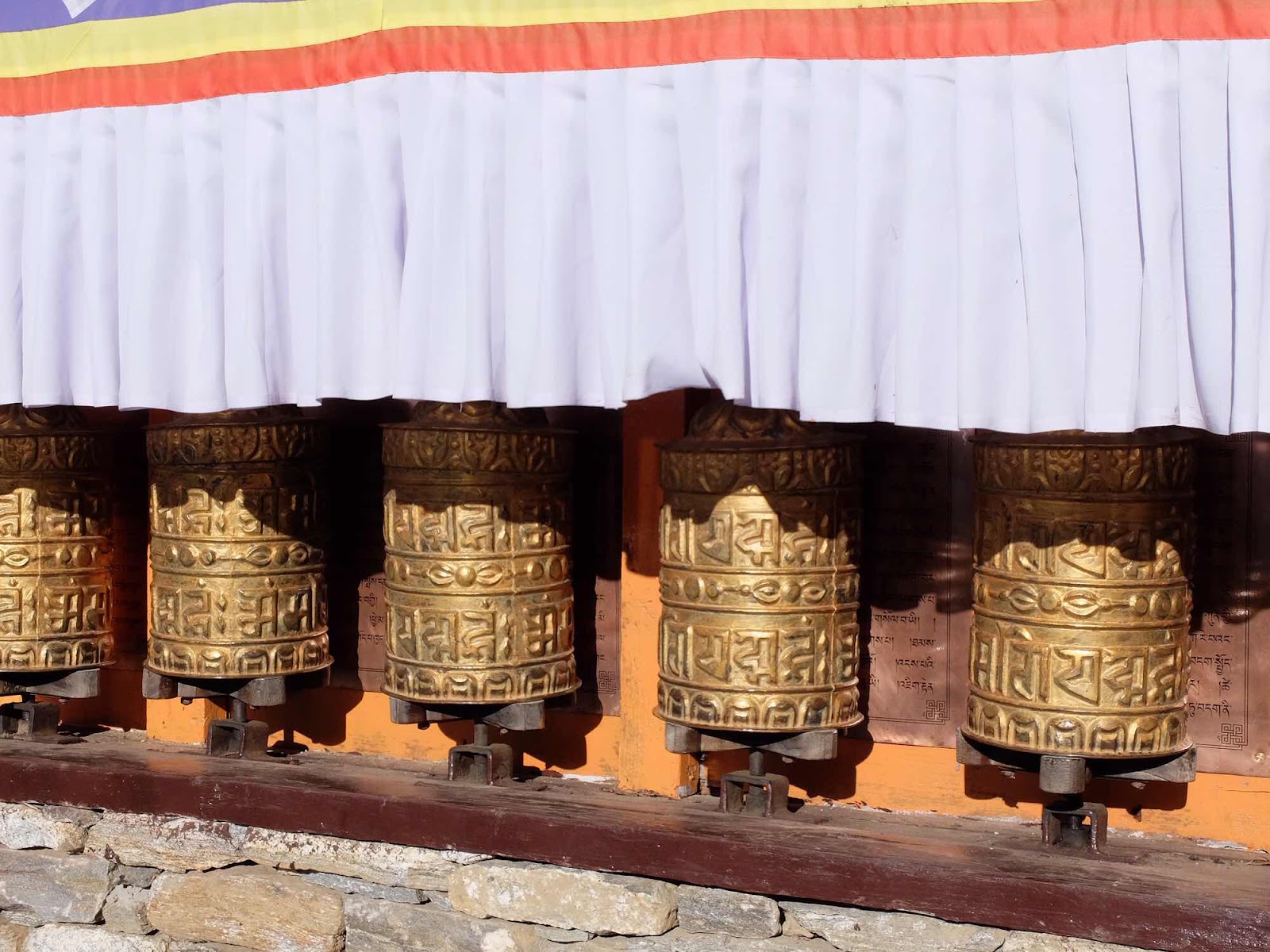
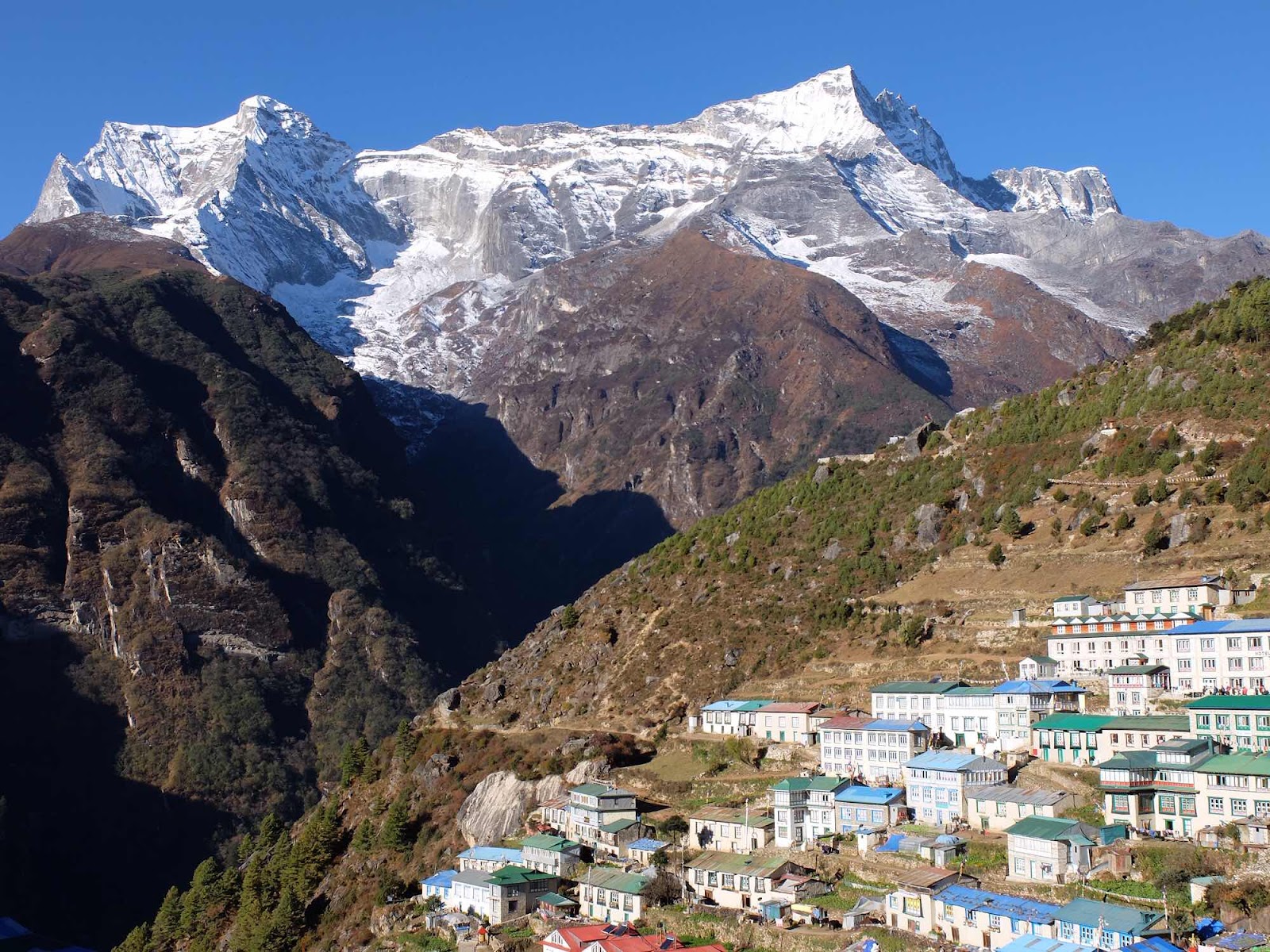
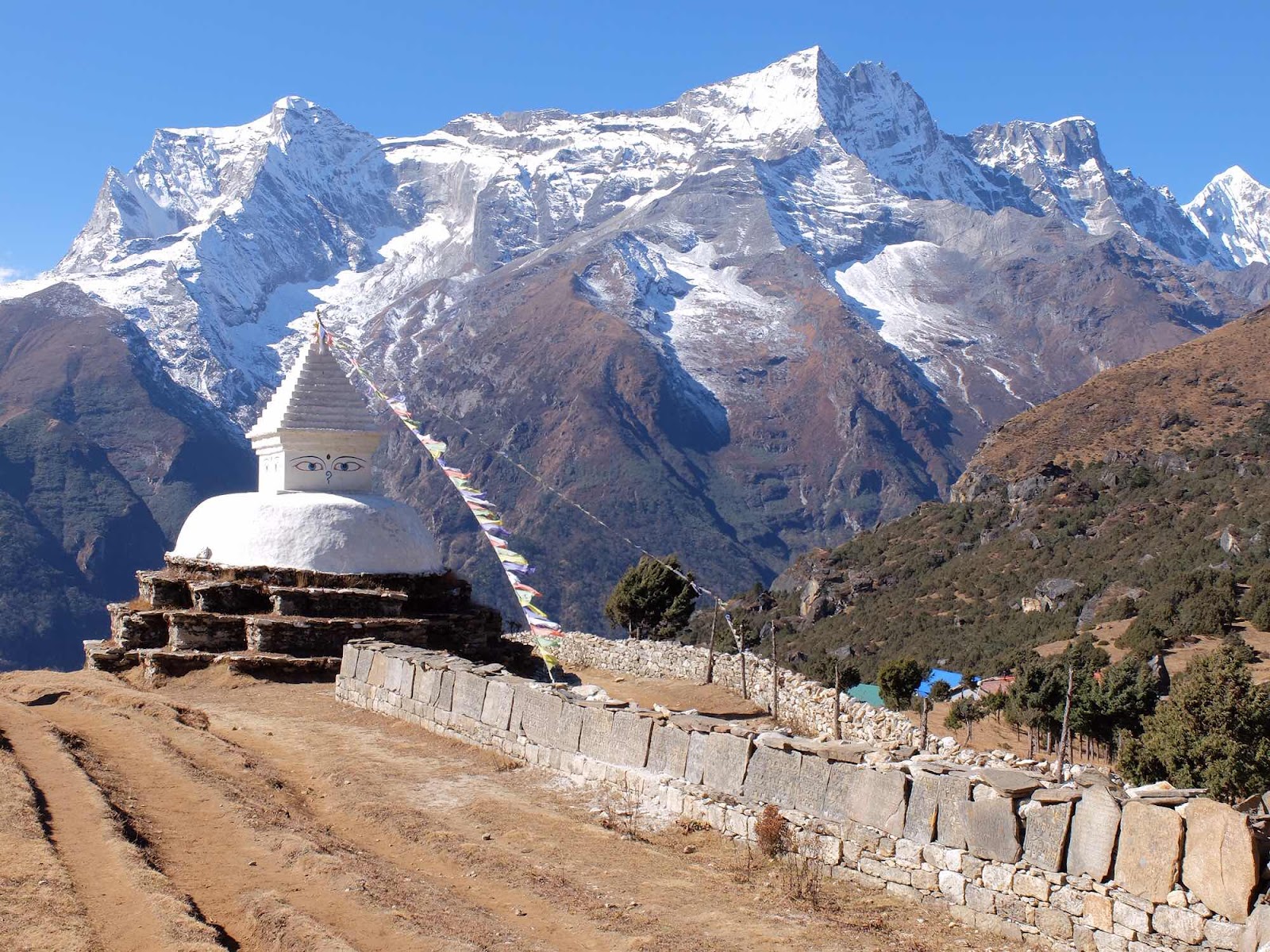 Namche Bazaar is the largest town we will see on our trek. Nestled in a horseshoe shaped hillside at 3400 metres, it has most of the amenities a trekker could desire. There is a hospital, innumerable shops offering trekking gear, several banks and money changers, a (Canadian trained) dentist, and, near and dear to a trekker’s heart, at least three bakeries. What makes all of these businesses remarkable is that there is no road access to Namche. Everything is produced locally, carried in on the back of a man or a beast, or, at great expense, transported by helicopter.It is accepted wisdom that a trekker should spend two nights in Namche to acclimatize to the altitude. And so we are enjoying two nights and a “rest” day here. There are several theories about what to do on a rest day, including rest, but I subscribe to the classic notion that you should climb high and sleep low. I made allowances for our fatigue from the 1000 metre climb into Namche to settle on a modest climb this morning. We climbed slowly to a point about 500 metres above Namche. We could feel the effects of the altitude in lightheadedness, so it was a good decision to remain here for two nights.Yesterday evening our hotel owner suggested we have breakfast at 6:30 am rather than 6:00, so that we could enjoy the view. We shrugged and settled on 6:15. It had been partially cloudy when we arrived in Namche, so when I stepped out onto the terrace this morning at 6:00, I was gobsmacked by the spectacular mountain facing me. A few minutes later the sun struck the peaks of the mountain. It was all we could do to make our 6:15 breakfast.The sense of awe continued on our day hike. We climbed to a point where we could get a good view of the mountain of Amadablam, a strikingly narrow wedge of a peak. Enroute we passed a largely abandoned airstrip (too high for most planes to land on) and numerous stupas, mani walls, carved boulders and other manifestations of local Buddhist faith. We returned to Namche to enjoy a few treats at a long established bakery.